


Views: 0 Author: Site Editor Publish Time: 2026-06-19 Origin: Site


Remote coastal communities, island resorts, and offshore operations face a paradox: seawater surrounds them, yet fresh water is scarce and expensive. Barging or trucking in supply is costly, weather-dependent, and unsustainable long-term. Building a conventional desalination facility takes years and demands infrastructure that simply does not exist in many of these locations. Containerized seawater desalination plants offer a different path—one that turns a standard shipping container into a fully operational treatment system deployed in weeks, not years. This article examines how these systems work, where they deliver the most value, and what to look for when evaluating one for your specific site.
Raw seawater is not simply salty—it carries suspended solids, algae, organic matter, and microorganisms that would destroy reverse osmosis membranes within hours if left untreated. The treatment sequence inside a containerized plant addresses this through a staged approach, each step preparing the water for the next.
For a seawater desalination plant, pre-treatment begins the moment seawater enters the system. Flocculation agents bind fine particles into larger clumps that settle out more readily. Multimedia filtration—typically layered sand and anthracite—removes remaining suspended solids down to the micron range. Many containerized systems then pass the water through membrane-based ultrafiltration, which captures particles, bacteria, and viruses that would otherwise reach the RO stage.
The stakes here are straightforward: robust pre-treatment is the single most important factor in extending membrane life and reducing unplanned downtime. In remote locations where replacement parts can take weeks to arrive, this is not a minor consideration. A system with inadequate pre-treatment will incur higher chemical consumption, more frequent cleaning cycles, and ultimately premature membrane replacement—costs that compound quickly in isolated settings.
With solids and microorganisms removed, the pre-treated seawater moves to the reverse osmosis stage. High-pressure pumps force water through semi-permeable membranes that reject dissolved salts, bacteria, and other impurities at rates exceeding 98.5%. The system must generate sufficient pressure to overcome the natural osmotic pressure of seawater—typically in the range of 5.0 to 6.5 MPa, depending on feed water salinity and temperature.
What emerges from the membranes are two streams: permeate, the fresh water that has passed through, and brine concentrate, the rejected salts and impurities that did not. Both require handling—the permeate for post-treatment, the brine for responsible discharge. Systems designed for seawater with total dissolved solids up to 35,000 mg/L are standard, with recovery rates typically ranging from 33–35%, meaning roughly one-third of the intake volume becomes product water.
Fresh from the membranes, the permeate is demineralized water—clean but flat-tasting and corrosive to pipes. Post-treatment adds back essential minerals through remineralization, improving taste and preventing corrosion in downstream distribution systems. Disinfection, typically via UV light or chlorine dosing, ensures biological safety.
Energy recovery is where containerized systems separate themselves from less efficient designs. A pressure exchanger or work-exchanger energy recovery device captures hydraulic energy from the high-pressure brine stream and transfers it back to the incoming feed water. This single innovation can cut total power consumption by 35–55% compared to systems operating without recovery. For an off-grid site running on diesel generators or solar-battery hybrids, that difference often determines whether the plant is economically viable at all.
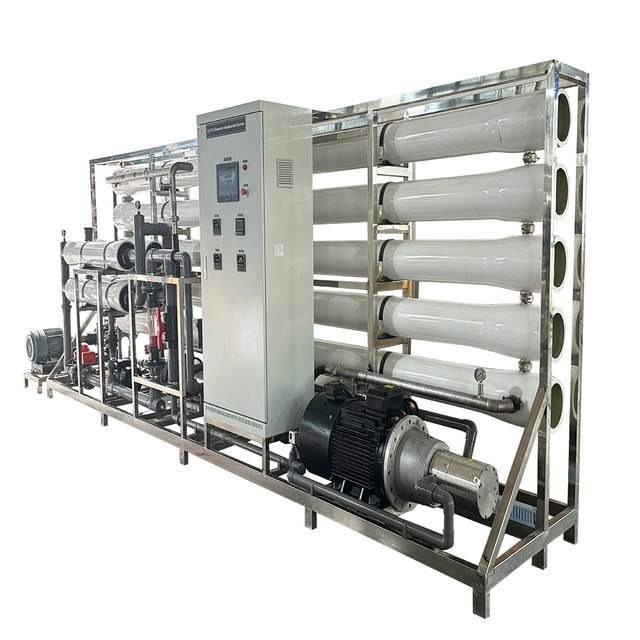
Containerized desalination is not a one-size-fits-all solution. It excels in specific scenarios where alternatives are either unavailable, prohibitively expensive, or too slow to deploy.
For islands and remote coastal settlements, water is typically shipped in by barge or tanker. Per-cubic-meter costs can reach five to ten times what piped municipal water costs on the mainland, and deliveries are vulnerable to weather delays, mechanical breakdowns, and supply chain disruptions. A containerized plant removes this dependency entirely, replacing external supply with on-site production that operates independently of shipping schedules. Resorts benefit from uninterrupted guest service; small communities gain water security that underpins public health and local economic activity.
Mining operations, oil-and-gas facilities, and large infrastructure projects frequently operate beyond the reach of municipal water networks. These sites require reliable water for processing, dust control, equipment cooling, and camp accommodation—and they typically need it within weeks of site establishment, not years. Containerized units deploy within days of site readiness and, critically, can be relocated to the next project when operations shift. This mobility preserves capital investment in a way that a permanent concrete-and-pipe facility never could.
When hurricanes, tsunamis, or earthquakes destroy freshwater infrastructure, the absence of clean water becomes a secondary disaster that often claims more lives than the initial event. Containerized desalination plants are built for rapid air or sea freight, require minimal site preparation, and can produce potable water within 7–10 days of arrival. Their self-contained design means they do not depend on existing buildings, pipelines, or grid connections—only a seawater source and a power supply. For humanitarian organizations, this speed and independence make them an indispensable tool in crisis logistics.
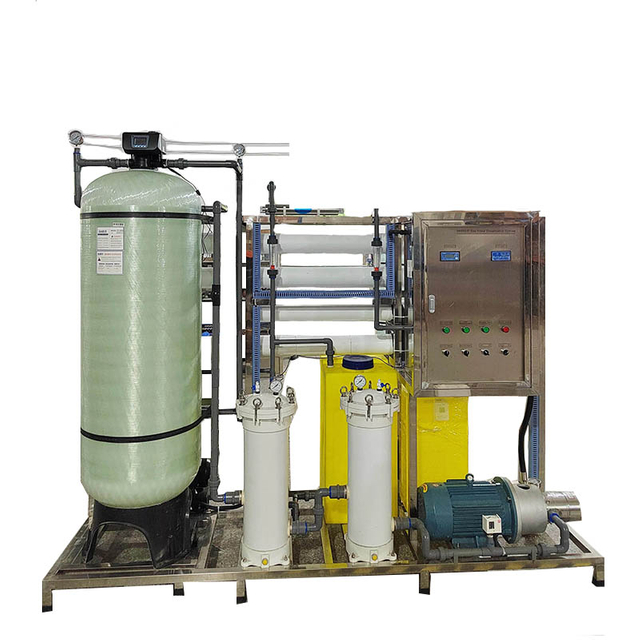
The economic case for containerized desalination rests on three distinctions: what you pay upfront, how fast you get water, and whether you can grow capacity without starting over.
Traditional desalination plants require large-scale civil construction—building structures, complex piping layouts, foundation reinforcement, and extensive site preparation. The process typically spans two to four years from initial feasibility study to commercial operation, with capital costs that frequently overrun initial estimates due to engineering changes, labor disputes, and material price volatility.
Containerized systems invert this model. The entire plant is factory-assembled, pre-piped, pre-wired, and factory-tested before it ever leaves the manufacturing facility. On-site work is reduced to preparing a level pad or compacted gravel base, connecting seawater intake and power supply, and commissioning. Projects can move from purchase decision to water production in weeks, not years. Capital costs are more predictable because most of the expenditure is fixed at the factory, insulated from on-site construction variables.
Table 1: Conventional vs. Containerized Desalination Plants – A Direct Comparison
Comparison Dimension | Conventional Fixed Desalination Plant | Containerized Desalination Plant |
Project Timeline | 2–4 years (site selection, design, permitting, construction) | Weeks to months (factory-built; on-site work limited to connections) |
Capital Expenditure | High, with frequent overruns due to engineering changes and labor | Largely fixed at factory; minimal exposure to on-site variables |
Expansion Method | New construction or major扩建; duplicates engineering work | Horizontal scaling: add containers alongside existing units |
Mobility and Asset Reuse | Permanent; investment is stranded upon project completion | Relocatable; can be moved to new sites, preserving asset value |
Site Infrastructure | Large land area, deep foundations, permanent buildings | Level pad or compacted gravel; minimal footprint |
External Dependencies | Heavy reliance on municipal power, drainage, and pipelines | Self-contained; requires only seawater intake and power supply |
A conventional plant’s capacity is locked in at the design stage. Expanding output means designing and constructing an entirely new facility or, at best, undertaking a major expansion that duplicates much of the original engineering work.
Containerized systems scale horizontally. Additional containers plug in alongside existing units, sharing the same intake and discharge infrastructure to increase total output. This allows communities and operations to start with the capacity they need today and add modules later as demand grows, spreading capital investment over time without re-engineering the entire site. It also enables seasonal capacity adjustments—leasing additional containers for peak tourist seasons or construction phases—a flexibility that conventional plants cannot offer.
Not all containerized systems are created equal. The following specifications have direct, measurable impacts on operational cost, reliability, and lifespan.
Remote sites rarely have stable grid power. Before selecting a system, confirm that it supports your available power source—diesel generator, solar hybrid, grid, or a combination. Variable frequency drives on the high-pressure pump improve efficiency and reduce inrush current, which matters significantly for generator sizing and battery bank design.
The single most important number to request is specific energy consumption: kilowatt-hours per cubic meter of product water under your expected feed water salinity. A system without energy recovery can consume 60% more power than one with an integrated ERD. For a 3,000 L/hour system, the difference can translate into thousands of dollars in annual fuel costs—or, for solar-powered installations, a doubling of the required panel acreage. Systems with total power ratings around 3.75 kW for smaller capacities or 20 kW for larger units represent typical benchmarks.
Marine environments are aggressively corrosive. Salt-laden air, high humidity, and temperature extremes degrade ordinary equipment within months. High-pressure piping and fittings should be SS316L or Duplex 2507 stainless steel; structural elements exposed to seawater should be marine-grade FRP. Container interiors require industrial-grade HVAC and insulation to protect electrical controls from condensation and salt creep.
These material choices are not premium upgrades—they are essential survival features for any plant operating within sight of the ocean. When evaluating suppliers, ask for material certifications and confirm that all wetted parts are explicitly rated for continuous seawater service.
Remote locations rarely have dedicated on-site technicians. Systems with PLC-based automation enable one-touch start/stop, automated chemical cleaning cycles (CIP), and built-in safety interlocks—low-pressure shutdown to prevent pump cavitation, high-pressure unloading to protect membranes from overpressure damage.
Remote monitoring via cloud connection allows off-site troubleshooting, reducing the frequency of emergency site visits. Performance metrics—differential pressure across membranes, permeate flow rate, conductivity—can be tracked in real time, with alerts for abnormal trends before they become failures. Systems with integrated data logging help operators optimize chemical dosing and cleaning schedules based on actual performance data, not guesswork. Fully automated units can operate unattended for extended periods, a critical capability for sites where sending a technician costs more than the service call itself.
Table 2: Key Selection Criteria for Containerized Seawater Desalination Plants
Selection Factor | Core Question | Recommended Standard / Consideration |
Power Compatibility | What power sources are available at the site? | Confirm support for generator, solar hybrid, or grid; request specific energy consumption (kWh/m³); prioritize systems with integrated energy recovery |
Corrosion Resistance | Can the equipment withstand marine salt spray and humidity? | SS316L or Duplex 2507 for high-pressure piping; marine-grade FRP for structures; container HVAC and anti-condensation insulation |
Automation Level | How is the system operated without full-time technical staff? | PLC one-touch start/stop, automated CIP cleaning, safety interlocks (low-pressure shutdown, high-pressure unloading) |
Remote Monitoring | Can performance be tracked and issues diagnosed off-site? | Cloud-based monitoring with real-time alerts for pressure, flow, conductivity deviations |
Spare Parts Availability | Can replacement components be sourced quickly when needed? | Globally standardized membranes, pumps, and controls (DOW, Toray, Hydranautics, Schneider, Siemens) ensure worldwide availability |
The decision to purchase a containerized desalination plant is not just about first cost. Operational continuity over a 15- to 20-year horizon determines whether the investment delivers its intended return.
One underappreciated advantage of containerized systems is component standardization. Pumps, membranes, valves, and electrical controls are sourced from major global manufacturers—DOW/Filmtec, Toray, Hydranautics for membranes; Schneider or Siemens for controls. Replacement parts are available worldwide and can be shipped via courier to even the most remote locations.
This matters far more than initial equipment price when a breakdown in an isolated site could mean weeks of downtime. Standardization also means technicians familiar with these components can often be found locally in many regions, reducing dependency on the original equipment manufacturer for every service call.
Containerized plants are engineered for 15- to 20-year operational lifespans—they are not temporary equipment despite their portable form factor. Reverse osmosis membranes typically last 2 to 5 years, depending on feed water quality and maintenance discipline. Replacement costs are predictable and should be factored into lifecycle budgeting as a recurring operational expense.
When energy recovery is included and pre-treatment is properly sized, total cost of ownership often competes favorably with conventional plants—especially when accounting for avoided water delivery costs, eliminated construction risk, and zero land acquisition expense. For remote sites, the payback period against delivered water prices can be as short as 12 to 18 months. The key variables are energy consumption, membrane replacement frequency, and chemical consumption—all of which are directly influenced by the quality of pre-treatment and the efficiency of the energy recovery system.
Containerized seawater desalination plants solve a problem that conventional infrastructure cannot: delivering reliable freshwater to remote coastal locations without years of construction or crippling logistics costs. These systems compress deployment timelines from years to weeks, scale incrementally as demand grows, and survive harsh marine environments through careful material selection and automation. For site managers, project developers, and community leaders facing persistent water access challenges, the question is no longer whether the technology works—it is whether the specific system matches the site’s power availability, feed water quality, and long-term capacity needs. Guangzhou Kai Yuan Water Treatment Equipment Co., Ltd. builds containerized desalination systems designed for these exact conditions, with energy recovery, corrosion-resistant materials, and remote monitoring capabilities that keep plants running in the most isolated locations. When water deliveries are no longer a viable option, a properly specified containerized plant turns seawater into a dependable, on-site supply.
A: A self-contained reverse osmosis system pre-assembled inside a standard shipping container, ready for transport and rapid deployment at remote coastal locations.
A: Seawater undergoes pre-treatment to remove solids, then high-pressure pumps force it through RO membranes that reject salts and impurities, producing fresh water.
A: Island communities, coastal resorts, remote mining and construction sites, offshore platforms, and emergency response operations following natural disasters.
A: Containerized units deploy in days rather than years, require minimal civil work, and can be relocated or expanded by adding more containers.
A: PLC automation enables remote monitoring and one-touch operation. Built-in cleaning cycles and standardized components simplify upkeep with minimal on-site staff.
A: Compact systems typically produce from several hundred to thousands of cubic meters per day, with larger configurations scaling up by connecting multiple container units.


