


Views: 0 Author: Site Editor Publish Time: 2026-06-12 Origin: Site


Water shortages are increasingly linked not to the absence of water itself, but to where usable freshwater is located and how reliably it can be delivered. Coastal cities expanding under climate stress face a particular contradiction: they sit beside an essentially unlimited ocean resource that remains unusable without treatment. A seawater desalination plant turns this imbalance into a workable supply source by converting saline water into freshwater through membrane or thermal separation systems.
What makes this technology relevant today is not just demand growth, but the instability of conventional water systems. The following sections explain why desalination is expanding, how these systems operate, and what determines their real-world performance in modern infrastructure planning.
Water scarcity is structurally uneven, with arid and semi-arid regions experiencing persistent deficits despite proximity to large ocean resources. Coastal cities are especially exposed because population density and industrial activity concentrate demand in areas where natural freshwater replenishment is limited.
Groundwater extraction has expanded far beyond sustainable recharge rates in many regions, gradually weakening long-term supply stability. At the same time, large-scale water transfer projects place increasing pressure on energy systems and infrastructure networks, making them less viable as a primary solution.
Long-term climate shifts have altered the reliability of traditional water sources. Extended drought cycles reduce reservoir levels and limit surface water availability. In many basins, reduced snow accumulation decreases seasonal meltwater that previously supported predictable inflows.
Seasonal variability has also become harder to forecast, which weakens long-term water planning models. This uncertainty has accelerated interest in alternative supply technologies such as desalination, which are less dependent on rainfall variability.
Most modern systems rely on reverse osmosis as the central treatment method. High-pressure pumps push seawater through semi-permeable membranes that allow water molecules to pass while blocking dissolved salts and other impurities. This separation process produces freshwater suitable for municipal and industrial use.
Energy recovery systems are often integrated into this stage to reduce overall power demand by capturing hydraulic energy from the concentrate stream and reusing it within the system. This improves operational efficiency without changing the core separation mechanism.
Before reaching the membrane stage, seawater undergoes multiple conditioning steps designed to stabilize feedwater quality. Coarse screening removes large debris and suspended solids that could damage downstream equipment.
Additional filtration stages reduce turbidity and biological activity, limiting fouling and scaling risks on membrane surfaces. In some systems, chemical conditioning is applied to control mineral precipitation and maintain consistent flow performance.
The desalination process produces a concentrated brine stream as a byproduct. This stream contains elevated salinity and residual compounds that were not retained in the freshwater fraction.
Brine is typically managed through controlled marine discharge systems or dilution strategies designed to reduce localized environmental impact. Disposal design is a critical regulatory factor, often influencing whether a project can proceed at the permitting stage.
Energy consumption is one of the defining characteristics of desalination systems. High-pressure pumping required for membrane separation represents the largest operational load, making electricity costs a major component of lifecycle expenditure.
Energy recovery technologies reduce net consumption by transferring pressure energy from the brine stream back into the feedwater system. Even with these improvements, energy requirements remain significantly higher than most conventional freshwater supply methods.
System Type | Energy Recovery | Typical Energy Use (kWh/m³) | Notes |
Conventional SWRO | No/low ERD | 5–7 | High pumping losses |
Modern SWRO | Pressure exchanger ERD | 3–4 | Industry standard |
Optimized SWRO | Advanced ERD + improved membranes | 2.8–3.5 | Large-scale plants |
Theoretical minimum | N/A | ~0.86 | Thermodynamic limit |
Water recovery rate refers to the proportion of input seawater converted into usable freshwater. Increasing recovery improves output efficiency but also raises the concentration of salts in the remaining stream.
Higher salinity levels increase the likelihood of scaling and membrane fouling, which can reduce system stability and require more frequent maintenance. Operators therefore balance efficiency gains against long-term operational reliability rather than maximizing output alone.
Continuous exposure to saline environments accelerates corrosion across most standard engineering materials. For this reason, desalination systems rely on corrosion-resistant alloys, reinforced polymers, and specialized coatings.
Material selection has a direct impact on lifecycle cost. While advanced materials increase initial investment, they reduce downtime and extend operational lifespan, improving overall system economics over time.
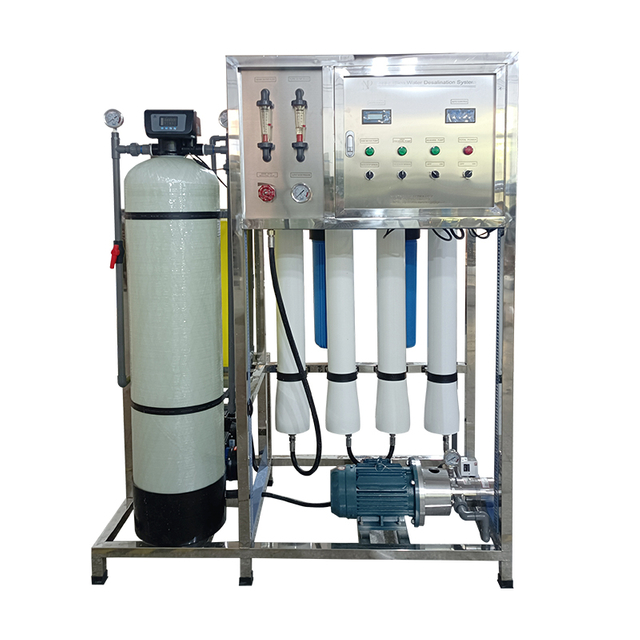
Large desalination facilities are typically integrated into regional water distribution networks. These systems are designed for continuous, high-volume production and can supply entire urban populations or industrial corridors.
However, they require significant civil engineering works, long construction timelines, and complex permitting processes. Environmental integration and coastal planning also play a major role in determining project feasibility.
Modular systems are built around prefabricated units that integrate reverse osmosis systems, pumps, and control modules within transportable containers. These configurations allow rapid installation with minimal infrastructure requirements.
They are particularly suitable for coastal communities, offshore installations, and emergency water supply situations. Their modular nature allows capacity to be scaled incrementally based on demand rather than requiring full upfront construction.
These systems can operate as complete treatment units, reducing deployment complexity while maintaining functional equivalence to larger installations.
In industrial environments such as mining operations, energy production facilities, and offshore platforms, desalination is primarily used to ensure operational continuity.
These systems prioritize reliability and compact design over maximum efficiency. Many are configured for hybrid energy operation, combining grid power with generators or renewable energy inputs depending on site constraints.
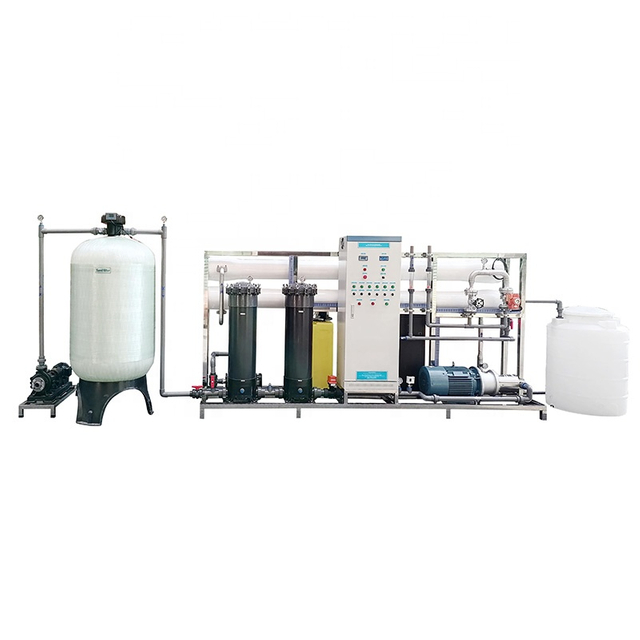
Modern systems increasingly rely on advanced energy recovery devices that significantly reduce net power consumption. Pressure exchange mechanisms allow energy transfer between outgoing and incoming streams, improving overall system efficiency.
Digital monitoring tools are also used to track membrane performance in real time, enabling predictive maintenance and reducing unexpected downtime.
Solar-assisted and hybrid renewable systems are becoming more common, particularly in regions with high solar exposure and limited grid reliability. These configurations reduce dependence on fossil-fuel-based electricity and improve long-term operational sustainability.
Hybrid systems help balance intermittent renewable supply with the continuous demand requirements of water production systems.
Brine streams are increasingly viewed as potential resource sources rather than waste. Research efforts are exploring methods for extracting valuable minerals such as magnesium and lithium from concentrated saltwater byproducts.
Although these technologies are still developing, they represent a shift toward more circular approaches in desalination system design, where waste streams are partially converted into usable materials.
A seawater desalination plant plays a growing role in addressing water stress by converting seawater into a dependable freshwater source, especially in regions where conventional supplies are no longer sufficient. As demand rises and climate variability intensifies, desalination continues to function as a practical layer within broader water infrastructure systems rather than a standalone remedy.
Its value depends on balancing energy use, environmental constraints, and operational efficiency. Guangzhou Kai Yuan Water Treatment Equipment Co., Ltd. provides reverse osmosis–based desalination systems designed to support these requirements across municipal, industrial, and modular applications, helping improve water access and system reliability in water-scarce coastal regions.
A: A seawater desalination plant is used to convert seawater into freshwater for drinking, irrigation, and industrial applications by removing dissolved salts and impurities through membrane or thermal processes.
A: Most systems use reverse osmosis, where seawater is pushed through a semi-permeable membrane that blocks salt and contaminants while allowing clean water to pass under high pressure.
A: It provides a stable freshwater source independent of rainfall or river systems, helping coastal and drought-affected areas reduce reliance on overused groundwater and unstable surface water supplies.
A: The removed salts form a concentrated brine byproduct, which is typically discharged back into the ocean through controlled systems or further processed for disposal.
A: Yes, desalinated water is generally safe after post-treatment steps such as mineral balancing and disinfection, which ensure it meets drinking water quality standards.
A: Key challenges include high energy consumption, operational costs, and environmental concerns related to brine discharge and marine ecosystem impact.


