


Views: 0 Author: Site Editor Publish Time: 2026-06-15 Origin: Site


A seawater desalination plant represents a major capital investment, yet many projects end up with systems that either struggle to meet demand or consume far more energy than necessary. The gap between what buyers expect and what they actually receive often traces back to the same few mistakes: vague capacity estimates, incomplete feed water data, and a tendency to focus on upfront price rather than long-term operating costs. This article walks through the critical decisions that determine whether a plant delivers reliable, affordable water for decades or becomes a persistent operational burden.
Capacity miscalculation ranks as the most common and costly error in desalination projects. Many buyers request a system size based on a single number—total population or number of rooms—without breaking down actual consumption by end-use. This approach produces unreliable estimates that lead to either undersized plants that fail during peak demand or oversized systems that waste capital on larger pumps, membranes, and higher fixed energy draw.
A proper demand assessment requires itemizing every water-consuming activity. For a resort, this means guest room fixtures (showers, toilets, sinks), restaurant kitchens, commercial laundry operations, swimming pool make-up water, landscape irrigation, and staff accommodations. A 100-room property, for instance, easily surpasses 50 m³ per day for guest rooms alone before adding any other facilities. Industrial applications demand even more granularity: cooling towers, boiler feed water, process rinsing, and sanitation each carry distinct volume requirements.
Project Type | Typical Daily Demand Range | Key Consumption Points to Count |
Small villa / guesthouse | 1 – 10 m³/day | Showers, kitchen, toilet flushing, small garden |
Small island resort | 20 – 100 m³/day | Guest rooms, restaurant, laundry, pool top-up, staff quarters |
Medium resort / coastal hotel | 100 – 500 m³/day | All of the above plus larger F&B operations, landscaping, cleaning |
Island community | 200 – 1,000 m³/day | Residential use, public facilities, small commerce, fire reserves |
Large municipal or industrial | Above 1,000 m³/day | Multi-use zoning, cooling water, process water, distribution losses |
The calculation must also account for losses. Distribution networks leak. Storage tanks overflow. Backwashing filters consume water. A realistic total demand figure adds 10–15% to net consumption to cover these inevitable inefficiencies. Without this buffer, the plant operates at or above its rated capacity continuously, accelerating membrane fouling and shortening equipment life.
Average daily demand is a dangerous benchmark. A system sized for mean consumption will fail during holiday rushes, harvest seasons, or tourist high seasons when occupancy and activity levels surge. Conversely, sizing for absolute peak and locking that capacity in permanently wastes money every other day of the year.
The solution lies in a 15–25% planning buffer above projected average demand, combined with a realistic view of future growth. A community expecting 5% annual population growth over ten years needs a plant that can accommodate that trajectory without requiring a complete rebuild. However, oversizing just for the sake of safety creates its own problems: larger high-pressure pumps consume more energy even at partial load, membranes operate below optimal flux ranges, and the upfront investment in larger pressure vessels and piping delivers no return until demand catches up.
Phased modular approaches offer a practical middle ground. Installing 50–65% of ultimate capacity initially, then duplicating systems alongside the original plant when demand justifies expansion, spreads capital expenditure over time and reduces financial risk. A project starting with a 3T/H unit can add a second identical line later, matching capacity to actual consumption rather than forecasting errors. This strategy works particularly well for resorts, developing communities, and industrial parks with uncertain growth trajectories.
Production does not have to match consumption hour by hour. A properly sized product water tank decouples the two, allowing the desalination plant to run at its most efficient steady rate rather than constantly cycling on and off in response to instantaneous demand.
The storage requirement depends on the consumption pattern. Resorts experience morning and evening peaks with lower demand overnight. Communities see usage spikes before work, after school, and during evening hours. Without adequate storage, the plant must start and stop frequently—a practice that stresses pumps, valves, and electrical components while increasing wear on membranes during each startup sequence.
For island or remote projects, storage serves an additional purpose: resilience. Bad weather can delay chemical deliveries or spare parts shipments. Maintenance may require shutting down the system for several hours. Power supply may fluctuate. A storage tank holding 12–24 hours of production provides a buffer against these disruptions, protecting users from short-term shutdowns. In practice, many island installations aim for at least one full day of storage, with some critical facilities holding two to three days’ worth to guard against extended supply chain interruptions.
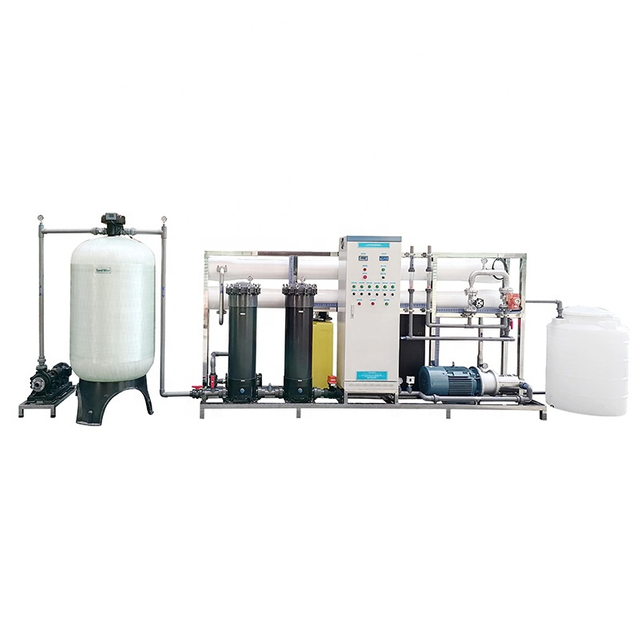
For modern seawater desalination plants, source water quality is not a minor detail to be reviewed after selecting equipment—it is a fundamental constraint that determines membrane selection, operating pressure, pretreatment intensity, and ultimately the viability of the entire project. Salinity, measured as total dissolved solids (TDS), directly affects the osmotic pressure that the high-pressure pump must overcome. Seawater at 35,000 ppm TDS requires significantly more pressure than brackish water at 5,000 ppm, which translates into higher energy consumption and more robust pump specifications.
Turbidity and suspended solids dictate the pretreatment burden. Open seawater intakes often contain algae, sand, silt, shells, and seasonal organic blooms that must be removed before water reaches the RO membranes. A beach well, by contrast, draws water that has naturally filtered through sand and gravel, producing lower turbidity and more stable water quality. This difference can reduce pretreatment costs substantially—fewer filters, less chemical dosing, and longer membrane life.
Temperature also matters. Warmer water has lower viscosity and passes through membranes more easily, reducing pressure requirements. However, warmer water also promotes biological growth, increasing the risk of biofouling in pretreatment systems and on membrane surfaces. Seasonal temperature swings in some regions require the plant design to accommodate a range of operating conditions, not just an annual average.
The practical implication is clear: a seawater analysis report is non-negotiable before finalizing system design. Parameters to test include TDS, turbidity, pH, temperature, hardness, iron, manganese, silica, bacteria counts, and the Silt Density Index (SDI)—a key predictor of membrane fouling potential. Without this data, the supplier is guessing, and guessing leads to either over-engineered systems that cost too much or under-engineered systems that fail prematurely.
Drawing water is only half the story; getting rid of the concentrate—the brine stream containing the rejected salts—is the other. A seawater reverse osmosis plant typically recovers 35–45% of its intake flow as product water, meaning 55–65% returns to the environment as concentrated brine. For a 100 m³/day plant, this translates to roughly 150 m³/day of brine discharge that must be managed responsibly.
Local discharge regulations vary widely. Some jurisdictions require diffusers that mix brine with ambient seawater rapidly to minimize salinity spikes near the outfall. Others mandate specific mixing zones or restrict discharge altogether in sensitive marine areas. Subsurface diffusers that release brine through multiple small nozzles along a pipeline on the seafloor achieve faster dilution than a single open pipe. Evaporation ponds and deep well injection offer alternatives for inland or land-constrained sites, though each carries its own cost and regulatory implications.
The physical distance from the intake point to the plant also affects design and cost. Longer pipelines require larger pumps to overcome friction losses, higher construction budgets for trenching or directional drilling, and more complex permitting for coastal construction. While locating the plant directly on the shoreline minimizes these expenses, site availability, zoning restrictions, and community opposition may force a more distant placement. Early engagement with local authorities and environmental consultants helps identify feasible intake and discharge options before committing to a site.
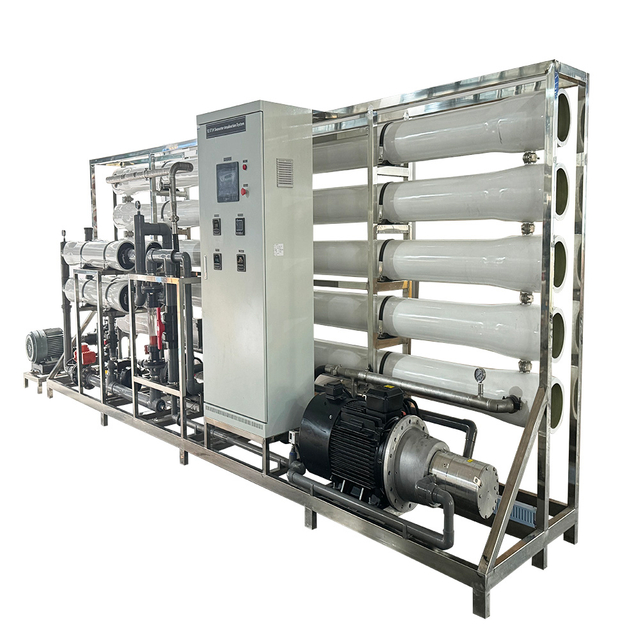
RO membranes are sensitive devices that require carefully conditioned feed water to perform reliably. Poor prefiltration is the number one reason desalination plants underperform within the first two years of operation. Suspended solids, colloidal matter, and biological growth foul membrane surfaces, increasing pressure drop, reducing permeate flow, and accelerating the need for chemical cleaning.
A robust pretreatment train typically includes multiple stages. Coagulation and flocculation aggregate fine particles into larger clumps that settle or filter more easily. Multimedia filtration through layers of sand and anthracite removes suspended solids down to 10–20 microns. Cartridge filtration, often rated at 5 microns, provides final polishing before water enters the high-pressure system. Antiscalant dosing prevents mineral scaling from calcium, magnesium, and silica compounds that would otherwise precipitate on membrane surfaces.
For difficult source waters with high turbidity, algae blooms, or variable quality, ultrafiltration (UF) ahead of the RO stage offers an additional layer of protection. UF membranes with pore sizes below 0.1 microns remove bacteria, viruses, and fine colloids that would pass through conventional media filters. While UF adds capital cost, it reduces fouling rates, extends membrane life, and provides more consistent feed water quality regardless of seasonal variations in the source.
The high-pressure pump is the workhorse of any seawater RO system, pressurizing feed water to the 55–85 bar range required to overcome osmotic pressure and force water through the membranes. In a seawater environment, standard stainless steel grades will not survive. Chloride-induced stress corrosion cracking attacks 304 and 316 stainless steels rapidly, leading to pitting, cracking, and catastrophic pump failure.
Duplex and super-duplex stainless steels offer the corrosion resistance required for high-pressure seawater service. These materials contain higher percentages of chromium, molybdenum, and nitrogen, providing greater resistance to chloride attack while maintaining the mechanical strength needed for high-pressure applications. The upfront cost premium for duplex materials is significant, but the alternative—premature pump failure, unplanned downtime, and costly replacement—carries far greater financial impact over the project lifecycle.
Pump type also influences efficiency and reliability. Centrifugal pumps remain common for medium and large plants, but positive displacement pumps maintain high efficiency across a wider range of flow rates and pressures, offering operational flexibility. For projects with variable demand or plans for future expansion, the broader operating range of positive displacement designs provides advantages that offset their higher initial cost.
Not all seawater membranes perform identically, and the differences matter directly to operating costs and water quality. Salt rejection rate—the percentage of dissolved salts removed from the feed water—should ideally exceed 99% for seawater applications. Lower rejection membranes produce permeate with higher conductivity, potentially requiring post-treatment or blending to meet drinking water standards.
Design flux, expressed as the flow rate per unit membrane area, determines how hard the membranes work. Higher flux rates produce more water from fewer membranes, reducing capital cost. However, pushing membranes too hard accelerates fouling, increases pressure drop, and shortens usable life from 5 years down to 2–3 years. Conservative flux design—using more membranes at lower individual flow rates—extends replacement intervals and reduces long-term operating costs, even though it increases the initial membrane count and vessel requirements.
Membrane replacement represents a major recurring expense that must be factored into lifecycle budgets. A typical seawater RO plant replaces its membranes every 3–7 years depending on feed water quality, pretreatment effectiveness, and operating practices. The cost of a full membrane set for a 100 m³/day plant can exceed $20,000, and larger facilities face proportionally higher replacement bills. Clarifying replacement cycle costs upfront, rather than discovering them when membranes fail, prevents budget surprises and allows for orderly capital planning.
Selecting a seawater desalination plant is not about chasing the lowest bid or the largest nameplate capacity—it is about matching the system to your specific demand profile, source water conditions, and operational constraints. The decisions that matter most—accurate sizing, appropriate pretreatment, corrosion-resistant materials, and realistic maintenance planning—are also the ones most often overlooked in the rush to procure equipment. Guangzhou Kai Yuan Water Treatment Equipment Co., Ltd. designs and supplies seawater desalination systems built around these practical considerations, helping project owners avoid the common pitfalls that turn promising installations into costly disappointments. When the plant fits the site and the budget accounts for the full lifecycle, the result is a water supply that performs as promised, year after year.
A: Size depends on your daily water demand across all uses—guest rooms, kitchens, laundry, irrigation, and staff facilities—plus a 15–25% buffer for peak seasons and future growth.
A: Reverse osmosis is the dominant choice for most modern projects due to lower energy consumption and modular scalability. Thermal distillation suits very large plants where waste heat is readily available.
A: Salinity, turbidity, temperature, and organic content directly determine membrane selection, operating pressure, and pretreatment requirements. Without proper analysis, the system may underperform or fail prematurely.
A: Modern reverse osmosis systems consume approximately 3 kWh per cubic meter of fresh water produced. Energy accounts for 40–60% of total operating costs in most installations.
A: Yes, containerized and modular seawater desalination plants are designed for remote locations. However, power supply reliability, spare parts logistics, and operator skill level must be carefully planned.
A: With proper pretreatment and regular maintenance, seawater RO membranes typically last 3–7 years. Membrane replacement is a major recurring expense that should be factored into lifecycle budgets.


