


Views: 0 Author: Site Editor Publish Time: 2026-06-08 Origin: Site


Water scarcity is no longer confined to traditionally arid regions—many coastal cities now face the paradox of growing demand alongside weakening freshwater supplies. As reservoirs shrink and groundwater becomes harder to sustain, attention is turning toward seawater as a dependable alternative source. A seawater desalination plant has emerged as a practical response, transforming abundant ocean water into usable supply through advanced treatment processes. Yet the real question is not only whether it works, but how far it can realistically go in solving long-term water stress.
Coastal regions often experience a structural imbalance between population density and available freshwater resources. Urban expansion concentrates demand near coastlines, while rivers and groundwater systems are increasingly overexploited or seasonally unstable. As a result, water systems become more vulnerable to climate variability.
Climate-driven droughts further intensify this pressure by reducing snowmelt, rainfall reliability, and aquifer recharge rates. Even regions once considered water-secure now face periodic shortages that disrupt municipal planning and industrial supply chains.
In this context, a seawater desalination plant becomes a stabilizing infrastructure component rather than a supplementary option.
Seawater is geographically advantageous because it is available directly adjacent to high-demand population centers. Unlike inland water transfers, which require long-distance pipelines and elevation pumping, desalination allows water production at the point of demand.
Transporting freshwater over long distances increases energy consumption, infrastructure complexity, and system vulnerability. Pipeline failures or drought restrictions can severely disrupt supply chains in inland-dependent systems.
Desalination therefore enables localized water independence, particularly in arid coastal zones where conventional freshwater systems cannot scale sustainably.
A seawater desalination plant is typically adopted when conventional water sources can no longer meet baseline demand. This shift is driven by three structural conditions:
● Long-term drought resilience requirements in urban planning
● Rapid population growth in coastal megacities
● Industrial clusters requiring uninterrupted high-volume water supply
Under these conditions, desalination transitions from a backup solution to a core component of national or regional water infrastructure.
A seawater desalination system begins with intake infrastructure designed to draw seawater while minimizing biological contamination and debris ingestion. Offshore or shoreline intake systems are typically equipped with coarse screening to protect downstream equipment.
Pre-treatment follows immediately after intake. This stage removes suspended solids and stabilizes chemical conditions to reduce scaling and biological fouling. Without this step, downstream membrane systems degrade rapidly, leading to reduced efficiency and higher maintenance frequency.
Water is then pressurized and directed into membrane-based filtration systems where salt separation occurs.
Reverse osmosis is the dominant technology in modern desalination infrastructure. It uses high-pressure pumps to force seawater through semi-permeable membranes that allow water molecules to pass while rejecting dissolved salts and impurities.
This process produces two output streams: purified freshwater and concentrated brine. The efficiency of reverse osmosis has made it the preferred method in most large-scale seawater desalination plant installations worldwide.
Its dominance is primarily due to its balance between scalability, operational stability, and energy efficiency compared to thermal alternatives.
Method | Working Principle | Energy Demand | Efficiency | Limitations | Usage Level |
Reverse Osmosis (RO) | High-pressure membrane filtration separates salts | Medium | High | Membrane fouling, pre-treatment needed | Dominant globally |
Thermal Distillation | Evaporation and condensation of seawater | Very High | Medium | Energy-intensive, costly scaling | Limited / niche |
Electrodialysis | Electric field separates ions through membranes | Medium | Medium | Less effective for high-salinity seawater | Industrial / brackish water |
Hybrid Systems | Combination of RO + thermal or renewable input | Variable | High | Complex system design | Emerging |
Freshwater produced through desalination is not immediately suitable for distribution. Post-treatment processes are required to ensure stability and safety.
Mineral adjustment is applied to restore essential ions that improve taste and prevent corrosion in pipelines. Without this step, water may be chemically unstable and damaging to infrastructure.
Disinfection is then performed to eliminate microbial risks. Finally, conditioning ensures that water meets municipal distribution standards, allowing safe integration into existing urban supply systems.
A seawater desalination plant is inherently energy-intensive because reverse osmosis relies on high-pressure pumping systems to overcome osmotic pressure. This pressure requirement represents the primary operational energy load.
Energy recovery systems can partially reduce consumption by capturing pressure from brine discharge streams and reusing it within the system. However, net energy demand remains significant, especially at large scales.
System efficiency is highly dependent on membrane performance, feedwater quality, and operational design.
The economic profile of desalination is shaped by both capital and operational expenditures.
Initial investment is high due to infrastructure requirements such as intake systems, pressure vessels, and corrosion-resistant materials. Once operational, electricity becomes the dominant recurring cost.
Membrane replacement and system maintenance also contribute significantly to lifecycle expenses, especially in environments with high salinity variability or biological contamination.
Economic feasibility varies widely depending on geography and energy availability. A seawater desalination plant is most cost-effective in coastal megaregions with high demand density and stable electricity supply.
In contrast, inland deployment is economically inefficient due to the additional energy required for water transport. This limitation reinforces desalination as a coastal-specific solution rather than a universal water strategy.
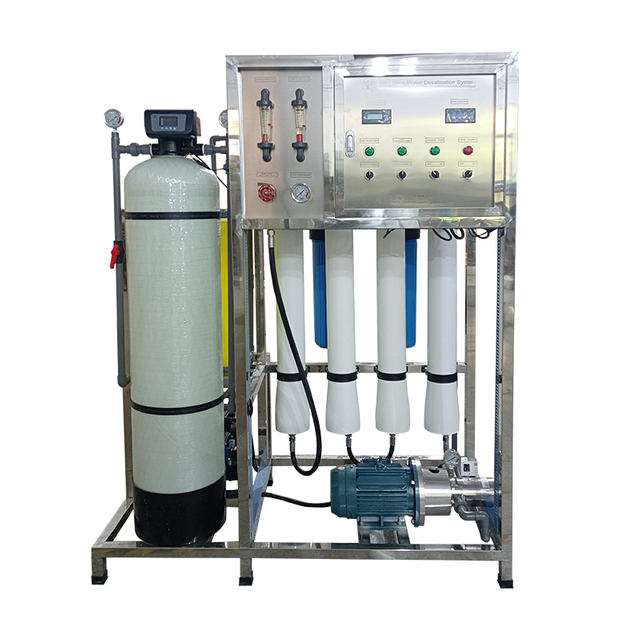
One of the most critical environmental concerns associated with a seawater desalination plant is brine discharge. This byproduct contains highly concentrated salts and is typically returned to the ocean.
If not properly diluted or dispersed, brine can alter local salinity levels and reduce oxygen availability in marine environments. These changes can stress benthic ecosystems and disrupt habitat stability.
The severity of impact depends heavily on discharge design and local ocean circulation conditions.
Pre-treatment processes often involve anti-fouling and anti-scaling agents to maintain system efficiency. While necessary for stable operation, these chemicals may persist in discharge streams depending on treatment design.
Seawater intake systems may also unintentionally trap small marine organisms, including plankton and fish larvae. These impacts are highly dependent on intake velocity, screen design, and location.
Environmental risk therefore varies significantly across different seawater desalination plant configurations.
Carbon emissions from desalination are not inherent to the process itself but are determined by energy sources. Plants powered by fossil-fuel-heavy grids carry significantly higher emissions compared to those integrated with renewable energy systems.
As renewable integration increases, the carbon intensity of desalination decreases substantially. However, energy demand remains a structural constraint across all technologies, regardless of energy source.
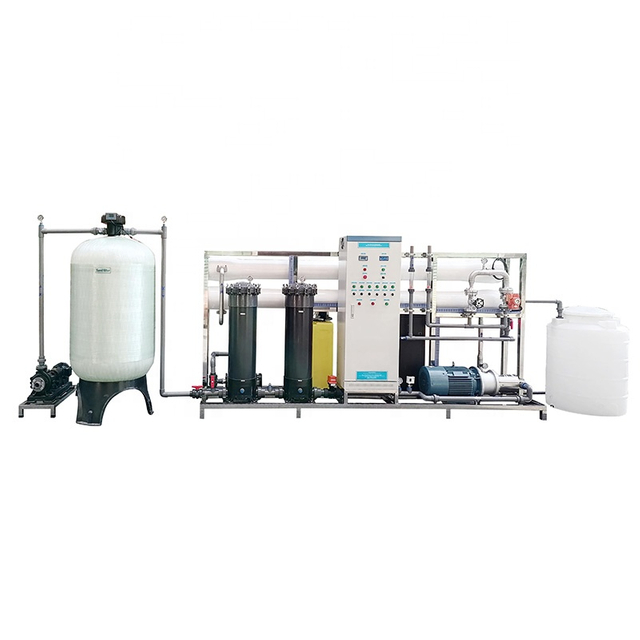
Advancements in membrane technology are reducing the pressure required for salt separation, directly lowering energy consumption. Improved materials also extend membrane lifespan, reducing maintenance frequency.
Energy recovery systems are becoming more efficient, allowing a greater proportion of input energy to be reused within the process. Hybrid configurations combining thermal and membrane systems are also being explored to optimize performance under different operating conditions.
These developments are gradually improving the overall efficiency of a seawater desalination plant.
Brine is increasingly viewed as a potential resource rather than a waste product. It contains valuable minerals such as magnesium and lithium that can be extracted under certain processing conditions.
This shift supports a more circular approach to desalination, where waste streams are partially converted into economically valuable outputs. While still emerging, this direction has gained increasing research and industrial attention.
Desalination systems are increasingly being integrated with renewable energy sources such as solar and wind power to reduce operational emissions. These integrations improve long-term sustainability and reduce dependence on fossil fuels.
Offshore and subsea desalination concepts are also being developed to take advantage of natural pressure conditions and reduce land-based infrastructure requirements. Modular designs allow for scalable deployment closer to demand centers.
Together, these innovations are redefining how a seawater desalination plant is conceptualized and deployed.
Desalination has become a practical response to rising freshwater stress, especially in coastal regions where demand outpaces natural supply. A seawater desalination plant can reliably convert seawater into potable water, but its long-term value depends on balancing energy use, operational cost, and environmental constraints such as brine discharge and ecosystem impact.
Ongoing improvements in membrane efficiency, energy recovery systems, and renewable integration are gradually improving performance and reducing environmental pressure. Companies like Guangzhou Kai Yuan Water Treatment Equipment Co., Ltd. provide seawater desalination plant solutions that support more stable and efficient water production, helping operators address supply challenges in water-stressed regions while maintaining system reliability and operational consistency.
A: A seawater desalination plant removes dissolved salts and impurities from seawater using processes like reverse osmosis, producing freshwater suitable for drinking, agriculture, and industrial use.
A: Seawater is pumped at high pressure through semi-permeable membranes that block salts and contaminants while allowing water molecules to pass, generating freshwater and concentrated brine.
A: It provides a reliable alternative water source where rivers and groundwater are insufficient, especially in coastal areas facing droughts, population growth, and increasing demand.
A: The concentrated saltwater byproduct is typically discharged back into the ocean through diffusion systems, although it can impact marine ecosystems if not properly managed.
A: It is generally energy-intensive due to high-pressure pumping requirements, though modern systems reduce consumption using energy recovery technologies and improved membranes.
A: It helps reduce supply stress but cannot fully solve scarcity due to cost, energy demand, and environmental constraints, making it one part of broader water management strategies.


