


Views: 0 Author: Site Editor Publish Time: 2026-03-23 Origin: Site


When clean water is suddenly needed in a place with limited infrastructure, unstable freshwater availability, or short project timelines, the most practical solution is rarely the most complicated one. In many cases, the best answer is to treat the water that is already available nearby. That is exactly where a brackish water plant becomes valuable.
A brackish water plant is designed to treat water with moderate salinity. This water is not as salty as seawater, but it still contains too many dissolved salts and impurities to be used directly for drinking, processing, washing, or other daily needs. In many regions, especially inland dry areas, industrial zones, remote project sites, and groundwater-dependent locations, brackish water is one of the most accessible water sources. Instead of waiting for tanker deliveries or relying entirely on overstretched municipal systems, users can treat this source on site and turn it into usable water.
That matters even more in emergency water supply and temporary projects. In those situations, time matters, logistics matter, operating cost matters, and reliability matters. A solution that looks good on paper but takes too long to install or depends on a perfect supply chain may not be the right fit. A modern brackish water plant, especially one based on reverse osmosis and efficient pretreatment, offers a more direct and more controllable way to secure water quickly.
This is why more organizations are looking at brackish water treatment not just as a permanent infrastructure option, but also as a flexible response tool. Whether the need involves temporary worker accommodation, a remote drilling site, a manufacturing expansion, a short-term municipal support project, or urgent water access for a community using borehole water, a brackish water plant can play an important role in restoring or maintaining water availability.
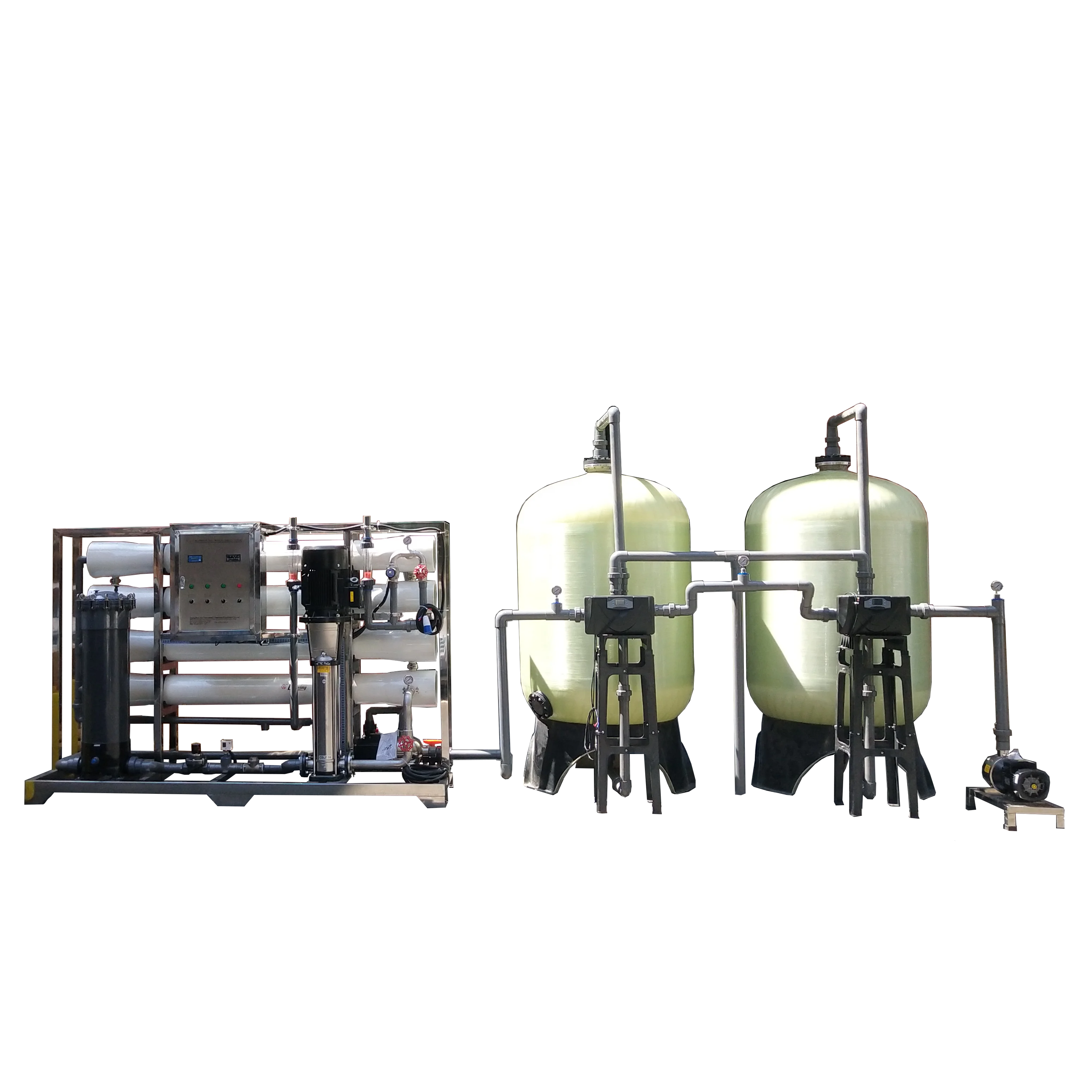
Many people think first about rivers, reservoirs, or municipal pipelines when they think about emergency water supply. But in reality, those sources may not always be enough, and in some regions, they may not be available at all. Groundwater and borehole water often become the most practical local source, especially in inland or dry regions. The challenge is that this water frequently contains elevated salinity, dissolved minerals, and other impurities that make treatment necessary.
That is why a brackish water plant is often more relevant than people realize. It is built specifically for this middle-ground water quality problem. The water is not fresh enough to use directly, but it is also not as difficult to treat as seawater. This creates an opportunity for efficient treatment with strong practical value.
In emergency and temporary projects, local availability matters. If a project site already has access to underground water, borehole water, or another moderate-salinity source, it makes sense to evaluate treatment instead of depending only on transported water. A brackish water plant allows users to make use of an existing resource rather than waiting for external supply.
In many dry and semi-arid regions, freshwater can be limited even under normal conditions. During emergency supply situations or temporary project expansion, that pressure increases. A brackish water plant helps create an alternative pathway by treating moderate-salinity water and reducing dependence on scarce freshwater reserves.
At its core, a brackish water plant is designed to remove dissolved salts, suspended matter, and other unwanted impurities so the final water can meet the required quality standard for its intended use. Most modern systems rely on reverse osmosis as the main treatment method, supported by pretreatment and post-treatment steps that protect the system and improve output quality.
The exact design depends on the raw water quality and project goals, but the basic treatment logic is straightforward.
Before water enters the reverse osmosis stage, it usually goes through pretreatment. This can include filtration to remove particles, sediment, and some organic contaminants. Pretreatment is essential because it helps protect membranes, maintain stable performance, and reduce fouling.
Reverse osmosis is the heart of most modern brackish water plant systems. Under pressure, water passes through specialized membranes that separate dissolved salts and many other impurities from the usable water stream. This is what makes the plant so effective for underground water, salty borehole water, and similar moderate-salinity sources.
After reverse osmosis, the treated water may go through additional conditioning depending on the final application. Some projects require potable water, while others need water for washing, sanitation, industrial processes, or temporary operational support. A properly designed brackish water plant can be configured around those needs.
Emergency water supply is different from routine water planning. It is not enough for a system to work in theory. It must work under time pressure, often with difficult logistics and changing site conditions. A brackish water plant is especially useful in these situations because it can be matched to locally available water sources and deployed faster than building entirely new permanent supply infrastructure.
One of the biggest advantages of a brackish water plant is that it can treat water where the demand exists. This reduces dependence on long-distance transport and repeated tanker delivery.
Water trucking is useful in some situations, but it can become costly, unpredictable, and difficult to scale. If a location has access to brackish groundwater, onsite treatment may be a more stable option. A brackish water plant shifts the model from transporting all the water to producing usable water on or near the site.
In emergency conditions, every delay matters. A treatment system that uses local source water can shorten the gap between water shortage and water recovery. This is one reason a brackish water plant is so practical for rapid-response supply planning.
Temporary projects often have a unique water challenge. They need reliable water, but they may not need a fully permanent municipal-scale installation. A construction base, drilling site, mining camp, factory expansion zone, event support area, or remote labor accommodation project may only need a robust water solution for months or a few years. In those cases, a brackish water plant can be a strong fit.
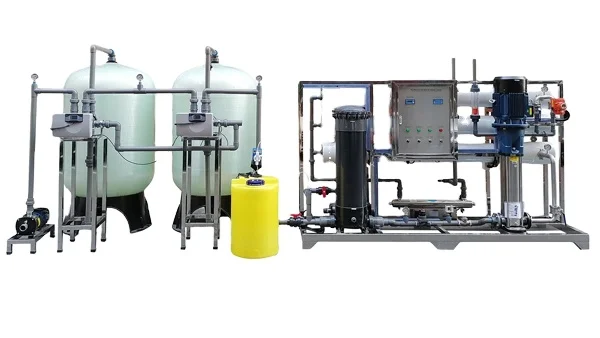
Temporary projects need infrastructure that matches the real operating period. A massive permanent water solution may be unnecessary, while a weak short-term solution may be too risky. A brackish water plant creates a more balanced option.
Construction and engineering projects often begin in places where water infrastructure is incomplete. Workers still need drinking water, sanitation water, and operational support water. If underground or borehole water is available but moderately saline, a brackish water plant can make the site much more self-sufficient.
Factories, processing plants, and industrial zones sometimes need temporary additional water capacity during expansion, maintenance, or seasonal demand spikes. A brackish water plant can help bridge that gap without requiring immediate long-term infrastructure expansion.
A modern brackish water plant offers more than basic salt removal. When it is properly designed, it becomes a practical operating asset that supports reliability, flexibility, and cost control.
The first major benefit is dependable output quality. Water from brackish wells and boreholes can vary, but a good system is designed to produce stable water quality suitable for the intended use.
Rather than depending on uncertain raw water conditions, users gain more control over the final water quality. That matters for drinking water, sanitation, industrial production, and any operation where water consistency affects safety or performance.
A brackish water plant reduces the uncertainty that often comes with untreated groundwater use. That improves confidence for project managers, operators, and local users alike.
A second major benefit is efficiency. Brackish water treatment is generally less energy-intensive than seawater desalination because the salinity level is lower. That can make a brackish water plant especially attractive for temporary and emergency applications where efficiency matters.
For sites dealing with moderate salinity rather than seawater, a brackish water plant often offers a practical balance between water quality improvement and operational economy.
Modern systems can support both smaller projects and higher-capacity demands. That flexibility makes them useful in everything from small remote facilities to larger industrial or municipal support projects.
A third benefit is adaptability. Not every project needs the same water output. Some may need compact systems around a few hundred liters per hour, while others need much larger daily capacity. A brackish water plant can be designed for different scales and layouts.
Many projects begin with modest needs and later expand. Systems are available in capacities that support a wide range of requirements, including industrial drinking water, underground water treatment, and salty borehole desalination.
This flexibility makes it easier to match the plant to actual site conditions rather than forcing the project into a one-size-fits-all solution.
The strength of a brackish water plant is not limited to one industry. It can support different environments where access to moderate-salinity source water makes onsite treatment possible.
Remote sites often rely on boreholes or groundwater, but raw water quality may be too poor for direct use. A brackish water plant helps convert that source into usable water for daily site operations.
Temporary accommodations need more than drinking water. They also need water for showers, toilets, handwashing, and food preparation. A brackish water treatment system can help cover those essential needs.
If a remote project depends only on trucked water, logistics delays can affect operations. A brackish water plant reduces that vulnerability by giving the site its own treatment capacity.
This is one of the most direct application areas. Many locations have underground water that is physically available but chemically unsuitable without treatment.
A brackish water plant is especially valuable where borehole water contains moderate salinity. Instead of abandoning the source, operators can treat it and make it useful for drinking or operational purposes.
When users ignore available brackish water and rely only on external supply, they may be overlooking a practical source already within reach. Treatment makes that source viable.
In some cases, a brackish water plant can support temporary municipal backup or community-level emergency supply planning.
If local systems are under maintenance, temporary strain, or demand pressure, brackish water treatment can provide helpful supplemental capacity where the raw water source is available.
In parts of the Middle East, Africa, and other dry regions, groundwater often plays a central role in water supply planning. Where that groundwater is moderately saline, a brackish water plant can be a practical part of emergency and temporary water access strategies.
A good plant starts with good planning. Not all brackish water is the same. Salinity, hardness, suspended solids, iron, manganese, and other factors can affect design choices. That is why raw water analysis is one of the most important first steps.
Choosing a brackish water plant without understanding source conditions can lead to avoidable problems. The best systems are built around real water data and real output goals.
Moderate salinity can still vary significantly from one source to another. The membrane arrangement and pressure requirements should reflect the actual raw water characteristics.
Some underground water sources contain more sediment or dissolved metals than others. Proper pretreatment is essential to protect the system and improve long-term performance.
Selecting the right plant is not only about output volume. It is about finding the right combination of capacity, water quality design, operating simplicity, and support.
A project should first define how the treated water will be used. Drinking water only requires one kind of demand calculation. Drinking, sanitation, and light industrial use require another.
Some buyers focus only on peak demand, while others underestimate actual daily water use. A properly selected brackish water plant should be sized based on realistic operating conditions.
A temporary project may still run for months or years. The plant should be easy to operate, maintain, and support over that full period.
A plant that looks efficient in specifications but is difficult to maintain in practice may not be the right answer. Ease of maintenance, spare parts availability, and technical support should all be part of the selection process.
Temporary projects do not always have large technical teams. A brackish water plant with straightforward operation and accessible maintenance is often the better long-term choice.
Even strong equipment benefits from professional support. Commissioning, troubleshooting, and routine maintenance all help keep output stable.
Even when used for a short-term need, a brackish water plant fits into a bigger idea: water resilience. A resilient water strategy is one that does not depend on only one source, one delivery route, or one infrastructure system. It creates options.
For emergency water supply and temporary projects, that flexibility is critical. A plant that can treat moderate-salinity groundwater or borehole water gives users more control over their own water situation. It reduces vulnerability to transport delays, lowers pressure on limited freshwater reserves, and makes better use of water that might otherwise be ignored.
This is especially valuable in regions where water conditions are naturally challenging. In dry inland zones, project-based developments, industrial corridors, and groundwater-dependent communities, a brackish water plant is not just a treatment unit. It is a practical response tool. It turns an uncertain source into a usable one and gives managers, operators, and planners a more direct way to secure water when it matters most.
A brackish water plant is used to treat water with moderate salinity, such as underground water, borehole water, or other slightly saline sources. It removes dissolved salts and impurities so the water can meet the required use standard.
Yes. A brackish water plant is well suited for emergency water supply when a location has access to brackish groundwater or borehole water. It allows users to treat local water instead of relying only on external deliveries.
A brackish water plant is designed for moderate-salinity water, while a seawater desalination plant handles much higher salinity. Because brackish water is less saline, treatment is often more energy-efficient and practical for inland and groundwater-based projects.
Yes. It is a strong option for temporary projects such as construction sites, remote camps, industrial expansions, and short-term municipal support, especially where local groundwater is available but requires treatment.
Buyers should review raw water quality, required output capacity, intended water use, energy availability, maintenance needs, and technical service support. The best system is the one designed around the real water source and project conditions.
For buyers looking for dependable water treatment solutions, Guangzhou Kai Yuan Water Treatment Equipment Co., Ltd. offers practical experience in designing and manufacturing reverse osmosis systems, brackish water systems, seawater desalination systems, ultrafiltration systems, ion exchange systems, and EDI ultrapure water systems. KYWATER has focused on water treatment technology and project service, helping customers across different regions and industries find reliable solutions for emergency supply, temporary installations, and long-term water treatment needs. If your project requires a stable and efficient brackish water plant, working with an experienced manufacturer can make the entire process more effective from design through operation.


