


Views: 0 Author: Site Editor Publish Time: 2026-03-25 Origin: Site


When a coastal area suddenly faces a shortage of safe water, the first challenge is rarely just treatment quality. The real challenge is speed. People need water where they are, not weeks later, not after a large civil project is completed, and not only when outside deliveries can get through. That is why a seawater desalination plant designed for mobility has become such an important solution for emergency water supply.
A fixed desalination facility can be a valuable long-term asset, but emergency conditions often demand something more flexible. Water demand may appear unexpectedly. Infrastructure may be temporarily disrupted. A remote site may have no practical access to municipal water. A coastal facility may need to restore basic operations fast. In these situations, a mobile system offers one major advantage over traditional plant models: it brings treatment capacity directly to the point of need.
A modern mobile seawater desalination plant combines reverse osmosis treatment, compact engineering, field-ready design, and faster deployment capability in one solution. It is built to convert seawater into usable fresh water while reducing the delays that often come with permanent installation projects. That makes it highly relevant for emergency water supply in coastal communities, island settings, industrial sites, temporary support areas, marine operations, and water-stressed regions that need practical resilience.
This is especially important in many parts of the Middle East, where freshwater resources are naturally limited, water demand can be high, and emergency preparedness is closely tied to reliable water infrastructure. In coastal zones, a mobile seawater desalination plant can provide a practical way to secure temporary or supplemental water supply without depending entirely on transported water or strained inland sources.
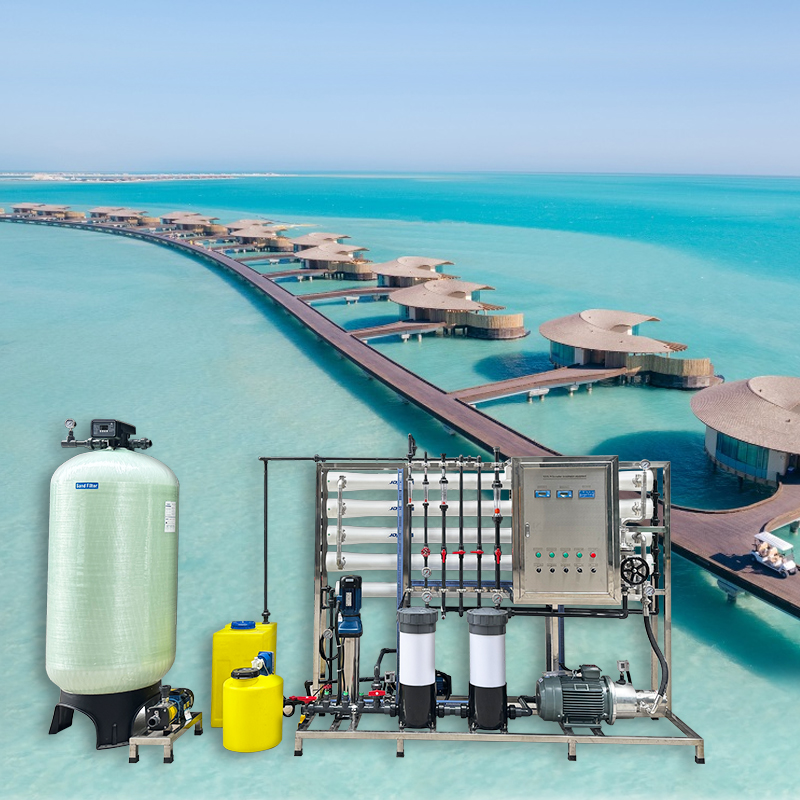
In normal conditions, water systems are expected to be stable, centralized, and continuous. In emergency situations, those assumptions no longer hold. Demand can rise quickly. Existing pipelines may not deliver enough water. Storage can become insufficient. A site may suddenly need potable water for workers, residents, patients, or support teams. The question becomes simple: how do you create safe water quickly and consistently under less-than-ideal conditions?
That is where mobility becomes essential.
A standard fixed treatment project often depends on site construction, longer installation planning, permanent piping, and extended commissioning timelines. Those steps make sense for long-term development, but they are not always ideal when the water need is urgent. A mobile seawater desalination plant shortens the distance between problem and solution.
Water trucking can help in the earliest phase of an emergency, but it has obvious limits. It depends on transport routes, repeated deliveries, storage capacity, and stable coordination. The larger the daily water requirement becomes, the less practical trucking may be as a standalone solution. Costs rise, timing becomes harder to control, and supply can fluctuate.
A mobile seawater desalination plant changes that model. Instead of moving all the water, you move the treatment system. Once the system is onsite and connected, it can produce water near the users. That makes emergency supply more controllable and often more sustainable over days, weeks, or longer temporary operating periods.
Coastal emergencies come with one major opportunity: the raw water source is often already there. Seawater is abundant and accessible in many shoreline areas. The challenge is treatment, not source availability. A mobile seawater desalination plant makes use of that local resource and turns it into practical fresh water for drinking, sanitation, washing, food preparation, and operational support.
In other words, coastal access gives emergency planners something valuable: the ability to create water instead of waiting for it.
The word “mobile” is not just a marketing detail. In emergency water supply, mobility changes the way a seawater desalination plant performs in the real world. A plant that can be transported, positioned, connected, and started with less site work is fundamentally more useful when time matters.
The first reason mobility matters is obvious but important: it reduces response time. A mobile seawater desalination plant is generally designed to be easier to transport and faster to deploy than a conventional fixed plant.
Modern mobile desalination systems are often built in containerized or skid-mounted formats. This kind of layout helps protect the equipment during transport, simplifies logistics, and reduces the amount of onsite assembly required.
Instead of delivering a large number of separate components and building everything in place, operators receive a more integrated treatment unit. That is a major benefit when emergency water supply needs to begin as quickly as possible.
A mobile seawater desalination plant is also valuable because it usually requires less permanent site preparation than a large fixed project. In urgent or temporary settings, this matters a lot. A solution that depends on heavy civil construction is harder to activate quickly. A mobile unit is better aligned with the realities of emergency use, especially in areas where infrastructure may already be under pressure.
Another major advantage of mobility is proximity. A seawater desalination plant that can operate close to the point of use reduces the gap between water production and water consumption.
The farther water has to travel, the more vulnerable the supply chain becomes. Long-distance transport adds cost, delay, and uncertainty. A mobile plant can be placed near a coastal town, industrial site, temporary support base, marine terminal, or remote facility. That reduces dependence on long external supply chains and gives operators better control over output.
Not every water emergency affects a whole city in the same way. Sometimes a specific site has the biggest need: a coastal hospital, a temporary workforce camp, an island utility zone, a port support area, or a shoreline industrial facility. A mobile seawater desalination plant works well in these decentralized scenarios because it does not require the entire regional system to be restored before water supply can improve locally.
A mobile seawater desalination plant is not simply a smaller version of a fixed system. The best modern units are engineered for field practicality. That includes compact design, integrated controls, reliable pretreatment, efficient reverse osmosis performance, and easier maintenance access.
Reverse osmosis has become the core technology for many seawater desalination systems because it offers strong salt removal performance and a practical balance between water quality and operational control. In a mobile unit, reverse osmosis is especially useful because it allows a compact system to produce high-quality freshwater from seawater with a well-established treatment method.
Emergency water treatment is not only about the membrane system. Pretreatment is essential. Seawater contains suspended solids, organic matter, and other substances that can affect performance if not handled correctly. A mobile seawater desalination plant with effective pretreatment is much better positioned to maintain stable operation, especially when source water conditions vary.
Modern mobile plants often include control systems that make operation more manageable. This helps maintain consistent performance, reduce pressure fluctuation, and improve response to changing feed conditions. In an emergency, stable operation is not a luxury. It is part of the solution.
The Middle East is one of the clearest examples of why a mobile seawater desalination plant matters. Many parts of the region face natural freshwater constraints. Coastal development is significant. Industrial growth, tourism, municipal expansion, and seasonal population changes all place pressure on water supply systems. In this context, emergency preparedness is closely tied to flexible water treatment capacity.
A mobile system is valuable not because it replaces all long-term infrastructure, but because it fills the gap when additional water is urgently needed.
In parts of the Middle East, there are coastal locations where quick access to safe water can be critical during periods of supply interruption, infrastructure maintenance, sudden demand growth, or temporary service instability. A mobile seawater desalination plant offers a practical backup option that can be positioned where the demand appears.
Imagine a coastal community in the Middle East during peak summer demand. Water consumption rises quickly because of temperature, tourism activity, or seasonal population changes. At the same time, local supply infrastructure may be under maintenance or temporary strain. A mobile seawater desalination plant can be deployed near the shoreline to produce supplemental freshwater and relieve pressure on the main system. That kind of support can make the difference between restricted supply and functional continuity.
Consider a coastal industrial or logistics site that depends on reliable water for staff use, sanitation, and essential operations. If the normal water source becomes unstable, the site cannot simply stop functioning. A mobile seawater desalination plant can serve as a rapid-response measure, producing water onsite or near-site without waiting for a permanent plant expansion. In the Middle East, where many major industrial and port facilities are located near the sea, this kind of deployment makes strong operational sense.
Freshwater protection is another reason mobility matters. In emergency conditions, local wells, reservoirs, and municipal reserves may already be under pressure. Drawing more from those sources may not be ideal, especially in water-scarce regions. A mobile seawater desalination plant creates an alternative path by using seawater instead of further burdening limited freshwater resources.
Good water resilience depends on diversification. If a coastal site depends on only one source, any disruption becomes more serious. Adding mobile desalination capacity helps diversify supply planning. Instead of treating emergency water as a logistics-only problem, planners can treat it as a production problem with a local solution.
In many regions, groundwater is valuable but limited. Trucked water is useful but often expensive and operationally cumbersome. A mobile seawater desalination plant gives planners another tool, one that is often more stable over extended temporary use periods.
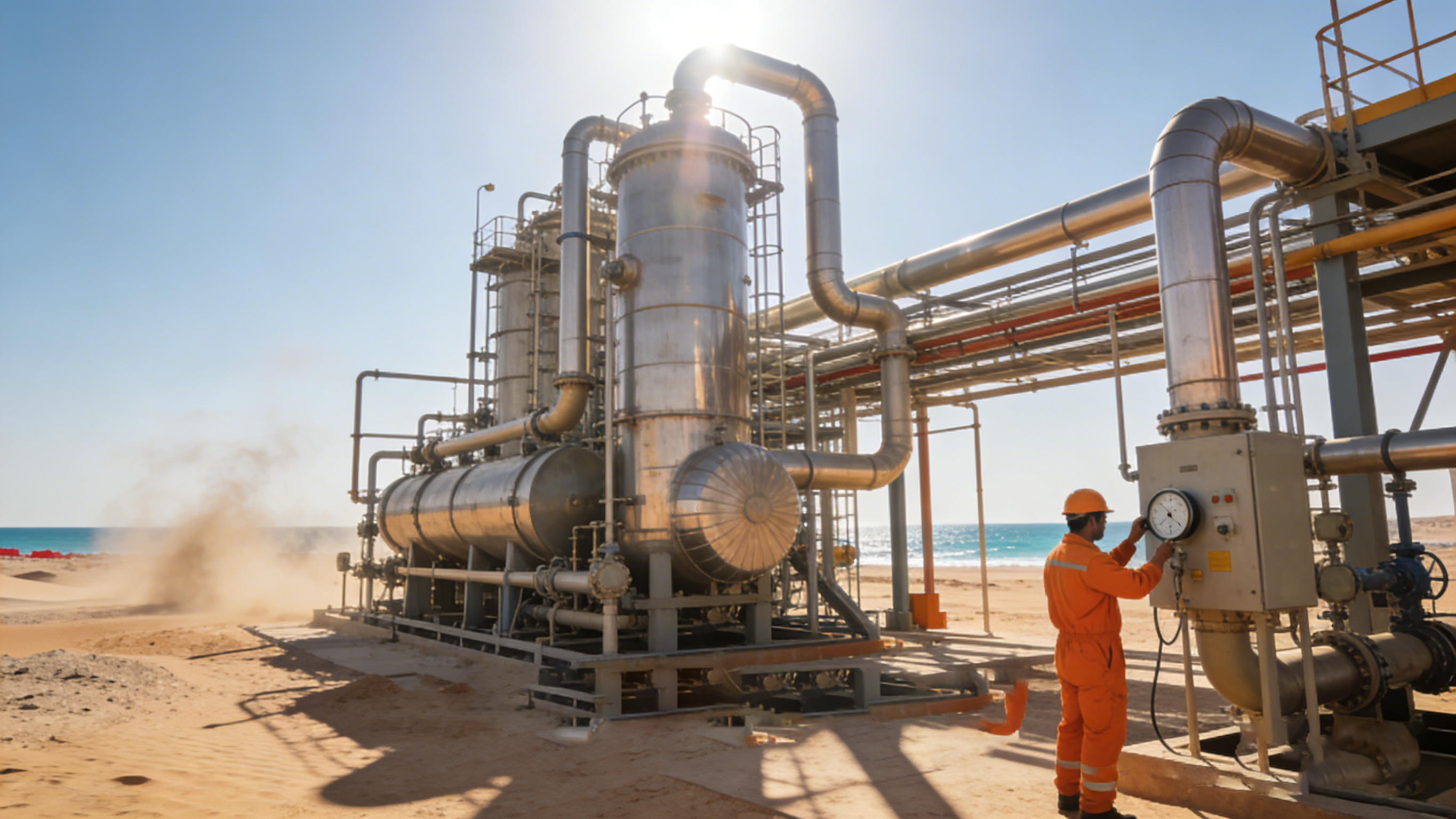
Another reason a mobile seawater desalination plant is essential is flexibility in capacity and application. Emergency water needs are rarely identical. One project may need drinking water for a small temporary support area. Another may need larger output for municipal backup or industrial continuity.
Mobile plants can be configured in different production ranges depending on the application. That makes them useful for multiple kinds of emergency water supply planning.
Compact systems are useful where the primary need is drinking water, sanitation, and basic support water. They can serve remote coastal sites, temporary facilities, marine uses, or localized emergency response zones.
Higher-capacity mobile systems can support communities, industrial facilities, coastal infrastructure projects, ports, and municipal contingency plans. The point is not only that they are mobile. It is that mobility does not prevent serious treatment capacity when properly designed.
Emergency water needs are often temporary, but “temporary” does not mean small or simple. Some situations last far longer than expected. Others require water support only until a permanent system is repaired, expanded, or stabilized. In these cases, a mobile seawater desalination plant offers a practical bridge between immediate response and long-term recovery.
There is often a middle phase between crisis and normal operation. During that phase, a site may need dependable water every day, but not necessarily a fully permanent new plant. Mobile desalination is ideal for that transitional role.
Emergency water supply is not always triggered by disaster-like conditions. It can also be needed during infrastructure upgrades, utility transitions, remote project startup, or seasonal overcapacity periods. A mobile seawater desalination plant works well in these situations because it offers fast support without forcing the user into a full permanent build immediately.
No emergency water strategy is complete without quality assurance. Water that arrives quickly but is not safe or suitable can create even larger problems. A modern mobile seawater desalination plant addresses this by combining pretreatment, reverse osmosis, and system monitoring to produce high-quality freshwater.
In emergency settings, water may be needed for drinking, cooking, hygiene, sanitation, and critical operations. Each of these uses depends on reliable treatment performance.
A properly designed seawater desalination plant can help ensure that emergency water is not only available but usable. That protects public health, improves living and working conditions, and supports operational continuity at sites where water is part of daily function.
The more integrated and stable the plant design, the easier it is to maintain water quality in changing conditions. That is one reason equipment design, pretreatment, membrane selection, and control systems matter so much in mobile applications.
Desalination has historically been seen as energy-intensive, but modern systems have improved considerably. A mobile seawater desalination plant designed with efficient pumps, optimized membranes, and energy recovery features can be much more practical than many users expect.
In temporary and field-based operations, power may be limited, expensive, or tightly managed. Equipment that uses energy more efficiently is easier to keep running and easier to integrate into emergency planning.
Some mobile seawater systems include energy recovery technology that improves performance and reduces overall power demand. This is especially useful where long temporary deployment is expected.
A system that is too difficult or too expensive to run will not remain a dependable emergency solution. Efficiency helps ensure that the mobile seawater desalination plant remains practical not just on day one, but through the full operating period.
Although this article focuses on emergency water supply, the value of mobile desalination goes beyond emergency response. A mobile seawater desalination plant is also a preparedness asset. It can be kept available for seasonal demand spikes, contingency planning, remote site support, or temporary expansion needs.
A fixed plant is tied to one location. A mobile system can be repositioned as priorities change. That flexibility gives operators more strategic options.
One year, the plant may support a coastal utility during maintenance. Later, it may assist a temporary industrial project. In another period, it may provide backup water to a shoreline community. Mobility turns the same equipment into a multi-scenario asset.
Uncertain demand is a major part of emergency planning. Since mobile units can be relocated or redeployed, they are often a better fit for uncertain or changing requirements than solutions that are fixed from the start.
Not all mobile units offer the same value. The right seawater desalination plant should be selected based on real project needs rather than general assumptions.
The system should match realistic daily or hourly demand. Oversizing can waste resources, while undersizing may leave the site under-supported.
Containerized systems are often useful for transportation and rapid placement. Skid-mounted systems may fit other deployment styles. The right format depends on logistics and installation needs.
Reliable pretreatment and well-matched RO components are essential for stable seawater operation, especially in temporary field conditions.
Emergency operations benefit from efficient equipment. Energy recovery and optimized system design should be considered early.
A mobile plant must remain manageable in practice. Spare parts, technical support, maintenance access, and operator training all affect real performance.
Water emergencies are not always predictable, but the need for readiness is. In coastal environments, a mobile seawater desalination plant offers something that few other solutions can provide at the same level: local source use, treatment quality, rapid deployment, and flexibility in one package.
That combination makes it essential, not merely helpful.
A fixed desalination plant may serve long-term development very well, but mobility addresses the urgent gap between water loss and water recovery. It allows users to place water treatment where it is most needed, reduce dependence on external deliveries, protect limited freshwater sources, and respond faster to temporary but serious supply challenges. For coastal regions, islands, marine facilities, remote shoreline sites, and many Middle East applications, that is exactly the kind of capability modern emergency planning requires.
A mobile seawater desalination plant is designed for easier transportation and faster deployment. It is especially useful for temporary, urgent, or field-based water supply needs where a fixed plant would take too long to install.
Yes. With proper pretreatment, reverse osmosis, and post-treatment, a mobile seawater desalination plant can produce high-quality freshwater suitable for drinking and other essential uses, depending on system design and operating standards.
Many parts of the Middle East face limited freshwater availability and high water demand, especially in coastal areas. A mobile seawater desalination plant helps provide flexible emergency and temporary water support where rapid response is important.
Not necessarily. While it is ideal for emergency and temporary deployment, it can also support maintenance periods, seasonal demand increases, remote projects, and contingency planning over longer timeframes.
Key factors include capacity, mobility format, source water conditions, pretreatment design, energy efficiency, and long-term technical support. The best plant is one that fits the real operating environment and emergency supply goals.
For buyers looking to improve emergency water readiness in coastal areas, choosing an experienced water treatment partner is just as important as choosing the system itself. Guangzhou Kai Yuan Water Treatment Equipment Co., Ltd. has focused on water treatment technology since 2008 and provides reverse osmosis systems, brackish water systems, seawater desalination systems, ultrafiltration systems, ion exchange systems, and EDI ultrapure water systems. With experience in design, manufacturing, installation, and project service, KYWATER can support customers seeking a dependable seawater desalination plant for emergency water supply, temporary coastal deployment, and long-term water resilience planning.


