


Views: 0 Author: Site Editor Publish Time: 2026-03-27 Origin: Site


When an area suddenly loses access to safe drinking water, the problem escalates fast. Hospitals, temporary shelters, public facilities, industrial sites, and residential communities all rely on stable water supply to keep basic operations running. In many coastal regions, seawater is one of the few water sources that remains consistently available, even when pipelines fail, freshwater reserves run low, or local infrastructure is under severe pressure. That is where a modern seawater desalination plant becomes especially valuable.
Today’s desalination technology is no longer limited to large, fixed municipal projects. Modern systems are more flexible, more energy-conscious, and much better suited to rapid deployment than many people assume. With advanced reverse osmosis technology, improved pretreatment, better membrane performance, and more practical modular designs, a modern seawater desalination plant can provide dependable freshwater supply in situations where time, reliability, and water quality matter most.
For emergency water needs, the goal is not simply to “make water.” The real goal is to restore access to clean, usable water quickly, safely, and consistently. That includes drinking water, sanitation water, process water for critical operations, and in some cases support water for temporary living or working environments. A well-designed desalination system can help meet all of those needs with more control and less dependence on outside freshwater delivery.
In normal conditions, water supply systems often depend on centralized treatment plants, long distribution pipelines, stable transportation, and predictable demand. Emergency situations are different. Water demand can spike suddenly, access roads may become difficult, water trucking can become expensive or inconsistent, and freshwater sources may be too limited to support a rapid response.
That is why emergency water solutions need several qualities at the same time:
fast deployment
stable output
reliable water quality
flexible installation
efficient operation
ability to work in changing field conditions
A modern seawater desalination plant matches these requirements well in coastal locations because it turns an abundant local resource into a practical freshwater supply. Instead of waiting for external water shipments or depending entirely on strained local infrastructure, organizations can create water close to where it is needed.
For inland emergency water needs, available source water may be uncertain. Surface water can be contaminated. Groundwater may have unstable quality. Nearby freshwater reserves may be too limited for sustained use. In coastal and island settings, seawater offers a more predictable source. It is not ready for direct use, of course, but it is consistently present.
That makes desalination especially useful for:
coastal communities
islands
ports and harbors
tourism areas
marine facilities
temporary camps near the shoreline
industrial projects located close to the sea
When freshwater supply becomes uncertain, a seawater desalination plant creates an immediate path toward local water independence.
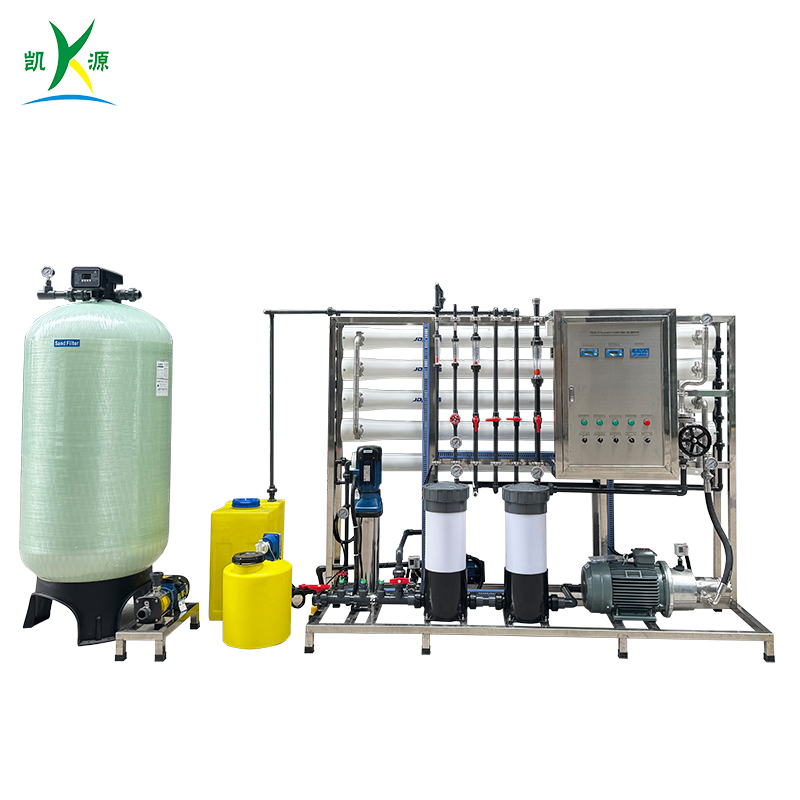
The most obvious benefit of a modern seawater desalination plant is also the most important: it provides access to fresh water from a source that is already available in large volume.
In emergency situations, reliability matters more than theory. A solution is only useful if it can operate under pressure and continue supplying water when other options become difficult. Seawater may not be simple to treat, but it is often the most dependable raw water source in coastal emergencies. Once the system is properly configured, it can deliver consistent output day after day.
Transported water can help in the very short term, but it comes with limitations. Delivery schedules can be delayed. Logistics costs can rise quickly. Storage tanks may need constant replenishment. And if demand grows, transportation alone may no longer be enough.
A seawater desalination plant helps reduce that dependence by creating water onsite or near-site. That shifts the model from “bringing in all the water” to “producing water where it is needed.” In many emergency situations, that is a major operational advantage.
A strong emergency water solution should be able to cover both immediate and ongoing needs. Some situations last longer than expected. Temporary systems often stay in place for weeks or months. A modern desalination plant can support that reality better than many short-term water supply methods because it is designed for continuous water production rather than one-off delivery.
Speed matters in any emergency response. Even an excellent water treatment system loses value if it takes too long to install and start up. One of the biggest strengths of a modern seawater desalination plant is that many systems are now available in modular, skid-mounted, or containerized formats that support quicker deployment.
Older water treatment projects often required large civil works, complicated installation conditions, and long commissioning periods. Modern systems are different. Many are built with mobility and fast setup in mind.
A containerized seawater desalination plant is especially useful for emergency water needs because it can simplify transportation, placement, and startup. Key treatment components are integrated into a more compact structure, which helps reduce installation complexity and makes project planning more straightforward.
This kind of configuration is useful when organizations need to respond quickly in:
coastal communities facing sudden water shortages
temporary support sites
remote shore-based projects
island utility backup scenarios
municipal contingency planning
Fast deployment is not just about moving equipment. It also depends on how quickly the system can be connected, tested, and put into operation. Modern desalination plants are often designed to make commissioning more efficient, especially when paired with clear pretreatment, membrane, control, and post-treatment layouts.
That means a well-prepared team can move faster from delivery to water production, which is exactly what an emergency environment demands.
In emergency situations, water quantity is important, but water quality is non-negotiable. Unsafe water can turn a difficult situation into a public health problem. A modern seawater desalination plant addresses this by using advanced treatment methods, especially reverse osmosis, to remove salts and a wide range of impurities from seawater.
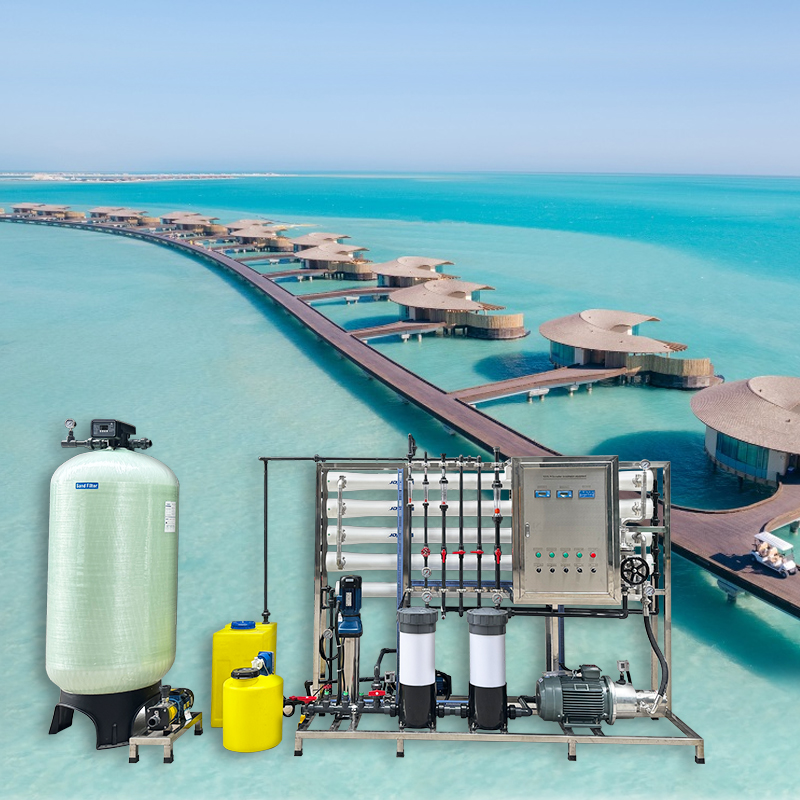
Modern seawater desalination systems are built around more than one treatment step. A reliable design usually includes pretreatment, membrane desalination, system controls, and final water conditioning. Together, these stages help ensure the produced water is suitable for intended applications.
Reverse osmosis has become the most widely recognized desalination method for good reason. It is highly effective, relatively mature, and well suited to systems that need consistent output and predictable water quality. In a modern seawater desalination plant, reverse osmosis membranes play the central role in separating dissolved salts from seawater and producing fresh water.
For emergency use, this matters because operators need confidence that the treated water will meet practical standards for use rather than fluctuating wildly with every shift in source conditions.
Depending on system design and post-treatment, desalinated water can support a range of emergency uses, including:
drinking water supply
food preparation
sanitation
washing and hygiene
healthcare support environments
municipal backup use
industrial continuity needs
That flexibility makes a seawater desalination plant more than a single-purpose machine. It becomes part of a broader water resilience strategy.
One often overlooked benefit of using a seawater desalination plant in emergencies is that it helps protect limited freshwater supplies. When freshwater reservoirs, wells, or municipal sources are already under stress, drawing even more from them may not be realistic or responsible.
By turning to seawater, coastal users can preserve valuable freshwater resources for applications where they are needed most.
Emergency response is not just about producing more water. It is also about using available resources more intelligently. Desalination gives operators another source option, which can reduce overdependence on existing freshwater assets.
That is particularly helpful in areas where:
freshwater reserves are already low
groundwater quality is unstable
seasonal water stress is common
population demand rises suddenly
essential services need priority allocation
If a coastal region uses all of its limited freshwater reserves during the first phase of an emergency, recovery becomes even more difficult later. A seawater desalination plant can help balance immediate supply needs with longer-term resource management.
Desalination is often associated with high energy use, and historically that concern was understandable. But modern seawater desalination plant design has improved significantly. Today’s systems are much more efficient than earlier generations, especially when they incorporate advanced reverse osmosis design, optimized pumps, smart controls, and energy recovery technology.
In emergency operations, power availability may be limited or expensive. Equipment that wastes energy can become difficult to sustain. Efficiency is not just a cost issue; it is also a practicality issue.
Some modern seawater desalination plants use energy recovery systems that help reduce overall power consumption. This improves the plant’s operational profile and makes it more realistic for continuous use in demanding conditions.
Automation and monitoring also contribute to efficiency. Modern control systems can help maintain more stable operation, reduce unnecessary pressure fluctuation, and improve system response to changing input conditions. In real-world terms, that can mean more dependable output with less operational strain.
Not every emergency water need looks the same. A small coastal facility may need limited drinking water support. A municipal backup project may need much larger daily capacity. A temporary site may require quick, compact treatment, while a longer-duration project may need a bigger, more robust installation.
One of the practical strengths of a modern seawater desalination plant is that it can be scaled to fit different requirements.
System selection should always follow actual water demand, source conditions, and project duration. The good news is that modern desalination technology can support a wide range of capacities.
Smaller or medium-scale systems are often useful where fast access to potable water is the top priority. They can support temporary sites, coastal facilities, emergency backup planning, or smaller community needs.
For larger emergency water projects, a bigger seawater desalination plant can support municipal continuity, industrial operations, port facilities, or broad community water access. The ability to scale makes desalination relevant to more than one type of user.
A good emergency water solution should work across different sectors. That is another reason a seawater desalination plant is so valuable. It is not limited to one user group. The same core technology can be adapted for community services, industrial continuity, municipal backup, and certain agricultural support needs in coastal areas.
Cities and towns near the coast need contingency plans for water supply disruption. A modern seawater desalination plant can strengthen those plans by providing an alternative source when normal systems are under pressure.
Industrial users often need water not only for drinking and sanitation, but also for process support, cleaning, cooling, or operational continuity. When water interruptions affect production, the financial impact can grow quickly. Desalination offers a way to maintain critical water access more independently.
In temporary living areas, support stations, and emergency response settings, stable clean water supply affects daily safety, health, and dignity. A seawater desalination plant helps meet those needs with a more structured and sustainable approach.
Emergency response is important, but preparedness may be even more important. A modern seawater desalination plant is not just a reactive tool. It is also a forward-looking investment in water security.
Organizations that plan ahead are generally in a much stronger position when water access becomes uncertain. Instead of scrambling to find supply, they can activate an existing treatment strategy.
A desalination plant installed for emergency readiness often continues delivering value outside urgent situations. It can support seasonal demand peaks, backup capacity planning, remote operations, and broader resilience goals.
One of the strongest arguments for a seawater desalination plant is that it does not become irrelevant after the urgent phase passes. It can remain part of regular water planning, contingency reserves, or long-term coastal development.
Where temporary freshwater delivery would otherwise continue for extended periods, desalination often becomes the more structured and practical option. It creates a controlled water source rather than an endless logistics exercise.
Even with all these benefits, the right system still depends on proper planning. A seawater desalination plant is highly useful, but only when it is matched carefully to actual conditions.
Seawater quality, temperature, and suspended solids can affect pretreatment and membrane performance. A good design starts with source water understanding.
How much water is needed per day or per hour? Is the goal drinking water only, or broader site support? Capacity planning should be realistic, not guessed.
Does the project need a containerized unit for faster transportation? Is it a fixed coastal installation? Will it support temporary use or longer deployment?
Power access should be considered early. Efficient system design becomes even more important where power resources are constrained.
A well-designed seawater desalination plant should not only produce water effectively but also remain manageable in daily operation. Maintenance access, parts support, membrane care, and operator training all matter.
Water insecurity is no longer viewed as a distant or highly specialized issue. For many coastal regions, it is now a practical planning priority. Rising demand, limited freshwater resources, seasonal stress, infrastructure pressure, and the need for better emergency preparedness have all pushed desalination closer to the center of real-world water strategy.
A modern seawater desalination plant stands out because it offers something extremely valuable in uncertain conditions: control. It gives operators more control over source water, more control over water quality, and more control over supply continuity. In emergency water needs, that kind of control can make a major difference.
Instead of relying only on external deliveries or overstretched freshwater systems, coastal users can turn seawater into a reliable support resource. With modern reverse osmosis technology, better energy performance, scalable system design, and faster deployment formats, desalination has become a much more practical option than many people realize.
The main advantage is that a seawater desalination plant can produce fresh water from a widely available local source in coastal areas. This reduces dependence on transported water and helps restore stable water access more quickly.
No. Modern systems can be designed in different sizes and formats, including modular and containerized units. That makes them suitable for a range of emergency applications, from smaller temporary needs to larger municipal or industrial support projects.
Reverse osmosis is the core process that removes dissolved salts from seawater. In a modern seawater desalination plant, it helps produce high-quality fresh water suitable for drinking, sanitation, and other essential uses when paired with proper pretreatment and post-treatment.
Yes. Many modern desalination systems are designed for faster transport and installation, especially containerized models. These are well suited for temporary emergency water supply, rapid deployment projects, and coastal backup planning.
Buyers should focus on source water conditions, required capacity, mobility needs, energy efficiency, operational simplicity, and long-term service support. The best system is not just the one that produces water, but the one that fits the actual project environment and response goals.
For organizations planning emergency water supply in coastal areas, choosing the right equipment partner is just as important as choosing the right system design. Guangzhou Kai Yuan Water Treatment Equipment Co., Ltd. has been focused on water treatment technology since 2008 and offers solutions including reverse osmosis systems, brackish water systems, seawater desalination systems, ultrafiltration systems, ion exchange systems, and EDI ultrapure water systems. With experience in design, manufacturing, installation, and project service, KYWATER can provide practical support for customers looking for dependable seawater desalination plant solutions for emergency readiness, temporary water supply, and long-term water security.


