


Views: 0 Author: Site Editor Publish Time: 2025-09-08 Origin: Site


Sodium is one of the most common dissolved minerals found in both natural and treated water supplies. While small amounts of sodium are not inherently dangerous, excessive sodium in water can create serious challenges, especially in industrial applications. High sodium levels contribute to scaling, corrosion, and reduced equipment efficiency, and can even compromise product quality in industries that require ultra-pure water.
For sectors such as pharmaceuticals, food and beverage production, power generation, and electronics, maintaining strict water quality standards is critical. In these industries, sodium is more than just a water contaminant—it is an operational risk that can translate into higher costs, frequent downtime, and safety concerns.
Although sodium is naturally occurring in groundwater, seawater, and even municipal water supplies, its presence in industrial water systems can be particularly harmful. To better understand the importance of sodium removal, let’s break down its specific effects.
Sodium, when combined with other dissolved minerals such as chloride, sulfate, and carbonate, accelerates the corrosion of pipes, pumps, and metal surfaces. In boilers, sodium can contribute to scaling that reduces heat transfer efficiency. Even a thin layer of scale can increase energy consumption by 5–10%, raising operating costs significantly.
Industries like semiconductors, pharmaceuticals, and precision manufacturing cannot tolerate sodium contamination because it compromises product quality. In semiconductor production, even trace amounts of sodium can lead to microchip defects. In pharmaceutical formulations, sodium alters chemical balances, potentially affecting safety and compliance with strict regulatory standards.
In cooling towers and chillers, sodium-rich water alters water chemistry, resulting in corrosion or inefficient heat transfer. Over time, this leads to higher energy bills, more frequent maintenance, and reduced lifespan of cooling infrastructure.
Facilities that operate with sodium-contaminated water often experience frequent cleaning cycles, chemical treatments, and unexpected shutdowns. This increases labor requirements, shortens equipment life, and inflates overall maintenance budgets.
In many industries, especially food, beverage, and pharmaceuticals, regulatory agencies impose strict water quality standards. Failing to reduce sodium to acceptable levels may result in non-compliance, product recalls, or loss of certifications.
Clearly, sodium is not a minor concern—it is a strategic issue that impacts efficiency, costs, compliance, and sustainability.
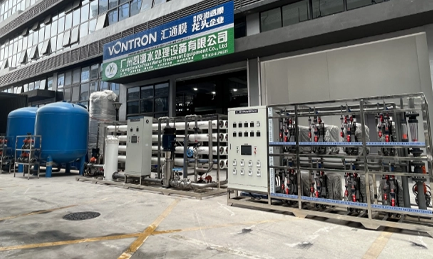
Not all filters are capable of removing sodium. Standard sediment filters, carbon filters, and UV sterilizers are excellent for removing particles, chlorine, or microbes, but sodium ions are dissolved salts, requiring more advanced technology. Below, we explore the main filtration methods proven to remove sodium effectively.
Ion exchange is one of the oldest and most effective methods for removing sodium from water, especially when ultra-low sodium levels are required.
Ion exchange systems use specialized resin beads charged with hydrogen (H⁺) or hydroxide (OH⁻) ions.
When water passes through the resin bed, sodium ions (Na⁺) are attracted to the resin and exchanged for hydrogen ions.
Over time, the resin becomes saturated with sodium and must be regenerated with strong acids or bases, restoring its ability to continue removing ions.
Pharmaceuticals: Produces ultrapure water for drug formulations and laboratory work.
Electronics: Ensures sodium-free water for semiconductor rinsing and microchip production.
Power plants: Provides high-purity boiler feedwater, preventing scale and corrosion.
Produces water with nearly zero sodium content.
Capable of removing multiple types of dissolved ions.
Can be tailored with mixed-bed resin to enhance purification efficiency.
Requires frequent regeneration with chemicals.
Generates chemical waste that must be disposed of responsibly.
Operational costs can be high for large-scale applications.
Despite these drawbacks, ion exchange remains the gold standard in industries requiring ultrapure water.
Reverse Osmosis is one of the most widely used technologies for sodium removal because of its efficiency and scalability.
RO uses a semi-permeable membrane that blocks dissolved salts and contaminants.
Water is pushed through the membrane under high pressure.
Sodium ions, along with chloride, calcium, and other salts, are rejected and flushed out as concentrated brine.
The purified water collected is called permeate, while the rejected portion is called concentrate.
Food and beverage industries: Improves water taste and consistency in products.
Municipal and industrial water supply: Reduces sodium in brackish and seawater desalination projects.
Power generation: Produces feedwater for turbines and boilers.
Removes up to 95–99% of dissolved sodium.
Reduces total dissolved solids (TDS) significantly.
Requires less chemical handling compared to ion exchange.
Can be scaled for small operations or large industrial plants.
Produces brine, requiring proper disposal.
Membranes need regular cleaning and replacement.
Requires high-pressure pumps, which means energy costs.
Nonetheless, RO is highly cost-effective over the long term and remains the most popular choice for sodium removal at scale.
For industries with particularly strict water quality requirements, a single filtration method may not be sufficient. Multi-stage systems integrate several technologies to maximize efficiency.
Pre-treatment (sand filters, multimedia filters) – Removes suspended solids, protecting downstream equipment.
Activated carbon filters – Removes chlorine, organics, and odors that can damage RO membranes.
Reverse osmosis – Removes sodium and most dissolved salts.
Deionization or electrodeionization (EDI) – Provides ultrapure water with nearly zero sodium content.
Semiconductors: Where ultra-pure water (UPW) is critical for rinsing wafers.
Pharmaceutical production: Ensures consistent, contamination-free formulations.
Laboratories: Produces reagent-grade water for precise experiments.
Provides a customized solution for varying water sources.
Extends the life of sensitive equipment like RO membranes.
Ensures long-term operational stability.
Though multi-stage systems require higher upfront investments, they are ideal for businesses seeking high performance, reliability, and compliance.
Reducing sodium levels prevents scaling and corrosion in boilers, pipelines, turbines, and cooling towers, extending equipment lifespan.
Clean water improves heat transfer and reduces the need for frequent maintenance, lowering operational costs. A small reduction in scale buildup can save thousands in annual energy expenses.
Industries like food, beverages, and pharmaceuticals benefit from improved product taste, consistency, and regulatory compliance when sodium is minimized.
Many industries must meet international water standards, such as USP (United States Pharmacopeia) or WHO guidelines. Sodium removal helps facilities remain compliant.
Advanced filtration systems reduce the need for chemical dosing, minimize waste, and promote eco-friendly industrial practices.
Sodium removal is a vital component of industrial water treatment. While standard filters cannot remove sodium, advanced solutions such as ion exchange, reverse osmosis, and multi-stage systems provide reliable and scalable results.
Each system has strengths:
Ion exchange delivers ultrapure water but requires chemical regeneration.
Reverse osmosis offers high efficiency with minimal chemical handling.
Multi-stage systems combine the best of both worlds for industries demanding ultra-low sodium.
For industries aiming to protect equipment, improve efficiency, and ensure consistent product quality, investing in the right sodium removal system is not just cost-saving but mission-critical.
Guangzhou Kai Yuan Water Treatment Equipment Co., Ltd. offers tailored sodium-removal solutions, helping industries achieve reliable water quality, extend equipment life, and reduce operational costs.


