Introduction
Hard water affects millions of homes worldwide, yet its environmental cost is often overlooked. Scale builds inside heaters, raises energy demand, and shortens appliance life. Many households depend on a water softener machine, but older systems increased salt discharge and water waste. Today, modern eco-engineered solutions are changing that story. In this article, you will discover how advanced softening technology reduces environmental impact while improving efficiency and long-term sustainability.
Why Traditional Water Softening Raised Environmental Concerns
Chloride Discharge and Ecosystem Impact
Chloride is highly soluble and does not readily degrade or volatilize once released into surface water. When brine from regeneration enters municipal wastewater systems, it typically passes through conventional biological treatment unchanged. Elevated chloride concentrations increase water salinity, which can disrupt osmotic balance in freshwater fish, amphibians, and aquatic plants. Long-term accumulation also affects soil structure when reclaimed water is used for irrigation. As residential water softener machine installations scale across regions with naturally hard water, aggregate chloride loading becomes a measurable watershed concern. Reducing salt dose per regeneration directly lowers cumulative environmental impact.
Municipal Treatment Pressure and Regulatory Drivers
Wastewater treatment facilities operate under discharge permits that specify maximum allowable chloride concentrations in effluent. When influent salinity rises, utilities must consider advanced treatment technologies such as membrane filtration or blending strategies, both of which increase operational costs and energy demand. As compliance thresholds tighten, municipalities encourage high-efficiency residential equipment to reduce upstream loading. A modern water softener machine equipped with metered regeneration and optimized salt settings supports these policy goals by limiting unnecessary discharge. Regulatory evolution therefore accelerates innovation, aligning environmental protection with improved residential system design.
Resource Consumption in Older Systems
Timer-based softeners regenerate at preset intervals, often every few days, regardless of actual hardness load. This approach can result in partial resin capacity being discarded during each cycle, increasing salt and water consumption. Regeneration typically includes backwash, brine draw, slow rinse, and fast rinse stages, all of which require controlled water flow. Demand-initiated systems monitor cumulative flow volume and calculate remaining grain capacity before triggering regeneration. By synchronizing regeneration with actual usage, a modern water softener machine minimizes excess brine production and reduces total annual water consumption while maintaining consistent softening performance.
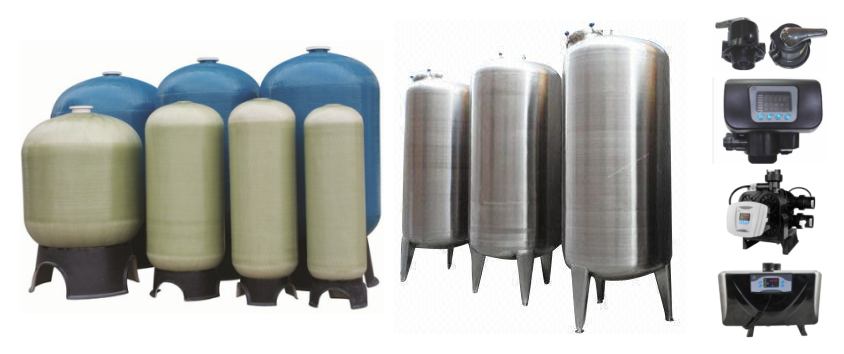
How Modern Water Softener Machine Technology Improves Environmental Performance
Demand-Based Regeneration for Reduced Salt and Water Use
Metered regeneration is a major advancement. It calculates hardness load based on real usage. Then it adjusts salt dose precisely. This lowers chloride discharge and preserves resin life. Many high-efficiency models report up to 50% less salt use compared to older units . The water softener machine becomes data-driven. It adapts to household behavior. That flexibility supports sustainability while maintaining performance.
Salt-Free Technologies (TAC and Advanced Conditioning)
Template Assisted Crystallization (TAC) offers another path. Instead of removing minerals, it transforms them. Calcium forms microscopic crystals that pass through plumbing. Scale does not adhere to surfaces. No salt discharge occurs. A TAC-based water softener machine preserves beneficial minerals while protecting pipes. It requires minimal maintenance and no brine waste. For eco-conscious homeowners, this approach aligns strongly with sustainability goals.
Smart Monitoring and IoT Optimization
Technology integration pushes efficiency further. Smart systems connect to apps. They monitor salt levels and water hardness in real time. If usage changes, settings adjust automatically. This prevents over-regeneration. It reduces operational waste. A connected water softener machine becomes part of a broader smart home network. We gain visibility into performance and consumption patterns. Data transparency supports responsible resource use.
Environmental Benefits Inside the Home
Lower Energy Consumption Through Scale Prevention
Calcium carbonate scale reduces heat transfer efficiency by forming a thermal barrier on heating surfaces. Even a thin layer can increase required input energy because heat must pass through mineral deposits before reaching water. In storage water heaters and boilers, this results in longer heating cycles and higher fuel or electricity demand. By maintaining outlet hardness below recommended levels, a properly configured water softener machine helps preserve heat exchange efficiency and stable flow rates. Over time, improved thermal performance reduces indirect carbon emissions and lowers utility expenses, especially in high hot-water-demand households or facilities.
Reduced Detergent and Chemical Usage
Hard water minerals react with soap to form insoluble residues, commonly known as soap scum. This reaction reduces cleaning efficiency and forces users to increase detergent dosage. Soft water minimizes mineral interference, allowing surfactants to function as designed. As a result, washing cycles often require shorter durations and lower chemical input. A calibrated water softener machine supports consistent low hardness levels, improving rinse performance in dishwashers and laundry systems. Reduced detergent consumption decreases chemical loading in wastewater streams and lowers packaging waste, supporting more sustainable household resource management.
Extended Appliance Lifespan and Waste Reduction
Hard water scale directly affects thermal efficiency, mechanical components, and service intervals. Even thin mineral deposits can increase energy demand and accelerate equipment wear. By controlling calcium and magnesium buildup, a properly sized water softener machine reduces stress on appliances and extends operational lifespan. The following breakdown highlights measurable performance impacts and sustainability outcomes based on established industry and energy data.
| Impact Area | Technical Mechanism | Verified Technical Reference | Typical Measurable Effect | Environmental Outcome | Application Considerations |
| Water Heater Efficiency | Scale forms insulating layer on heat exchange surfaces | U.S. DOE & Water Quality Research Foundation studies | As little as 1/8 inch (≈3 mm) scale can increase energy use by ~10–15% (varies by heater type) | Higher energy demand → higher CO₂ emissions | More critical in electric resistance heaters |
| Heating Element Failure Rate | Mineral deposits cause overheating of elements | WQA technical bulletins | Hard water can reduce element life by 30–50% (industry reports, varies by hardness level) | Premature replacement increases material waste | Monitor in areas >15 gpg hardness |
| Appliance Lifespan (Water Heaters) | Reduced sediment accumulation improves internal component stability | Industry service data (tank-style heaters) | Average lifespan: 8–12 years; softened water environments often report extended service intervals (varies by usage) | Fewer units manufactured and discarded | Annual flushing still recommended |
| Dishwasher Performance | Scale clogs spray arms and internal passages | Manufacturer service documentation | Hardness >10 gpg increases internal scaling risk significantly | Reduced efficiency leads to earlier replacement | Maintain hardness below 3–5 gpg after treatment |
| Washing Machine Components | Scale builds on heating coils and valves | Appliance maintenance data | Reduced efficiency and valve wear in high hardness zones (>15 gpg) | Increased spare part replacement | Pair softening with sediment filtration |
| Plumbing Longevity | Calcium carbonate narrows pipe diameter | Water chemistry studies | Long-term hardness >20 gpg increases scaling rate in hot water lines | Higher pump load and water waste | Especially relevant in copper piping systems |
| Energy Consumption Impact | Reduced scale improves heat transfer coefficient | DOE efficiency comparisons | Energy savings of 5–15% depending on scale severity (varies by heater design) | Lower electricity or gas consumption | Monitor annually in commercial buildings |
| Landfill Waste Reduction | Extended appliance service intervals | EPA durable goods lifecycle assessments | Each avoided 50-gallon water heater replacement prevents ~60–70 kg of steel waste (approximate material weight) | Reduced solid waste and embodied carbon | Supports ESG sustainability metrics |
| Carbon Footprint Reduction | Lower manufacturing and transport cycles | Life cycle assessment (LCA) principles | Manufacturing a residential water heater involves hundreds of kg CO₂ equivalent (varies by region and fuel mix) | Longer lifespan lowers lifecycle emissions | Include in carbon accounting reports |
| Maintenance Cost Stability | Fewer scale-related service calls | Industry field data | Reduced descaling frequency when hardness is controlled | Lower service-related resource use | Maintain correct regeneration settings |
Tip: In commercial facilities, track appliance replacement intervals before and after installing a water softener machine to quantify lifecycle extension and support ESG performance reporting.
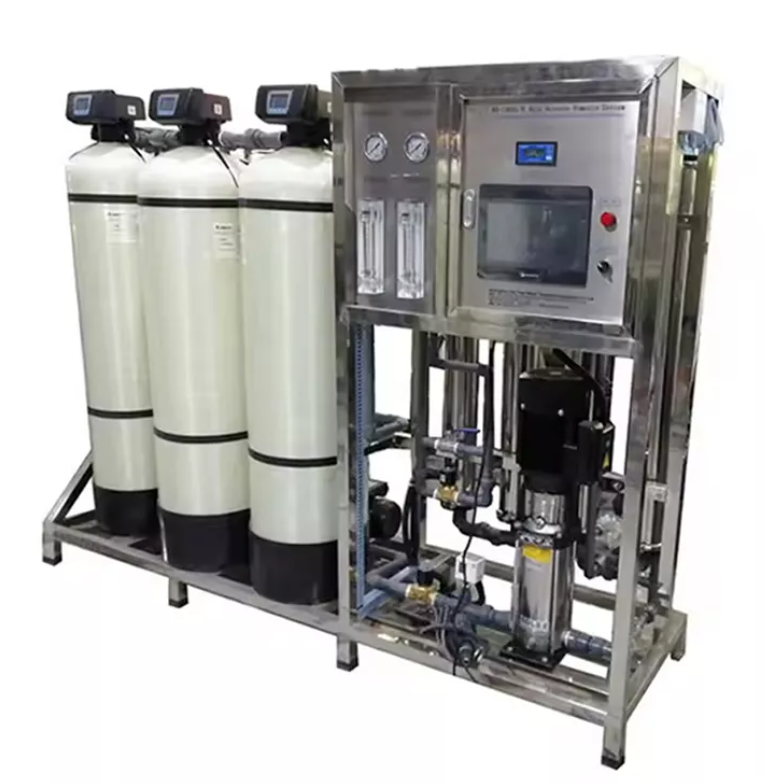
Centralized vs. In-Home Softening: A Sustainability Perspective
Centralized Lime and Reverse Osmosis Systems
Lime softening increases water pH to around 10–11, causing calcium carbonate and magnesium hydroxide to precipitate and settle before distribution. This process can significantly reduce hardness at the municipal level, often lowering levels below 5–8 gpg depending on source water. Reverse osmosis systems apply pressure across semi-permeable membranes to remove dissolved ions, producing low total dissolved solids (TDS) water. Centralized treatment reduces the overall mineral load entering residential plumbing, decreasing regeneration frequency for each water softener machine. However, in-home systems still play a polishing role to stabilize residual hardness and protect internal piping and appliances.
Community-Level Efficiency Gains
Pre-softened municipal water reduces cumulative salt discharge across entire neighborhoods. When baseline hardness drops, residential regeneration intervals extend, lowering total annual chloride release and brine wastewater volume. Central plants benefit from predictable influent chemistry and improved compliance management. Shared treatment infrastructure also distributes operational energy use more efficiently than isolated household systems alone. However, optimized residential water softener machine configuration remains essential to prevent over-treatment. Coordinated planning between municipalities and homeowners creates measurable improvements in water conservation, infrastructure longevity, and long-term environmental performance.
Integrating Residential High-Efficiency Systems
Municipal blending, seasonal groundwater shifts, and distribution distance can create hardness variation within service zones. A high-efficiency water softener machine installed at the residential level stabilizes these fluctuations, ensuring consistent outlet hardness below 3–5 gpg. Proper calibration of regeneration thresholds and salt dosage prevents unnecessary cycling in partially softened supply areas. Integration works best when municipal baseline hardness data informs household system sizing. Aligning centralized treatment strategies with efficient residential softening maximizes salt efficiency, reduces discharge variability, and supports coordinated water conservation targets across the supply network.
Sustainable Alternatives and Hybrid Water Treatment Solutions
Potassium-Based and Low-Salt Options
Potassium chloride functions through the same ion-exchange mechanism as sodium chloride, replacing calcium and magnesium ions on the resin bed. It is often selected in regions where sodium discharge is regulated or where users monitor sodium intake in drinking water. A compatible water softener machine must support proper brine concentration and injector settings, as potassium pellets dissolve differently than standard salt. High-efficiency programming further reduces total regenerant demand. When combined with metered regeneration, potassium-based systems provide controlled discharge levels and improved environmental flexibility without compromising softening performance.
Hybrid Filtration and Softening Systems
Hybrid systems integrate ion exchange with carbon filtration, ultraviolet disinfection, or reverse osmosis to address multiple water quality parameters simultaneously. Carbon reduces chlorine and organic compounds, UV controls microbial presence, and RO lowers dissolved solids. When paired with a water softener machine, scaling is minimized before filtration membranes, improving system longevity and maintaining stable flow rates. Proper hydraulic design ensures pressure balance and prevents cross-interference between stages. This integrated approach enhances energy efficiency, simplifies maintenance scheduling, and supports comprehensive water quality management in residential and light commercial applications.
Exchange Tank Services and Managed Regeneration
Exchange tank programs shift regeneration from on-site systems to centralized facilities. Resin tanks are replaced on schedule and regenerated under controlled industrial conditions, where brine handling and wastewater treatment are more efficiently managed. This model reduces peak discharge concentrations at individual properties and allows standardized monitoring of salt efficiency and resin performance. Many commercial buildings favor this approach because it stabilizes maintenance costs and ensures regulatory compliance. When coordinated correctly, managed regeneration improves operational oversight while reducing localized environmental impact.
Choosing an Eco-Friendly Water Softener Machine for Long-Term Impact
Evaluating Salt Efficiency Ratings
When selecting a water softener machine, salt efficiency is one of the most critical technical indicators. It directly affects chloride discharge, water consumption, and long-term operating costs. A structured evaluation based on measurable data helps ensure environmental compliance and optimal system performance.
| Evaluation Dimension | Technical Definition / Principle | Key Technical Indicators (Industry Standards) | Typical Residential Range | Practical Application | Selection Considerations |
| Salt Efficiency Definition | Hardness removed per pound of salt used during regeneration | grains per pound (grains/lb) | 3,000 – 5,000 grains/lb (high-efficiency units often ≥5,000) | Higher values mean better salt utilization and lower chloride discharge | Compare efficiency rating, not just total capacity |
| Hardness Measurement | 1 grain = 17.1 mg/L CaCO₃ | gpg (grains per gallon) | 5–25 gpg typical residential hardness | Used to size system capacity accurately | Always conduct a certified water hardness test |
| Regeneration Salt Dose | Amount of salt used per regeneration cycle | pounds per regeneration (lb/cycle) | 6 – 15 lb per cycle | Lower salt dose reduces environmental load | Higher salt dose does not equal higher efficiency |
| Working Capacity | Total hardness removal before regeneration | grains per cycle | 24,000 – 48,000 grains (common residential systems) | Determines regeneration frequency | Avoid continuous operation at maximum rated capacity |
| Regeneration Water Use | Water consumed during backwash and brine cycle | gallons per regeneration | 25 – 65 gallons | Impacts total water consumption and wastewater output | Prefer metered systems to reduce unnecessary cycles |
| Control Type | Regeneration trigger mechanism | Time-clock vs. Metered (demand-initiated) | Most modern systems use metered control | Metered systems can improve salt efficiency by ~30–50% (industry reports, verification recommended) | Always prioritize demand-initiated regeneration |
| Annual Salt Consumption | Estimated yearly salt use under normal load | pounds per year (lb/year) | 25 – 50 lb/year (typical household estimate, verification recommended) | Directly correlates to annual chloride discharge | Calculate based on household water usage |
| Certification Standards | Performance validation | NSF/ANSI 44 standard | High-efficiency benchmark often ≥4,000 grains/lb | Ensures third-party performance verification | Select systems with recognized certification |
| Resin Specification | Crosslink percentage affects durability and exchange stability | 8% or 10% crosslink resin | 8% common for residential use | Higher crosslink improves chemical resistance and lifespan | Consider water iron content when choosing resin |
| System Sizing Basis | Daily water demand per person | 60–80 gallons/person/day (EPA residential estimate) | 3–5 person home often uses 32,000 grain system | Prevents oversizing or undersizing | Match system to calculated daily hardness load |
Tip: For commercial or multi-unit projects, request a salt efficiency performance calculation based on actual feed water hardness and projected daily demand rather than relying solely on nominal grain capacity ratings.
Matching Technology to Local Water Hardness
Water hardness can range from below 3 gpg (soft) to over 25 gpg (very hard), depending on geology and water source. Accurate sizing begins with a certified hardness test expressed in grains per gallon (gpg) or mg/L as CaCO₃. System capacity should be calculated using daily water consumption (typically 60–80 gallons per person per day) multiplied by measured hardness. Oversized units may operate at low salt efficiency, while undersized systems regenerate too frequently, increasing water and salt use. A properly matched water softener machine balances grain capacity, regeneration interval, and salt dose to achieve stable performance and reduced environmental discharge.
Professional Calibration and Ongoing Optimization
Water chemistry changes with seasonal groundwater shifts, municipal blending, or source transitions. Even small hardness variations can affect regeneration timing and salt dosage. Annual professional calibration ensures the water softener machine maintains optimal salt efficiency and resin performance. Technicians verify flow meter accuracy, adjust regeneration thresholds, and inspect resin condition. Fine-tuning brine refill volume and cycle duration reduces excess discharge while preserving softening capacity. Continuous optimization not only lowers salt consumption but also stabilizes long-term operational costs and environmental impact.
Conclusion
Eco-friendly water treatment reduces salt discharge, saves energy, and protects appliances. Modern water softener machine systems use smart regeneration and advanced conditioning to cut waste while improving efficiency. These solutions support cleaner waterways and longer equipment life. Guangzhou Kai Yuan Water Treatment Equipment Co., Ltd. provides high-efficiency systems with reliable performance and professional service, helping customers achieve sustainable water management with measurable long-term value.
FAQ
Q: How does a water softener machine help the environment?
A: A modern water softener machine reduces salt discharge, lowers energy use, and improves appliance efficiency.
Q: Why were older softeners harmful to ecosystems?
A: Traditional systems released excess chloride, while a high-efficiency water softener machine limits brine waste.
Q: What is salt efficiency in a water softener machine?
A: Salt efficiency measures hardness removed per pound of salt, improving sustainability and cost control.
Q: Are salt-free water softener machine systems eco-friendly?
A: Yes, salt-free systems prevent scale without chloride discharge, protecting waterways.
Q: Does a water softener machine reduce energy bills?
A: Yes, it prevents scale buildup, improving heat transfer and lowering energy demand.


