Introduction
Have you noticed cloudy dishes or dry skin after showering? Hard water may be the hidden cause. Over time, mineral buildup can clog pipes, reduce appliance efficiency, and raise energy costs. A properly sized water softener machine removes excess calcium and magnesium before they damage your home. In this article, you will discover the common signs of hard water and practical solutions to protect your plumbing and daily comfort.
Common Signs of Hard Water in Your Home
Visible Mineral Scale and Soap Scum Buildup
One of the clearest signs of hard water is white, chalky residue on faucets, showerheads, and tile. This buildup, known as limescale, forms when water evaporates and leaves minerals behind. At first, it appears as light spots. Over time, it hardens into thick crusts that resist cleaning. You may scrub often but still see streaks on glass doors and fixtures. This scale does more than affect appearance. It also restricts water flow and reduces fixture efficiency. When scale forms quickly after cleaning, it often signals mineral-rich water moving through the system daily.
Cleaning and Laundry Performance Decline
Hard water reduces soap efficiency. When calcium and magnesium react with detergent, they form insoluble residue. As a result, dishes appear cloudy, and fabrics feel stiff even after washing. Many homeowners respond by adding more detergent. However, this rarely solves the issue. Clothes may fade faster, and towels may lose softness. You may also notice soap scum around sinks and bathtubs. These cleaning frustrations often indicate mineral interference rather than poor products. A water softener machine restores proper detergent performance by removing the hardness minerals before they react.
Plumbing and Appliance Performance Issues
Mineral buildup narrows pipes from the inside. This reduces water pressure and strains plumbing systems. Water heaters are especially vulnerable because heat accelerates scale formation. As scale coats heating elements, it insulates them, forcing longer heating cycles and higher energy use. Dishwashers and washing machines experience similar strain. Frequent repairs or reduced performance often point to untreated hard water. If multiple appliances show early wear, it is wise to evaluate mineral levels before replacing equipment.
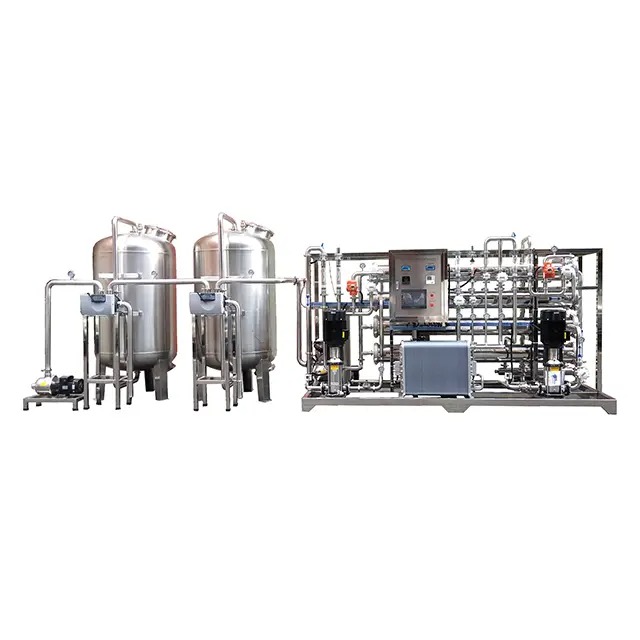
How Hard Water Affects Skin, Hair, and Comfort
Dry, Irritated Skin After Showering
Hard water leaves behind mineral residue on skin. This residue interferes with soap rinsing and removes natural oils. Many people describe a tight or itchy feeling after bathing. In homes with elevated hardness levels above 7–10 GPG (data needs verification), skin discomfort often becomes noticeable. Over time, dryness may worsen, especially in colder seasons. People often blame weather or body wash products. In reality, minerals may be the underlying cause. When a water softener machine removes calcium and magnesium, soap rinses cleanly and skin retains moisture more effectively.
Dull, Brittle, or Flat Hair
Hair reacts similarly to mineral-heavy water. Calcium deposits coat strands and block moisture absorption. This results in dull texture and reduced manageability. Color-treated hair may fade faster due to mineral accumulation. Shampoos may not lather properly, leading to product buildup. Many individuals experiment with specialty hair treatments without lasting improvement. Softened water allows shampoos to work as intended and helps restore shine and softness. When hair texture improves shortly after installing a water softener machine, mineral interference was likely the cause.
Soap Residue and Incomplete Rinsing
If your skin feels slippery or coated even after rinsing thoroughly, mineral interaction may be occurring. Soap reacts with hardness minerals to create residue known as soap scum. This film sticks to skin and surfaces alike. It prevents a clean rinse and may leave bathtubs feeling gritty. Over time, the residue accumulates in drains and on fixtures. A water softener machine prevents this reaction by eliminating the minerals before they contact soap, improving rinsing efficiency across the home.
Why a Water Softener Machine Is the Most Effective Solution
Ion Exchange Technology Explained
A salt-based water softener machine uses ion exchange to remove hardness minerals. Inside the system, resin beads carry sodium or potassium ions. As hard water flows through, calcium and magnesium ions attach to the beads. In exchange, sodium ions release into the water. This process prevents scale formation throughout plumbing. The system periodically regenerates by flushing the resin with brine, restoring its softening capacity. This method treats water before it reaches appliances, making it one of the most effective whole-home solutions available.
Whole-Home Protection at the Source
Point-of-use treatments address isolated fixtures. A whole-home water softener machine treats all incoming water at the main supply line. This approach ensures consistent protection for pipes, water heaters, dishwashers, and washing machines. It also improves water quality in showers, sinks, and laundry rooms. By removing minerals at entry, the system stops scale before it forms. This proactive strategy reduces cumulative damage and creates uniform performance improvements across the household.
Immediate and Long-Term Performance Improvements
Many homeowners notice improvements within days of installation. Soap lathers more easily. Glassware dries without spots. Laundry feels softer and appears brighter. Over months, appliances operate more efficiently and require fewer repairs. Energy bills may stabilize due to reduced heating strain. The benefits compound over time. Instead of reacting to damage, the water softener machine prevents mineral accumulation from occurring in the first place.
Choosing the Right Water Softener Machine for Your Home
Matching System Capacity to Water Hardness
Water hardness is typically measured in grains per gallon (GPG) or milligrams per liter (mg/L). Soft water ranges below 3.5 GPG, while levels above 7 GPG are considered hard. Homes exceeding 10 GPG often see noticeable mineral effects. Selecting the correct water softener machine requires understanding both hardness level and daily water use. A properly sized system regenerates efficiently without overuse of salt or water. Professional testing ensures accurate system capacity selection.
Salt-Based vs. Salt-Free Systems
Different water conditions require different treatment strategies. The comparison below breaks down how salt-based and salt-free systems differ in working principle, measurable performance, installation context, and technical parameters. It highlights verified industry benchmarks and commonly referenced standards to support informed system selection.
| Category | Salt-Based Water Softener (Ion Exchange) | Salt-Free System (Template-Assisted Crystallization / Conditioning) |
| Core Technology | Ion exchange using sulfonated polystyrene resin beads | Template-Assisted Crystallization (TAC) or Nucleation-assisted crystallization |
| Primary Function | Removes calcium (Ca⊃2;⁺) and magnesium (Mg⊃2;⁺) ions from water | Converts dissolved hardness minerals into microscopic crystals that remain suspended |
| Hardness Removal | Yes — physically removes Ca⊃2;⁺ and Mg⊃2;⁺ | No — minerals remain in water |
| Measured Hardness After Treatment | Typically reduced to 0–3 grains per gallon (gpg) (≈ 0–50 mg/L as CaCO₃) | Hardness remains unchanged (e.g., 10 gpg in = ~10 gpg out) |
| Effective Hardness Range | Suitable for moderate to very hard water (7–20+ gpg; 120–340+ mg/L) | Best suited for low to moderate hardness (< 15 gpg; < 250 mg/L) |
| Regeneration Required | Yes — periodic brine regeneration cycle | No regeneration cycle |
| Salt Consumption | Approx. 3–15 lbs (1.4–6.8 kg) per regeneration cycle depending on system size | None |
| Water Used During Regeneration | Typically 20–70 gallons (75–265 liters) per cycle | None |
| Flow Rate Range | Common residential units: 7–15 gallons per minute (gpm) | Similar nominal flow rates: 7–15 gpm |
| Grain Capacity (Residential Units) | 24,000–80,000 grains per tank (1 grain = 17.1 mg/L as CaCO₃) | Not rated in grains (does not remove hardness) |
| NSF Certification Category | NSF/ANSI 44 (Cation Exchange Water Softeners) | NSF/ANSI 61 (Material Safety), some models tested under NSF/ANSI 372 |
| Scale Prevention Mechanism | Prevents scale by eliminating mineral ions | Reduces scale adhesion by forming stable micro-crystals |
| Scale Removal Capability | Removes existing hardness but does not descale pipes | Does not remove existing scale |
| Impact on TDS (Total Dissolved Solids) | Slight increase due to sodium addition (~7.5 mg/L sodium added per 1 gpg removed) | No change to TDS |
| Sodium Addition | Adds approx. 7.5 mg sodium per liter per gpg removed (needs verification for specific models) | None |
| Best Application | Whole-home protection in areas > 10 gpg hardness | Homes concerned about scaling but not needing hardness removal |
| Appliance Protection Level | High — protects heaters, dishwashers, washing machines | Moderate — reduces scale adhesion but minerals remain present |
| Maintenance Requirement | Salt refill every 4–8 weeks (usage dependent) | Media replacement typically every 3–5 years |
| Wastewater Discharge | Yes (brine discharge during regeneration) | No wastewater discharge |
| Energy Requirement | Requires electricity for control valve | Often non-electric systems available |
| Installation Position | Main water supply entry point | Main supply entry or point-of-use |
Tip:For hardness levels above 10 gpg (≈170 mg/L as CaCO₃), full ion exchange systems generally provide measurable performance benefits in appliance protection and detergent efficiency.
Considering Household Size and Usage
Household size influences regeneration frequency and system grain capacity. Larger families use more water daily, increasing mineral load on the system. Peak demand also matters. Multiple showers, laundry cycles, and dishwasher use can occur simultaneously. A water softener machine must handle these loads without depleting soft water reserves. Accurate sizing ensures consistent supply and efficient regeneration cycles.
Preventing Appliance Damage with a Water Softener Machine
Protecting Water Heaters from Scale Insulation
Scale inside water heaters acts as insulation. It traps heat against heating elements and reduces efficiency. As heating cycles extend, energy consumption rises. Over time, excessive scale can lead to premature heater replacement. Softened water prevents mineral deposits from forming, allowing heaters to operate efficiently. Removing this internal stress extends system lifespan and stabilizes energy performance.
Extending Dishwasher and Washing Machine Lifespan
Appliances exposed to hard water accumulate scale in internal components. Spray arms clog. Heating elements coat with mineral layers. This buildup reduces cleaning power and increases wear. A water softener machine stops mineral accumulation at the source. When internal parts remain free of scale, appliances maintain efficiency and durability over years of operation.
Lowering Energy and Maintenance Costs
Hard water increases detergent use and appliance strain. Maintenance calls become more frequent. Energy bills rise as systems compensate for reduced efficiency. By eliminating mineral buildup, softened water reduces operational stress. Over time, homeowners often observe fewer service visits and more stable utility costs. These savings accumulate gradually and reinforce the value of preventative treatment.
Testing and Confirming Hard Water Before Installation
Using Home Water Testing Kits
Home hardness kits typically use EDTA titration drops or color strip indicators calibrated in grains per gallon (gpg) or mg/L as CaCO₃. Most strips measure within ranges such as 0–25 gpg. For higher accuracy, follow instructions carefully, test cold water samples, and compare results under natural light. Repeating the test twice improves reliability. Kits provide baseline data, but lab analysis offers precise mineral breakdown.
Reviewing Local Water Reports
Annual Consumer Confidence Reports list average hardness, often expressed in mg/L as CaCO₃. Values above 120 mg/L indicate hard water, while levels above 180 mg/L are classified as very hard. These reports reflect treatment plant output, not conditions inside aging household pipes. Seasonal fluctuations may also occur. Reviewing both annual averages and in-home testing results ensures more accurate system sizing decisions.
Professional Assessment for Accurate System Selection
Before selecting a water softener machine, a structured technical evaluation ensures correct sizing and long-term performance. A professional assessment combines laboratory data, hydraulic analysis, and household demand modeling to prevent undersizing or unnecessary oversizing.
| Assessment Category | What Is Measured | Technical Standard / Unit | Typical Residential Range | Why It Matters for Water Softener Machine Selection | Professional Notes |
| Total Hardness | Calcium & magnesium concentration | Grains per gallon (gpg) or mg/L as CaCO₃ | 3–20+ gpg (50–340+ mg/L) | Determines required grain capacity and regeneration frequency | 1 gpg = 17.1 mg/L as CaCO₃ |
| Iron (Fe⊃2;⁺ / Fe⊃3;⁺) | Dissolved ferrous iron | mg/L (ppm) | 0–5 mg/L common in well water | Iron >0.3 mg/L may require pre-treatment to protect resin | NSF suggests iron removal above 0.3 mg/L |
| Manganese (Mn) | Dissolved manganese | mg/L (ppm) | 0–0.5 mg/L | High manganese can foul resin beads | Often requires oxidation or filtration stage |
| Total Dissolved Solids (TDS) | Overall mineral load | mg/L | 100–1000 mg/L typical | High TDS affects overall system selection and downstream filtration | Softening does not reduce TDS significantly |
| pH Level | Water acidity/alkalinity | pH scale (0–14) | 6.5–8.5 typical municipal range | Extreme pH may affect resin longevity | Optimal range for resin: 6–9 |
| Peak Flow Rate | Maximum simultaneous water demand | Gallons per minute (gpm) | 7–15 gpm for residential | Ensures control valve and resin tank support demand | Measured during simultaneous fixture operation |
| Daily Water Usage | Total daily consumption | Gallons per day (GPD) | 60–75 gallons per person/day (EPA estimate) | Determines regeneration cycle interval | Multiply by household size |
| Household Size | Number of residents | Persons | 1–6 typical | Influences grain capacity sizing | Larger homes require higher capacity |
| Required Grain Capacity | Hardness × daily gallons | Grains | 24,000–80,000 grains common residential sizes | Ensures system does not regenerate too frequently | Formula: (Hardness gpg × GPD × Days between regen) |
| Regeneration Frequency | Days between cycles | Days | 3–7 days typical | Balances salt efficiency and performance stability | Frequent regeneration increases salt use |
| Installation Location | Main supply line diameter | Inches (¾"–1¼") | ¾" or 1" common | Ensures proper hydraulic compatibility | Undersized bypass valves restrict flow |
| Drain Line Requirement | Regeneration discharge line | ½"–¾" line typical | Must meet plumbing code | Ensures safe brine discharge | Must comply with local code |
| Pressure Range | Incoming water pressure | psi (pounds per square inch) | 40–80 psi optimal | Protects valve integrity and performance | Pressure >80 psi may require regulator |
| Water Temperature | Incoming water temp | °F (°C) | 40–100°F (4–38°C) typical | Resin performs best within rated temp | Hot water (>120°F) damages resin |
| Certification Standards | Compliance verification | NSF/ANSI 44 (ion exchange systems) | Certified systems preferred | Confirms performance claims and safety | NSF certification validates grain capacity claims |
Tip:Always calculate grain capacity using verified hardness data and average daily usage; oversizing by extreme margins reduces salt efficiency, while undersizing increases regeneration frequency and operating cost.
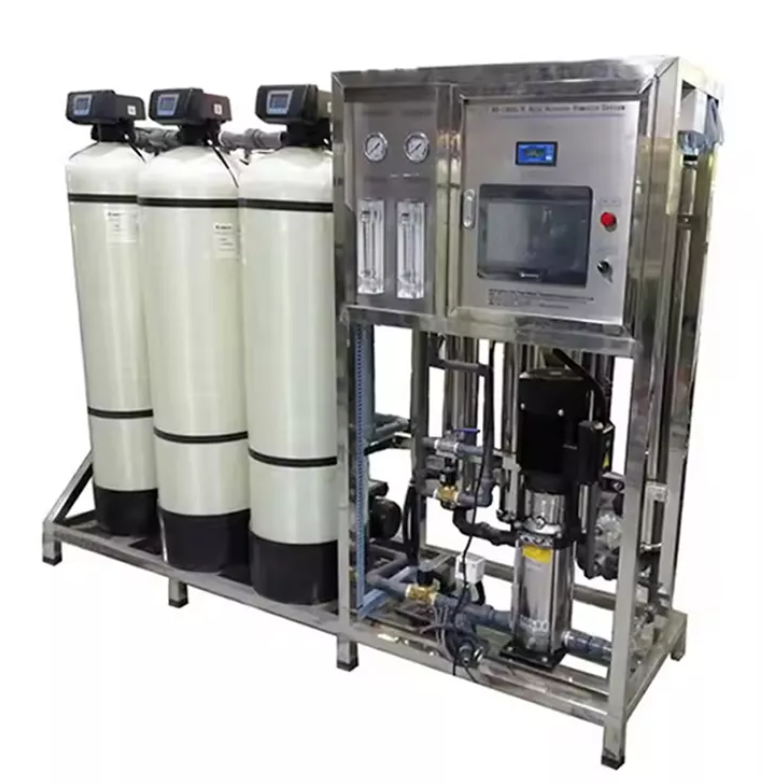
Long-Term Benefits of Installing a Water Softener Machine
Improved Cleaning Efficiency and Reduced Detergent Use
Soft water prevents calcium from binding with surfactants, allowing detergents to dissolve and rinse completely. Studies show hard water can require up to 50% more detergent for equal cleaning performance. With a water softener machine, soap forms stable lather, reduces residue, and improves fabric fiber preservation. Lower detergent demand also decreases phosphate and surfactant discharge into wastewater systems.
Enhanced Home Sustainability and Resource Efficiency
Scale-free heating elements transfer heat more effectively, improving water heater efficiency and reducing energy consumption. Even a thin 1.6 mm layer of scale can noticeably reduce heat transfer efficiency. By eliminating mineral buildup, a water softener machine supports stable appliance performance, lowers water reheating cycles, and reduces overall resource waste throughout the home.
Increased Property Value and System Longevity
Mineral-free plumbing maintains internal pipe diameter, preserving water pressure and reducing long-term corrosion stress. Appliances operating without scale experience less mechanical strain and longer service intervals. Homes equipped with a properly sized water softener machine demonstrate proactive infrastructure protection, which can enhance buyer confidence and support stronger resale positioning.
Conclusion
Hard water troubles begin quietly but gradually damage pipes, appliances, and daily comfort. Scale buildup reduces efficiency and raises energy costs. A properly sized water softener machine removes hardness minerals at the source, improving cleaning results and extending equipment lifespan. Guangzhou Kai Yuan Water Treatment Equipment Co., Ltd. offers advanced, durable water treatment systems designed for reliable performance, helping homeowners achieve long-term efficiency, protection, and measurable value.
FAQ
Q: What are common signs of hard water at home?
A: White scale, cloudy dishes, and dry skin often indicate mineral buildup in pipes and appliances.
Q: How does a water softener machine solve hard water problems?
A: A water softener machine removes calcium and magnesium through ion exchange, preventing scale and improving cleaning performance.
Q: Why is my water heater less efficient with hard water?
A: Scale insulates heating elements, reducing heat transfer and raising energy use.
Q: How do I choose the right water softener machine size?
A: Match system grain capacity to hardness level and daily water usage for consistent performance.
Q: Is a water softener machine worth the cost?
A: Yes, it reduces repair expenses, lowers detergent use, and extends appliance lifespan.


