


Views: 0 Author: Site Editor Publish Time: 2025-04-14 Origin: Site


In today’s world, where clean and safe water is vital for human health, industrial processes, and environmental sustainability, reverse osmosis plants play a crucial role. Whether you're a business looking to treat process water, a municipality purifying drinking water, or an organization working in remote areas, understanding how a reverse osmosis (RO) system functions is essential.
Many people use or rely on purified water without knowing how the system works behind the scenes. However, understanding the mechanics of a reverse osmosis plant helps you:
Make better investment decisions
Maintain your system effectively
Identify suitable upgrades or modifications
Achieve consistent water quality
Whether you are using the RO plant for industrial, commercial, or residential purposes, knowing its working principle allows you to appreciate its role in delivering safe, clean, and efficient water.
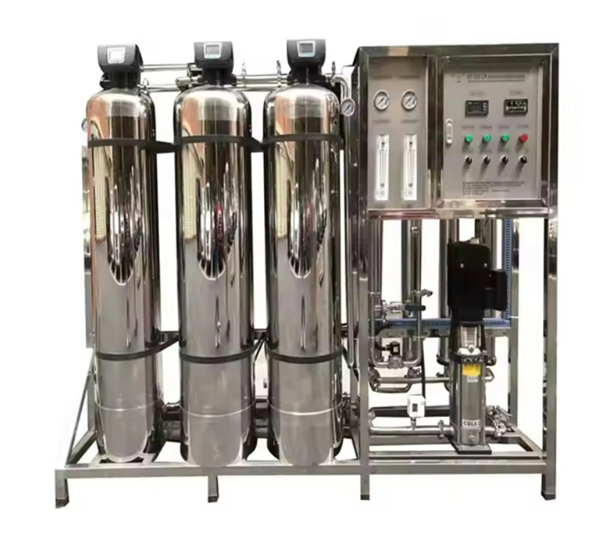
Let’s break down the operation of a reverse osmosis plant into its core stages, making the process easier to understand:
Before water reaches the main membrane, it undergoes a pre-treatment process to remove particles that could clog or damage the RO membrane. This phase generally includes:
Sediment Filters: These filters remove sand, silt, rust, and other visible particles. They act as the first defense line, protecting more sensitive components downstream.
Activated Carbon Filters: These filters remove chlorine, organic contaminants, pesticides, and unpleasant odors. Chlorine, in particular, can damage the RO membrane if not removed beforehand.
In large-scale industrial systems, pre-treatment may also involve antiscalant dosing, softening units, or microfiltration for highly contaminated or hard water sources.
After pre-treatment, the water is pressurized using a high-pressure pump. This is a vital step because the reverse osmosis process depends on applying enough pressure to force water molecules through the membrane while blocking dissolved solids.
Typical pressure ranges:
Brackish water: 150–250 psi
Seawater: 800–1,200 psi
High-pressure pumps used in KYWATER’s systems are engineered for efficiency, durability, and energy savings. These pumps ensure smooth water flow across the membrane and help achieve higher recovery rates.
This is the heart of the reverse osmosis plant. In this stage, water passes through a semi-permeable membrane that allows only water molecules to pass through while rejecting up to 99% of dissolved salts, bacteria, viruses, and organic substances.
Here’s how it works:
The membrane contains microscopic pores (~0.0001 microns).
Water is forced through the membrane, leaving impurities behind as concentrated brine (or reject water).
Clean water, now called permeate, is collected for post-treatment or end use.
KYWATER uses high-rejection, low-energy membranes that reduce energy costs while maintaining superior filtration performance.
Once the water has passed through the membrane, it may still require post-treatment depending on its intended use:
Mineral Rebalancing: Since RO removes almost all minerals, the water can be too "pure" for human consumption. Therefore, calcium and magnesium may be added back to improve taste and meet health standards.
UV Disinfection or Chemical Dosing: To ensure microbial safety, ultraviolet (UV) sterilizers or small amounts of chlorine or ozone may be used.
For industrial uses like boiler feedwater or electronics manufacturing, the post-treatment might include deionization or pH adjustment to meet specific quality parameters.
Modern reverse osmosis systems are increasingly equipped with energy recovery devices (ERDs) and automated control systems to enhance efficiency and reduce operational costs.
Energy Recovery Devices: These components capture and reuse energy from the high-pressure reject stream, cutting energy consumption by 30–60%, especially in seawater desalination.
Automation and Smart Controls: KYWATER integrates Programmable Logic Controllers (PLCs), Human-Machine Interfaces (HMIs), and IoT-based remote monitoring. These allow operators to:
Monitor system performance in real-time
Set automatic flushing and cleaning schedules
Receive alerts for maintenance or failure
Depending on the application, reverse osmosis plants come in various configurations. KYWATER specializes in designing tailored systems to match your specific water needs:
Flow rates: Up to hundreds of cubic meters per hour
Applications: Power plants, chemical industries, food & beverage, mining
Features: Multi-stage filtration, energy recovery, high durability
Flow rates: Typically 250 to 5,000 liters per hour
Applications: Hotels, schools, hospitals, office buildings
Features: Compact footprint, easy maintenance, reliable output
Pre-assembled units installed in standard 20/40 ft containers
Suitable for remote locations or emergency deployment
Plug-and-play design for quick installation and minimal downtime
Mounted on trucks or trailers
Used in military, disaster relief, or temporary projects
Designed for rapid deployment and self-contained operation
KYWATER supports custom engineering for all system types, ensuring compliance with local water regulations and quality requirements.
Most RO membranes last 2 to 5 years, depending on the feed water quality, system maintenance, and operating conditions. Regular pre-treatment and membrane cleaning can extend membrane life significantly.
Sediment and carbon pre-filters should be replaced every 6 to 12 months on average, though high-contamination water may require more frequent changes. Timely replacement ensures membrane protection and system performance.
Recovery rate refers to the percentage of feed water converted into purified water. It varies by application:
Brackish Water RO: 50–85%
Seawater RO: 35–45%
Industrial RO (multi-stage): Up to 90%+
Yes. RO membranes reject over 99% of viruses, bacteria, and pathogens, thanks to their ultra-fine pore size (~0.0001 microns). However, post-disinfection is still recommended for potable applications to ensure safety.
Absolutely. RO water is safe and clean. Some systems add essential minerals like calcium and magnesium during post-treatment to improve taste and health benefits for drinking purposes.
The rejected water, also called brine or concentrate, carries the removed contaminants. It is typically sent to drainage or can be reused in non-critical applications (e.g., flushing, irrigation) with proper treatment.
Yes. Many off-grid or containerized RO systems are now solar-powered, making them ideal for rural or disaster-relief areas. KYWATER offers energy-efficient designs suitable for integration with solar power systems.
Reverse osmosis plants are a cornerstone of modern water treatment—efficient, flexible, and capable of producing high-purity water from almost any source. Understanding how these systems work helps stakeholders make smart decisions regarding purchase, operation, and maintenance.
Whether your goal is to meet health standards, comply with regulations, cut operational costs, or ensure business continuity, investing in a reverse osmosis plant is a forward-thinking move.
KYWATER is here to support you at every stage—from water quality analysis to system design, commissioning, and long-term service.
Interested in building a reliable, energy-efficient reverse osmosis plant?
Visit www.gzkywater.com or contact our expert team for a personalized solution.


