


Views: 0 Author: Site Editor Publish Time: 2025-09-17 Origin: Site


Reverse osmosis (RO) plants play a crucial role in providing fresh drinking water, particularly in regions facing water scarcity. By desalinating seawater or purifying contaminated water sources, RO systems have become essential in ensuring a reliable and clean water supply. However, building and operating an osmosis plant involves significant financial investment. Understanding the costs associated with building a reverse osmosis plant, from capital expenditures (CAPEX) to ongoing operating expenses (OPEX), is vital for businesses, governments, and organizations that are planning such projects.
The capital costs of building a reverse osmosis plant encompass a wide range of expenses related to equipment, infrastructure, and labor. These costs represent the upfront investment required to construct the plant and bring it into operation.
One of the largest components of the CAPEX is the equipment necessary for the RO process. Key pieces of equipment include:
Membrane Modules and Housings: The reverse osmosis membranes are the core of the filtration process. Membrane modules and their housings are essential for separating impurities from water. The cost of these membranes can vary depending on the plant’s size and the type of water being treated.
High-Pressure Pumps and Energy Recovery Devices: Reverse osmosis systems require high-pressure pumps to push water through the membranes. These pumps are energy-intensive, making them a significant part of the overall cost. Additionally, energy recovery devices (ERDs) help reduce energy consumption by capturing and reusing energy from the brine stream.
Pre-Treatment and Post-Treatment Components: Before water enters the RO system, it often undergoes pre-treatment to remove large particles and chemicals that could damage the membrane. Post-treatment, such as UV disinfection or remineralization, may also be required to ensure water quality.
Proportion of CAPEX: Typically, equipment costs represent about 20–30% of the total capital investment.
Civil works involve the construction of the physical infrastructure needed for the plant. These costs include:
Intake and Outfall Pipelines: The construction of pipelines that will transport water to the plant and discharge the brine waste back to the environment. These pipelines must be designed and installed to meet the specific requirements of the site, particularly in coastal locations.
Onsite Piping Networks, Tanks, and Buildings: The construction of piping networks within the plant, storage tanks for water, and the necessary buildings to house the equipment.
Chemical Mixing and Storage Facilities: Facilities for storing chemicals used in pre-treatment and post-treatment processes, such as coagulants, antiscalants, and disinfectants.
Proportion of CAPEX: Civil works typically account for 30–40% of the total capital investment.
Electrical infrastructure is another significant portion of CAPEX, which includes:
Power Supply Systems: These include transformers, control panels, and wiring necessary to supply power to all systems, including high-pressure pumps and other equipment.
Energy-Intensive Systems: Since reverse osmosis plants require considerable energy to operate high-pressure pumps, the electrical systems are typically designed to handle large power demands.
Proportion of CAPEX: Electrical works generally make up about 10–15% of the total capital expenditure.
Land acquisition is a key consideration when building a reverse osmosis plant. Depending on the location, land costs can be substantial, especially in coastal regions where desalination plants are often built.
Minimum Space Requirements: A typical reverse osmosis plant requires between 5 to 10 acres of land, though this can vary based on the plant’s size and capacity.
Consideration of Coastal Locations and Piping Easements: Coastal locations for seawater desalination require additional considerations for piping easements and other logistical factors.
Proportion of CAPEX: Land acquisition costs generally represent about 5–10% of the total capital investment.
Labor costs for the erection, installation, and commissioning of the plant also form a significant part of CAPEX.
Proportion of CAPEX: Labor costs typically account for about 15–20% of the total capital investment.
Before a reverse osmosis plant starts generating revenue, there are pre-launch operational expenses, such as staffing, training, and initial raw material procurement.
Proportion of CAPEX: Initial working capital is generally about 5–10% of the total capital investment.
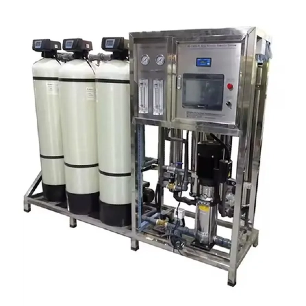
Once the plant is up and running, the operating costs (OPEX) become a significant part of its financial management. These costs include labor, energy, chemicals, maintenance, and other day-to-day expenses.
Labor costs encompass the wages of plant operators, technicians, and administrative staff. The size of the staff depends on the scale and automation level of the plant.
Automation's Role: Modern reverse osmosis plants often incorporate automation systems, which can help reduce labor costs. Operators are required for monitoring, troubleshooting, and maintaining the plant, but automation can make the operation more efficient.
Proportion of OPEX: Labor costs typically account for 15–25% of the total operating expenses.
Energy costs are one of the largest ongoing expenses for reverse osmosis plants. High-pressure pumps used to force water through the membrane consume significant amounts of electricity.
Energy Recovery Devices: The use of energy recovery devices can help reduce energy consumption by capturing and reusing some of the energy from the brine stream, making the system more energy-efficient.
Proportion of OPEX: Energy costs can account for 35–45% of the total operating expenses, depending on the size of the plant and the energy efficiency of the equipment.
Chemicals are used in both the pre-treatment and post-treatment processes. These include:
Pre-Treatment Chemicals: Chemicals like antiscalants, coagulants, and acids are used to prevent membrane fouling and to condition the feedwater before it enters the RO system.
Post-Treatment Chemicals: Post-treatment chemicals, such as chlorine and lime, are used to disinfect and stabilize the purified water.
Proportion of OPEX: Chemical costs typically make up 5–15% of the total operating expenses.
Reverse osmosis membranes degrade over time and must be replaced regularly. Membrane replacement typically occurs every 3 to 5 years, depending on the quality of the feedwater and the maintenance practices.
Proportion of OPEX: Membrane replacement costs represent 5–10% of operating expenses over the plant's lifetime.
Regular maintenance is essential to keep the plant running smoothly. This includes parts replacement, system repairs, and preventive maintenance on pumps, membranes, and other critical components.
Proportion of OPEX: Maintenance costs typically account for 10–15% of the total operating expenses.
Other utility costs, such as water supply, waste disposal, and communication services, also contribute to the ongoing expenses of an RO plant.
Proportion of OPEX: These additional utility costs typically account for 5–10% of the total operating expenses.
The Levelized Cost of Water (LCOW) is a metric that reflects the total cost of producing water over the plant's lifetime, including both capital and operating costs. This metric provides a clearer picture of the cost efficiency of a reverse osmosis plant.
LCOW involves amortizing the capital costs (CAPEX) over the expected operational life of the plant, usually 30 years, and adding the operating and maintenance costs over that period. It gives a per-unit cost of water produced by the plant.
For a 10 million gallons per day (MGD) reverse osmosis plant, the LCOW can be as low as $0.50 to $1.50 per cubic meter of water, depending on various factors such as scale, energy efficiency, and technology used.
Incorporating renewable energy sources like solar or wind can further reduce the LCOW, making reverse osmosis desalination more cost-competitive, especially in regions with high energy prices.
When compared to other water sources, reverse osmosis is highly competitive, especially in areas with limited freshwater resources.
Imported Freshwater: $3.00 per cubic meter
Groundwater Pumping from Depleted Aquifers: $2.00 per cubic meter
New Dams and Reservoirs: $1.50 per cubic meter
Seawater RO: $0.50–$1.50 per cubic meter
Reverse osmosis desalinated water is particularly cost-effective in water-scarce regions, where it is often the most viable option for ensuring a steady water supply.
As the capacity of an RO plant increases, the per-unit costs of water production decrease. Larger plants benefit from economies of scale, with reduced costs for equipment, labor, and energy.
Larger plants tend to be more energy-efficient due to better optimization and the use of advanced technologies, resulting in lower energy consumption per cubic meter of water produced.
Phased expansion of plants allows for scalability, meaning that initial costs can be kept lower while still allowing for future capacity increases as demand grows.
Building a reverse osmosis plant involves a significant capital investment, where key cost factors include equipment, civil works, energy, and labor. In addition to the upfront costs, operating expenses such as labor, energy consumption, chemicals, and maintenance are ongoing and need careful management to ensure the plant remains financially sustainable. The Levelized Cost of Water (LCOW) serves as a vital tool for evaluating the cost-effectiveness of RO systems, helping to assess both initial and long-term operational costs. By focusing on optimizing plant scale, energy efficiency, and incorporating renewable energy sources, reverse osmosis desalination can offer a cost-efficient solution to address water scarcity issues.
For those seeking to explore further advancements in water treatment technology or looking for reliable solutions, Guangzhou Kai Yuan Water Treatment Equipment Co., Ltd. (KYWATER) offers expert guidance and top-quality RO systems. Their innovative technologies can help optimize the performance and cost-efficiency of RO plants, making them a trusted partner in tackling water purification challenges. Contact KYWATER today to learn more about how their advanced solutions can meet your specific water treatment needs.


