


Views: 0 Author: Site Editor Publish Time: 2026-05-23 Origin: Site


Transitioning from basic commercial filtration to a full-scale reverse osmosis plant is a significant capital expenditure. Strict operational tolerances drive this decision, rather than simple water aesthetics. Standard filters rely on passive physical or chemical barriers to trap large particles. However, industrial RO plants utilize high-pressure, molecular-level separation to produce high-purity water at scale. They act as broad-spectrum generalists in water treatment. Facility managers and process engineers must understand specific industrial use cases before investing. Evaluating architectural configurations, such as stages versus passes, is highly critical. Identifying pre-treatment risks will further help you shortlist the right system for your facility. You will learn how these robust systems protect downstream assets and ensure absolute baseline purity. We will explore core industrial applications, system designs, and vital vendor criteria. By the end, you will know exactly how to align plant specifications with your operational goals.
Asset Protection & Yield: RO plants are primarily used to protect expensive downstream equipment (like boilers and cooling towers) from scaling and to ensure absolute baseline purity for manufacturing and agriculture.
Stages vs. Passes: System design dictates efficiency; "stages" are cascaded to maximize water recovery rates (reducing waste), while "passes" are cascaded to achieve ultra-pure water standards.
Pre-treatment is Non-Negotiable: Failure to address raw water chemistry (chlorine, calcium, iron) will lead to rapid membrane fouling, scaling, or chemical degradation, destroying system ROI.
Compliance & Sustainability: Modern plants must balance pure water production with stringent wastewater discharge limits, increasingly relying on Energy Recovery Devices (ERDs) and Zero Liquid Discharge (ZLD) technologies.
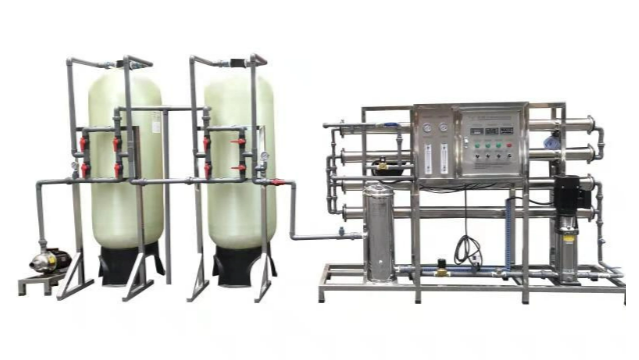
Industrial leaders must differentiate a robust reverse osmosis plant from basic point-of-use filters. Common whole-facility filters act as specialists. Carbon tanks remove chlorine odors. Water softeners exchange hard calcium ions for sodium. However, these systems leave other dissolved minerals untouched. An industrial RO system acts as a molecular generalist. It forces water through microscopic pores under extreme pressure. This physical separation process reliably extracts up to 99% of all dissolved solids (TDS).
Risk mitigation drives the core business case for this upgrade. High-pressure boilers and cooling towers represent massive infrastructural investments. Untreated water contains calcium and silica. These minerals precipitate under intense heat. They form a hard insulating scale inside boiler tubes. Scale acts as a thermal barrier. Boilers must burn significantly more fuel to reach target temperatures. Eventually, localized overheating causes tube ruptures. Removing dissolved solids proactively prevents this mineral scaling. You directly reduce maintenance downtime and eliminate wasted energy.
Transitioning to pressure-driven separation also reduces chemical dependency. Traditional water treatment relies heavily on chemical flocculants and coagulants. Operators must handle hazardous materials daily. A membrane-based plant relies on mechanical pressure instead. This shift simplifies environmental compliance requirements. It also substantially lowers ongoing consumable costs.
Finally, RO processing guarantees standardization of baseline inputs. Seasonal weather patterns change raw water chemistry drastically. Spring runoff spikes turbidity. Summer droughts concentrate dissolved minerals. Fluctuating water quality disrupts precise manufacturing formulas. An RO system essentially creates a blank slate. It ensures seasonal water variations never compromise delicate chemical reactions on your production floor.
Different industries leverage molecular separation to solve distinct operational challenges. We can categorize these deployments based on their specific purity and volume requirements.
Power plants operate massive steam turbines. They require ultra-pure water to function safely. Even trace amounts of silica or calcium will crystallize on high-speed turbine blades. This crystallization causes catastrophic mechanical imbalances. Processing boiler feedwater through membrane arrays prevents this scaling. It extends the operational lifespan of critical power generation infrastructure.
Medical and tech manufacturing strictly forbid contaminants. Pharmaceutical companies must meet rigorous USP-grade water standards. Microchip fabricators require ultra-pure water (UPW) to wash silicon wafers. Semiconductor features are built at the nanometer scale. A single microscopic mineral particle can ruin an entire microchip. Membrane separation provides the absolute purity necessary for these cleanroom environments.
Modern indoor agriculture relies on precise nutrient dosing. Raw well water poses multiple threats to crop yield.
Predictable Reactions: Raw water contains variable iron and manganese. These minerals cause unpredictable chemical reactions when mixed into liquid fertilizers. They can lock out vital nutrients from plant roots.
EC Baselines: Growers use Electrical Conductivity (EC) to measure nutrient concentration. Pure water does not conduct electricity. Membrane separation allows growers to establish an exact zero-EC baseline. They can then dose nutrients perfectly.
Corrosion Risks: You must respect the aggressive nature of RO water. Lacking minerals, pure water actively seeks equilibrium. It acts as a solvent. It will rapidly corrode standard copper or galvanized piping. You must install specialized PVC or stainless steel infrastructure to handle it.
Municipalities and offshore facilities use RO for large-scale desalination. They process unusable water sources into safe potable supplies.
Seawater RO (SWRO): Ocean water has intense natural osmotic pressure. Operators must apply massive mechanical pressure ranging between 40 and 82 bar.
Brackish Water RO (BWRO): Estuaries and deep aquifers contain moderately salty water. These systems require lower operating pressures, typically falling between 2 and 17 bar.
Application Sector | Primary Contaminant Target | Key Operational Benefit |
|---|---|---|
Power Generation | Silica, Calcium, Magnesium | Prevents turbine blade scaling |
Pharmaceuticals | Bacteria, Endotoxins, Organics | Meets strict USP-grade standards |
Commercial Agriculture | Iron, Manganese, Variable TDS | Establishes exact zero-EC baseline |
Municipal Desalination | Sodium, Chloride (Heavy Salt) | Produces safe potable water at scale |
Demystifying system nomenclature is critical for accurate vendor evaluation. Many buyers confuse stages and passes. These two design concepts serve entirely different operational goals. Understanding them helps you match equipment to your precise facility needs.
System designers use stages to maximize water recovery. A single commercial membrane might reject 50% of incoming water as waste. This high waste ratio is unacceptable for massive industrial volumes. Engineers cascade membranes to solve this.
A stage routes the concentrated reject water from the first membrane directly into the feed of a second membrane. The first membrane extracts pure water and leaves behind concentrated brine. Instead of dumping this brine down the drain, the system pressurizes it again. The second membrane squeezes more pure water out of the concentrated feed. Multi-stage industrial arrays easily push overall recovery rates to 85%. This cascaded design drops waste volume down to just 15%.
While stages focus on volume, passes focus strictly on water quality. Critical applications require extreme purity levels. A single pass might only remove 99% of contaminants.
A pass routes the purified permeate water from the first membrane into a completely new second RO membrane. The system treats the already-purified water a second time. Double-pass systems are mandatory for microelectronics and pharmaceuticals. Furthermore, standard membranes cannot reject low-molecular-weight dissolved gases. Carbon dioxide passes right through the pores. It turns into carbonic acid and lowers permeate pH. Engineers combat this by injecting sodium hydroxide between the first and second pass. This chemical dosing converts dissolved CO2 into a solid carbonate ion. The second pass then easily catches and rejects the solid ion.
Design Concept | Flow Routing Mechanism | Primary Engineering Goal | Typical Industry Use Case |
|---|---|---|---|
Multi-Stage | Reject (Brine) feeds the next membrane | Maximize recovery & reduce wastewater | Agriculture, Municipalities, General Manufacturing |
Multi-Pass | Permeate (Pure) feeds the next membrane | Maximize absolute purity & gas removal | Semiconductors, Pharmaceuticals, Power Generation |
Enterprise vendor shortlists must also dictate standardized hardware specifications. Demand industry-standard components for your architecture. The global benchmark relies on 8-inch diameter and 40-inch length membrane housings. Proprietary sizes create vendor lock-in. Using standardized dimensions ensures you can source replacement consumables from multiple competitive suppliers.
Membrane failure is a harsh reality in industrial water treatment. You must never view pre-treatment as an optional add-on. It remains the primary factor dictating the lifespan of Thin Film Composite (TFC) membranes. If you feed raw, untreated water into high-pressure pumps, you will destroy your investment rapidly.
Operators frequently confuse fouling and scaling. They require entirely different mitigation strategies.
Fouling: This involves the accumulation of organic matter or suspended solids on the membrane surface. Silt, clay, and biological slime block the microscopic pores. You mitigate this using Multi-Media Filtration (MMF). MMF tanks layer different sizes of gravel, sand, and anthracite. They trap solids and significantly lower the Silt Density Index (SDI) before water reaches the arrays.
Scaling: This involves the hard precipitation of dissolved minerals. Calcium carbonate and magnesium drop out of solution under pressure. They form a concrete-like crust over the membrane sheets. You mitigate scaling by continuously dosing antiscalant chemicals into the feed line. Alternatively, upstream water softeners can physically remove the hardness ions.
Chemical degradation acts much faster than fouling or scaling. Municipalities add free chlorine to water to kill bacteria. Explicitly warn your facility operators about this threat. Free chlorine rapidly oxidizes TFC material. It essentially burns through the microscopic membrane pores. Rejection rates will plummet from 99% to zero in a matter of days. You must install robust dechlorination solutions. Most industrial sites utilize sodium bisulfite injection to neutralize chlorine chemically. Others use large Granular Activated Carbon (GAC) tanks to absorb it.
Membrane arrays consist of fragile, tightly wound composite layers. Sudden pressure spikes cause catastrophic mechanical damage. Operators call this phenomenon water hammer. When a large pump turns on instantly, it slams a wall of water into the array. This force telescopes the membrane elements, destroying their internal seals. You prevent water hammer by installing precise variable frequency drives (VFDs). VFDs ramp up the high-pressure pumps gradually. They ensure a smooth, controlled delivery of hydraulic force.
Procuring heavy water treatment equipment requires strict vetting. Capital costs only represent a fraction of the long-term financial picture. You must evaluate potential vendors based on long-term operational resilience.
First, inspect their automation and control systems. Avoid manual valve systems entirely. Look for robust Programmable Logic Controller (PLC) architectures combined with intuitive Human-Machine Interfaces (HMIs). The control system must autonomously monitor the five core performance metrics continuously. These include Salt Rejection Percentage, Recovery Percentage, Concentration Factor, Flux Rate, and Pressure Drop. If the PLC detects an abnormal pressure drop, it should trigger an automatic flush cycle.
Next, prioritize energy efficiency. High-pressure systems consume massive amounts of electricity. This is especially true for desalination setups. Evaluate vendors based on their inclusion of Energy Recovery Devices (ERDs). An ERD captures the intense hydraulic energy remaining in the pressurized brine stream. It mechanically transfers this kinetic energy to the incoming feed stream. This recapture process drastically reduces the overall kWh/m³ consumption.
Assess the vendor's wastewater compliance capabilities carefully. Industrial facilities face increasingly strict municipal discharge limits. Handling concentrated waste streams is difficult. Shortlist engineering partners who offer Zero Liquid Discharge (ZLD) integrations. ZLD systems use thermal evaporators to boil off the remaining brine. They leave behind only solid salt cakes. This high-recovery retrofit ensures total environmental compliance.
Finally, demand concrete proof of concept. Recommend requiring a localized pilot study before committing to full plant sizing. Vendors should place a small-scale testing skid at your facility for several weeks. Alternatively, request a destructive membrane autopsy of your existing degraded filters. These diagnostic steps reveal the exact chemical footprint of your raw water. They remove the guesswork from final engineering calculations.
A modern reverse osmosis plant is not a static filter. It operates as a dynamic, pressure-driven separation facility tailored to specific business outcomes.
It effectively removes dissolved solids to extend boiler life, protect cooling towers, and standardize pharmaceutical yields.
Base your procurement decision strictly on the vendor’s pre-treatment strategy and architectural logic. Focus on stages versus passes rather than just the initial capital cost.
Aggressive water management requires specialized non-metallic piping to prevent infrastructure corrosion.
Your next step is proactive data gathering. Call your local engineering partner to schedule a comprehensive raw water analysis today. Follow this with a thorough facility flow-rate audit. Securing precise laboratory data is the only reliable way to determine your exact operational requirements and design a highly efficient separation system.
A: Standard filters use physical or chemical trapping to catch large particles or specific elements. An RO plant uses high-pressure pumps to force water through semi-permeable membranes at the molecular level. It acts as a broad-spectrum generalist. It actively removes up to 99% of all dissolved solids, rather than just filtering sediment or chlorine.
A: Traditional single-point commercial systems can waste 3 to 5 gallons for every purified gallon. However, modern industrial plants utilize multi-stage cascading designs. They route reject water into subsequent membranes. This allows them to achieve 75% to 85% recovery rates. They generate roughly 0.15 to 0.25 gallons of waste per purified gallon.
A: No. RO membranes struggle to reject low-molecular-weight, uncharged dissolved gases. Carbon dioxide will pass straight through the pores. It will then turn into carbonic acid, which slightly lowers the permeate's pH. Removing CO2 requires specific double-pass configurations or chemical pH adjustment post-treatment.


