


Views: 0 Author: Site Editor Publish Time: 2026-05-28 Origin: Site


Industrial water treatment demands absolute precision and reliability. A single microscopic contaminant can halt production lines or ruin entire product batches. Standard municipal water simply fails to meet strict purity standards for complex industrial applications. Industries like pharmaceuticals, manufacturing, and food processing face tightening regulatory compliance and severe global water scarcity. They need ultra-pure process water to maintain operations safely. A commercial reverse osmosis plant solves this problem. It acts as an engineered system designed to remove dissolved solids, organics, and impurities at a massive scale. This guide shifts your focus from basic filtration mechanics to strategic procurement and system architecture. You will learn how to evaluate different system categories and mitigate significant operational risks. We will explore the critical dimensions of feed water chemistry, pre-treatment requirements, and brine management.
A commercial reverse osmosis plant is not a one-size-fits-all product; it requires custom engineering based on specific feed water chemistry and target permeate quality.
Effective pre-treatment is the primary differentiator between an RO system that meets expected lifespan and one plagued by costly membrane fouling.
Successful implementation demands a clear strategy for concentrate (brine) disposal and compliance with local environmental regulations.
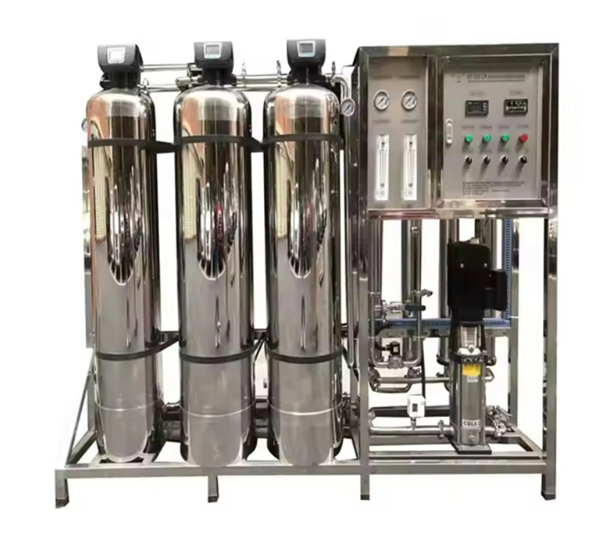
Many industrial facilities actively shift away from standard municipal water supplies. Municipal water quality fluctuates unpredictably. This variance disrupts sensitive manufacturing processes. Facilities now demand controlled, ultra-pure water generation on-site. Boiler feed water requires minimal mineral content to prevent scale buildup. Pharmaceutical manufacturers need strict compliance with purified water standards. Other plants pursue zero liquid discharge (ZLD) initiatives to meet environmental goals. An industrial reverse osmosis plant delivers this necessary control. It transforms unpredictable feed water into a reliable, high-purity asset.
You must understand the physical architecture to evaluate a system properly. A standard commercial system relies on several integrated elements to function. A failure in one component compromises the entire process.
High-Pressure Pumps: These provide the immense mechanical force required to overcome natural osmotic pressure. They push feed water through the microscopic membrane pores.
Pressure Vessels: These robust cylindrical housings contain the membrane elements. They withstand extreme internal pressures without rupturing.
Semi-Permeable Membranes: These form the heart of the system. Manufacturers typically use polyamide thin-film composite materials. They block dissolved salts while allowing water molecules to pass.
Control Skids: These centralize the electrical and mechanical controls. They house flow meters, pressure gauges, and automated valves.
You cannot manage what you do not measure. You must establish clear Key Performance Indicators (KPIs) before commissioning a plant. The recovery rate represents the percentage of feed water converted into usable permeate. Higher recovery means less waste, but it increases scaling risks. The salt rejection rate measures the percentage of dissolved solids removed from the water. Industrial applications often require rejection rates above 99%. Flow capacity dictates the total volume processed. Engineers measure this in Gallons Per Day (GPD) or Cubic Meters Per Hour. You must align these metrics strictly with your production demands.
Engineers design these systems in different physical configurations. You must choose a format that matches your facility layout and deployment timeline. Review the chart below to understand the primary categories.
Plant Category |
Primary Application |
Deployment Speed |
Infrastructure Needs |
|---|---|---|---|
Skid-Mounted |
Existing indoor manufacturing facilities |
Fast |
Level concrete floor, climate control |
Containerized |
Remote locations, mining, municipal backup |
Very Fast |
Outdoor space, minimal foundation |
Custom-Engineered |
High-capacity desalination, complex processing |
Slow |
Extensive site engineering and civil work |
Manufacturers pre-assemble these units onto a welded metal frame. This design offers a plug-and-play solution for facilities with existing indoor space. The skid arrives at your site fully piped and wired. You only need to connect the feed water, permeate line, reject line, and power supply. Skid-mounted systems suit manufacturing plants requiring rapid deployment. They demand minimal onsite civil engineering.
Engineers house these systems entirely within standard ISO shipping containers. They offer a highly mobile and ruggedized solution. The containers feature built-in climate control, lighting, and security. They isolate the sensitive equipment from harsh external environments. Containerized systems fit perfectly in remote mining sites or disaster relief scenarios. They also serve as excellent temporary backups for municipal water districts.
Standardized configurations fail when treating extreme water volumes or unique chemistries. Custom-engineered plants are built on-site from the ground up. Municipal desalination facilities require this approach. Engineers must design massive intake structures and complex brine dispersion networks. Custom plants handle extreme feed water salinity that destroys standard equipment. They require significant upfront planning and extended construction timelines.
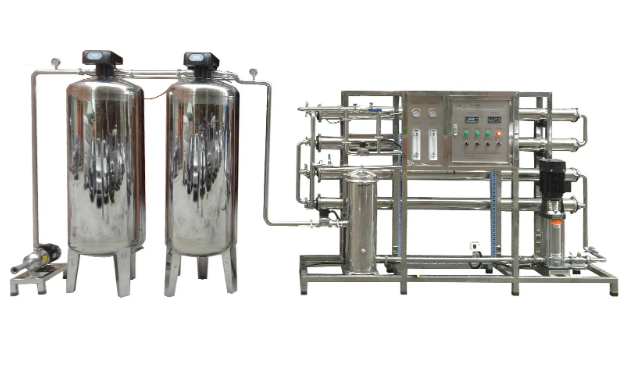
This represents the foundational step of any successful water project. You cannot buy an off-the-shelf unit without analyzing your water source first. You must evaluate Total Dissolved Solids (TDS), pH levels, and seasonal temperature fluctuations. You must also measure the Silt Density Index (SDI) and biological contaminants. Brackish water requires different membrane specifications than seawater. Industry standards mandate at least a 30-day sampling period. This prevents catastrophic system failures caused by seasonal water quality spikes.
Best Practice: Always use a certified third-party laboratory to conduct your water analysis. Do not rely solely on historical municipal data, as pipe degradation often alters water chemistry before it reaches your facility.
Pre-treatment determines the lifespan of your entire system. A robust pre-treatment design prevents premature membrane failure. Feed water often contains suspended solids, chlorine, and organic matter. These elements destroy sensitive polyamide membranes rapidly. You must assess the need for multimedia filtration to remove particulates. Ultrafiltration acts as an excellent barrier against microscopic contaminants. You must also implement precise anti-scalant dosing. This chemical injection prevents minerals from crystallizing on the membrane surface.
Common Mistake: Facility managers often under-size the pre-treatment equipment to save initial space. This inevitably leads to rapid membrane fouling and severe production downtime.
High-pressure pumps consume massive amounts of electricity. You must mitigate this electrical demand through smart engineering. Energy Recovery Devices (ERDs) capture the kinetic energy from the high-pressure reject stream. They transfer this energy back into the feed stream. This drastically reduces the primary pump's workload. You must also insist on Variable Frequency Drives (VFDs) for all major motors. VFDs adjust the motor speed to match actual process demands. This prevents the system from running at maximum power unnecessarily.
Modern industrial facilities require integrated data environments. You should evaluate the system's SCADA compatibility. Seamless data integration allows operators to monitor performance metrics centrally. Remote monitoring capabilities alert your team to pressure drops or flow anomalies instantly. You should also demand automated Clean-in-Place (CIP) systems. Automated CIP cycles flush the membranes with specialized chemicals safely. This reduces manual oversight and protects operators from chemical exposure.
Membrane degradation remains an unavoidable operational reality. Biological fouling occurs when bacteria form slime layers on the membrane surface. Mineral scaling happens when calcium, magnesium, or silica precipitate out of the water. Both scenarios choke the system and reduce permeate flow. You must implement strict mitigation strategies. Operators must adhere to rigorous daily monitoring logs. You must schedule routine chemical cleaning cycles before pressure differentials reach critical levels. Waiting too long to clean a fouled membrane often renders it unsalvageable.
A reverse osmosis plant separates water; it does not make contaminants disappear. The system produces a highly concentrated reject stream known as brine. Disposing of this brine carries significant environmental and financial impacts. You cannot simply dump concentrated salts into a local sewer indiscriminately. Municipalities enforce strict discharge limits. You must outline viable disposal options early in the planning phase. These options may include large evaporation ponds for dry climates. Some facilities require further thermal processing like mechanical vapor recompression to achieve true zero liquid discharge.
Industrial systems occupy significant physical space. You must account for the required clearance around pressure vessels. Technicians need room to extract and replace membranes safely. The infrastructure requirements extend beyond mere square footage. High-pressure pumps generate substantial vibration. You must pour specialized load-bearing concrete slabs to isolate this equipment. Furthermore, the electrical grid at your facility may require an upgrade. The massive startup currents of industrial pumps often overwhelm older electrical panels.
Procuring an industrial water system requires disciplined analysis. Do not buy off-the-shelf capacity based purely on estimated flow rates. You must base your final decision strictly on a comprehensive feed water analysis and your required permeate purity. A poorly designed system will inevitably fail under industrial stress. The cheapest initial quote frequently leads to disastrous outcomes due to inadequate pre-treatment or inefficient pump sizing. You must prioritize long-term reliability over superficial savings. As a critical next step, advise your procurement team to commission an independent water analysis immediately. You should also seek out integration partners who offer pilot-scale testing. Running a pilot unit proves the specific pre-treatment concept before you commit to a full-scale implementation.
A: Industrial membranes typically last between three to five years. This lifespan heavily depends on pre-treatment efficacy and the feed water's Total Dissolved Solids (TDS). High-fouling environments can degrade membranes in months if you skip proper maintenance. You must adhere to strict Clean-in-Place (CIP) schedules and optimize antiscalant dosing to maximize membrane longevity.
A: Recovery rates generally range from 50% to 85% for brackish or freshwater applications. Seawater systems yield lower rates, typically between 30% and 45%. Osmotic pressure dictates these physical limits. Forcing higher recovery rates requires exponentially more energy and increases the risk of severe mineral scaling on the membrane surfaces.
A: It cannot treat raw wastewater directly. A reverse osmosis plant requires extensive primary and secondary treatment before processing heavily contaminated water. You must use technologies like membrane bioreactors (MBRs) or ultrafiltration to remove suspended solids, biological loads, and gross organics. Otherwise, rapid and irreversible membrane fouling will destroy the system.
A: A water softener relies on an ion-exchange process to replace hard minerals like calcium and magnesium with sodium. It targets water hardness but leaves other impurities behind. Conversely, a reverse osmosis system uses high pressure to push water through a semi-permeable membrane. This process strips out almost all dissolved solids, heavy metals, and organics.


