


Views: 0 Author: Site Editor Publish Time: 2026-08-17 Origin: Site


Feed water salinity represents the foundational variable in reverse osmosis and thermal engineering. It directly dictates plant design, energy requirements, and overall economic viability. Variations in Total Dissolved Solids (TDS) occur frequently across different environments. They arise from seasonal changes, tidal patterns, or specific geographic locations. For example, Mediterranean water parameters differ vastly from Arabian Gulf conditions. These fluctuations can severely impact operating expenses (OPEX) and output capacity. Engineers must account for them during the procurement and design phase. Otherwise, facilities risk massive inefficiencies and unexpected downtime. We will analyze how salinity fluctuations impact thermodynamics, membrane integrity, and final water quality. You will learn how to evaluate systems built to handle these precise challenges effectively.
Higher OPEX via Osmotic Pressure: Every 1,000 ppm increase in feed water salinity requires a proportional increase in applied hydraulic pressure, directly driving up energy consumption.
Permeate Quality Risks: Elevated feed salinity increases the rate of salt passage, often necessitating secondary treatment passes to meet municipal drinking water standards.
Accelerated Component Wear: High-salinity environments increase scaling potential and require specialized, corrosion-resistant alloys (like Duplex stainless steel) for high-pressure components.
Design Flexibility is Critical: Modern plants mitigate salinity spikes through Energy Recovery Devices (ERDs) and Variable Frequency Drives (VFDs) to maintain a stable long-term operational model.
Total Dissolved Solids and osmotic pressure share a direct, undeniable correlation. Natural osmosis drives fresh water toward saline water to balance concentrations. Reverse osmosis must overcome this natural force. Standard seawater contains approximately 35,000 ppm of dissolved salts. It requires roughly 28 to 30 bar of pressure just to overcome this baseline osmotic pressure. You cannot produce a single drop of fresh water until you breach this threshold.
Higher salinity environments compound this challenge drastically. In enclosed bodies like the Arabian Gulf, feed water frequently exceeds 45,000 ppm. High-pressure pumps must operate at 65 to 80 bar to maintain target recovery rates. They push against a much steeper osmotic gradient. This physical reality forces mechanical systems to work significantly harder.
Energy consumption remains the largest single OPEX line item for any facility. We measure this energy penalty in kilowatt-hours per cubic meter (kWh/m³). A 10% increase in feed salinity does not just add a linear power draw. It can result in a non-linear spike in power requirements. Facilities without adaptive energy recovery face crippling utility bills during seasonal salinity peaks. Efficient pump selection and responsive motor controls become mandatory to survive these spikes.
Regional Salinity and Baseline Pressure Requirements
Geographic Region | Average Feed Salinity (TDS ppm) | Estimated Osmotic Pressure (bar) |
|---|---|---|
Pacific Ocean | 33,000 - 35,000 | 27 - 29 |
Mediterranean Sea | 38,000 - 40,000 | 31 - 33 |
Red Sea / Arabian Gulf | 41,000 - 46,000+ | 34 - 38 |
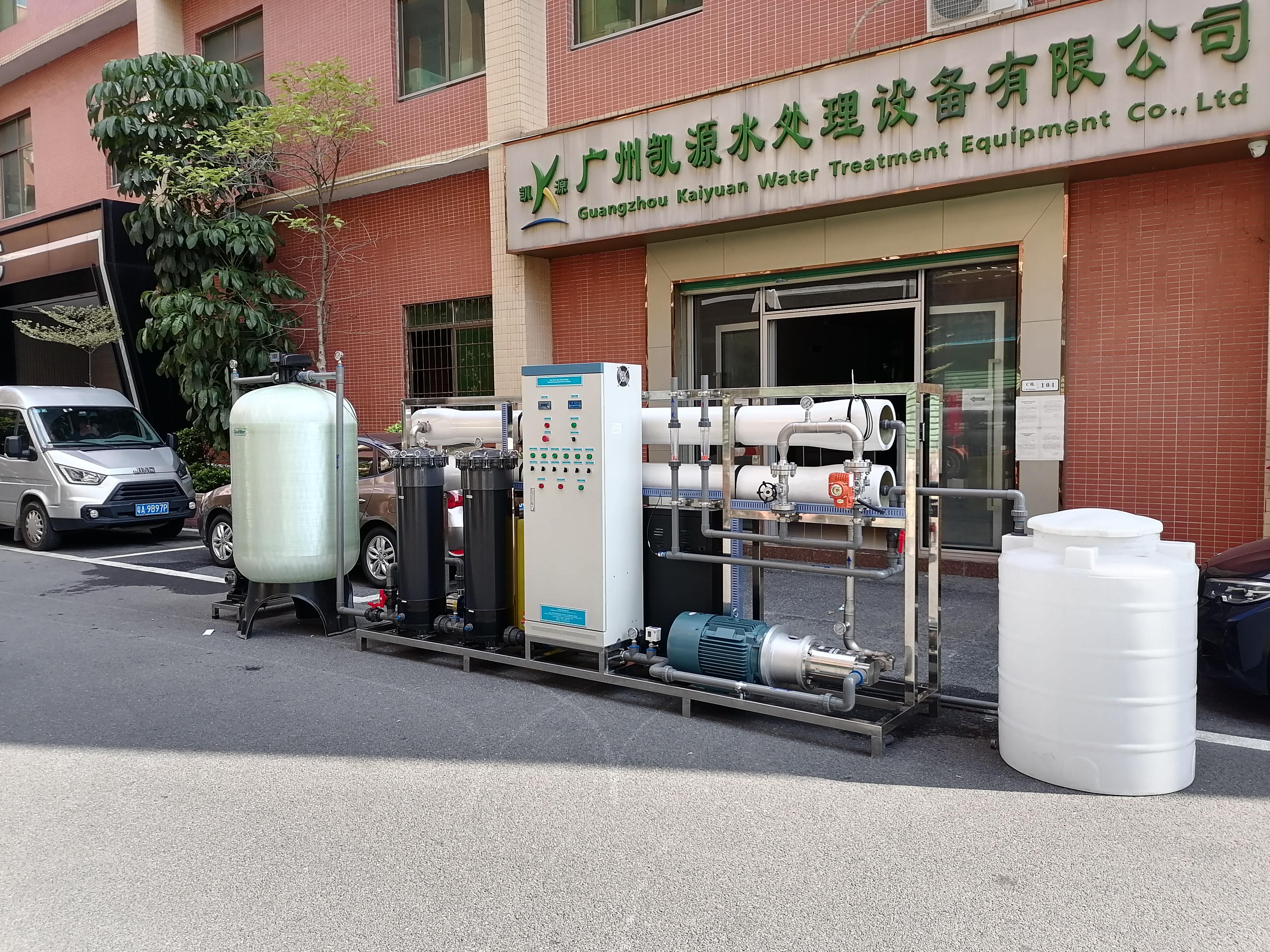
No reverse osmosis membrane rejects 100% of dissolved solids. Salt passage dynamics dictate that a small fraction of ions will always cross the membrane barrier. A higher feed concentration naturally results in higher permeate TDS. This happens because the concentration gradient across the membrane becomes much steeper. High salinity literally pushes more salt through the microscopic pores.
Municipal networks enforce strict regulatory requirements for potable water. The World Health Organization (WHO) typically mandates less than 500 mg/L TDS for drinking water. They also enforce stringent limits on specific ions like boron and chlorides. Meeting these targets requires precision engineering. Any Seawater Desalination System for Drinking Water must account for peak seasonal salinity to avoid violating health codes.
Extreme feed salinity often forces a facility to implement secondary treatments. A single-pass system might yield 600 mg/L TDS from a 45,000 ppm feed source. This falls short of WHO standards. Engineers must then design a partial or full second-pass RO system. The second pass treats the permeate from the first pass again. This effectively doubles the membrane footprint. It also increases energy use to guarantee potable water quality.
Steps to Ensure Permeate Quality Under High Salinity:
Continuous TDS Monitoring: Install real-time conductivity meters on the feed line to detect sudden salinity spikes.
Dynamic Blending: Route specific volumes of first-pass permeate through a second pass, blending the two streams to hit exact quality targets.
pH Adjustment: Inject sodium hydroxide before the second pass to improve boron rejection rates.
Post-Treatment Remineralization: Add calcium and magnesium back into the highly pure permeate to stabilize it and prevent pipeline corrosion.
High salinity directly threatens membrane health through a phenomenon called concentration polarization. As water passes through the membrane, rejected salts accumulate at the surface. This creates a boundary layer where local salinity is much higher than the bulk feed water. High feed salinity exacerbates this localized buildup. It reduces flux, which is your actual water production rate. The system must then apply even higher pressure to compensate for this dense salt layer.
Elevated salinity often correlates with higher concentrations of sparingly soluble salts. These include calcium carbonate, calcium sulfate, and barium sulfate. When these compounds exceed their solubility limits in the boundary layer, they precipitate. This triggers irreversible membrane scaling. Mineral scale blocks membrane pores permanently if left untreated. It destroys efficiency and ruins expensive components.
This operational reality heavily impacts maintenance schedules. High-salinity feed water typically increases the frequency of Clean-In-Place (CIP) protocols. Operators must shut down trains and flush them with harsh acids or bases. This reduces overall plant availability and uptime. It also drives up chemical consumption costs significantly. To combat these risks, operators must follow rigorous best practices.
Optimize Antiscalant Dosing: Inject specialized polymeric antiscalants matched precisely to the feed water's mineral profile.
Limit Recovery Rates: Keep single-pass recovery between 35% and 45% to prevent supersaturation of the brine stream.
Enhance Crossflow Velocity: Maintain high feed flow rates across the membrane surface to sweep away rejected salts and minimize the boundary layer.
Pre-treatment Upgrades: Utilize ultrafiltration ahead of the RO unit to remove particulate matter that could act as nucleation sites for mineral scale.
Modern engineering offers robust solutions to decouple high salinity from crippling energy bills. Energy Recovery Devices (ERDs) serve as the primary defense. Isobaric ERDs, like pressure exchangers, capture up to 95% of the hydraulic energy from the high-pressure brine reject stream. They transfer this pressure directly to the incoming feed water. This dramatically reduces the load on the main high-pressure pump. You recover wasted energy instead of venting it.
Variable Frequency Drives (VFDs) provide another critical layer of adaptability. Salinity and temperature shift constantly throughout the year. VFDs connect to high-pressure pumps and automatically adjust motor speed in response to these shifts. If winter rains drop the feed salinity, the VFD slows the pump. This prevents dangerous over-pressurization and wasted energy. They ensure the plant uses only the exact energy required for that specific moment.
Membrane selection also plays a crucial role in mitigating salinity challenges. Engineers must balance rejection rates against energy demands. High-rejection membranes deliver superior water quality but require immense pressure. High-flux membranes require less energy but allow more salt passage. Hybrid configurations offer a balanced solution. They place high-rejection elements at the front of a vessel and high-flux elements at the rear. This equalizes flux distribution and optimizes both energy and quality.
Membrane Configuration Trade-offs
Membrane Type | Salt Rejection Rate | Energy Requirement | Best Application Scenario |
|---|---|---|---|
Standard High-Rejection | 99.7% - 99.8% | Very High | Single-pass potable water from average seawater. |
Ultra High-Rejection | > 99.85% | Maximum | Extreme salinity (e.g., Arabian Gulf) requiring strict boron removal. |
High-Flux / Low-Energy | 99.4% - 99.6% | Moderate | Second-pass systems or moderate salinity environments. |
Designing for the worst-case scenario creates an engineering dilemma. Do you size a plant for peak summer salinity and temperature, or do you design for average conditions? Sizing for the absolute peak increases upfront capital expenditure (CAPEX) significantly. You must buy larger pumps, more membranes, and heavier piping. However, failing to design for peak conditions guarantees catastrophic production drops when seasonal salinity spikes occur.
Evaluating CAPEX versus OPEX trade-offs forms the core of smart procurement. Upgrading to super-duplex stainless steels and advanced ERDs requires higher upfront capital. Standard stainless steel might save money today, but high chlorides will corrode it quickly. Investing in superior alloys and high-efficiency drives secures predictable, lower OPEX over a 20-year plant lifecycle. Every custom Seawater Desalination Plant requires a strict financial model that accounts for these variables.
Buyers must scrutinize vendor evaluation criteria carefully. Never accept generalized performance claims. Demand site-specific pilot testing data based on your exact water chemistry. Scrutinize the vendor's specific energy consumption guarantees (SEC) under maximum expected salinity. Review their warranty terms regarding membrane life under harsh scaling conditions. Vendors should transparently detail how their design handles long-term operational stress.
Feed water salinity is never just a simple environmental data point. It acts as the primary driver of a facility's entire financial and operational model. High dissolved solids push osmotic pressure limits, mandate higher energy consumption, and threaten long-term component survival. Managing these factors dictates whether a facility remains profitable or becomes a maintenance nightmare.
Evaluating any desalination infrastructure requires moving far beyond standard capacity metrics. You must demand rigorous, site-specific water characterization. Adaptive engineering, leveraging ERDs and VFDs, separates modern successes from outdated failures. You must address both peak salinity and temperature variations before finalizing any design.
We encourage project stakeholders to initiate a comprehensive feed water analysis immediately. Partner with qualified engineering teams to request a site-specific, long-term operational cost projection. Secure your water production reliability by demanding data-driven procurement strategies today.
A: Most standard commercial SWRO plants are designed for up to 45,000 ppm. Salinities approaching 50,000 ppm or higher require specialized equipment. These extreme levels, often found near brine discharges or enclosed seas, mandate ultra-high-pressure RO (UHPRO) components or hybrid thermal systems to overcome the massive osmotic pressure.
A: Higher feed water temperatures decrease water viscosity. This lowers the required pump pressure and saves energy. However, it simultaneously increases salt passage through the membrane. This dynamic can compromise drinking water quality, often requiring engineers to balance energy savings against strict permeate regulations.
A: Elevated chloride levels aggressively attack standard stainless steels under high pressure. They cause rapid pitting and crevice corrosion. Systems must utilize high-grade alloys, like SMO 254 or Super Duplex stainless steel. These specialized materials ensure a 20-plus year lifespan without suffering catastrophic structural failures.
A: No. Conventional pre-treatment methods like ultrafiltration, media filters, and dissolved air flotation (DAF) only remove suspended solids, organics, and turbidity. They do not remove dissolved salts or lower the TDS. Only the RO membranes or thermal evaporation phases can actually reduce salinity.


