


Views: 0 Author: Site Editor Publish Time: 2026-08-15 Origin: Site


Global reliance on desalination is growing rapidly for municipal and industrial water security. Municipalities and private sectors increasingly demand guaranteed water security. This technology has successfully transitioned from a localized last resort to a baseline infrastructure strategy. Understanding the purification mechanics is absolutely non-negotiable for project stakeholders. The underlying technology directly dictates your initial CAPEX, ongoing OPEX, and strict regulatory compliance. You cannot simply install a system and expect perfect operation without deep technical oversight. This article serves as a comprehensive technical and commercial guide. We detail how modern facilities convert complex marine source water into certified, safe potable water. We will also show you how to properly evaluate these systems for large-scale deployment. By understanding the core filtration mechanisms and environmental mandates, you can build a highly resilient water supply. Let us explore the strict engineering requirements needed to guarantee both plant reliability and ultimate public health.
A commercial Seawater Desalination Plant relies on a strict multi-stage process: pre-treatment, Reverse Osmosis (RO), and post-treatment remineralization to ensure safety and stability.
The viability of a Seawater Desalination System for Drinking Water is heavily dependent on advanced Energy Recovery Devices (ERDs) and robust pre-treatment to control operating costs.
Meeting World Health Organization (WHO) and local municipal water standards requires precise chemical dosing and automated water quality monitoring systems.
Environmental compliance (brine disposal, marine-safe intakes) and site-specific water characterization are the highest-risk hurdles in project deployment.
Operating a modern Seawater Desalination Plant requires multiple precision stages. You cannot force raw ocean water directly through fine membranes. Doing so will instantly destroy the equipment. Engineers break the process into distinct filtration steps. Each step protects the subsequent stage. This methodical approach guarantees long-term plant viability.
The process begins at the intake. Engineers generally choose between open-ocean intakes and subsurface intakes. Subsurface intakes use beach wells or infiltration galleries. They leverage the ocean floor as a massive, natural sand filter. This drastically reduces incoming biological loads. Open-ocean intakes pull water directly from the sea. They require extensive mechanical screening to protect marine life and prevent debris ingress.
Once inside the plant, the water enters pre-treatment. This stage is crucial. We routinely deploy Ultrafiltration (UF) and Dissolved Air Flotation (DAF). DAF systems inject micro-bubbles into the raw water. These bubbles attach to low-density organics like algae. They float the contaminants to the surface for easy removal. UF acts as a microscopic physical barrier. It removes remaining suspended solids and bacteria.
Decision Lens: Inadequate pre-treatment is the leading cause of premature RO membrane fouling. Fouling restricts water flow. It drastically increases your pump energy requirements. It also spikes chemical cleaning costs. Skimping on pre-treatment guarantees inflated daily operating expenses.
Reverse Osmosis (RO) drives the actual desalination process. It relies on fundamental physics. High-pressure pumps push the pre-treated seawater into pressure vessels. These vessels house semi-permeable polyamide membranes. The pumps must overcome the natural osmotic pressure of seawater. They operate at extreme pressures, often between 60 and 80 bar. Only pure water molecules pass through the microscopic membrane pores. The remaining salty brine gets left behind.
Decision Lens: System designers must balance recovery rate against energy consumption. The recovery rate is your total freshwater yield. Higher yields require higher pump pressures. This exponentially increases your electrical load. You must optimize this balance based on local power tariffs.
RO permeate is incredibly pure. However, this high purity makes it highly corrosive. It acts as a hungry solvent. If you pump it directly into municipal pipes, it will strip metals from the infrastructure. This causes severe heavy metal leaching and red water issues. It is completely unsafe for immediate consumption.
We must stabilize the water. We add calcium and magnesium back into the permeate. We also adjust the pH using lime, limestone, or carbon dioxide. This process gives the water a positive Langelier Saturation Index (LSI). It deposits a microscopic protective scale inside the municipal pipes.
Decision Lens: This stabilization stage is strictly regulated. This precise remineralization process is where the output officially becomes a compliant Seawater Desalination System for Drinking Water.
Trust is the foundation of municipal water supply. Citizens need absolute certainty regarding their tap water. Modern desalination plants operate under intense regulatory scrutiny. They deploy multiple overlapping safety protocols to prove their safety.
Global baseline standards dictate the exact pathogenic and chemical removal requirements. The World Health Organization (WHO) provides comprehensive guidelines. Local agencies like the EPA enforce strict maximum contaminant levels. Plants must achieve specific logarithmic reductions for viruses and bacteria. We also monitor complex dissolved ions. Boron is a primary concern. Seawater contains high boron levels. Standard RO membranes struggle to reject boron perfectly. Plants often require targeted second-pass RO systems to meet strict boron limits, especially if the municipality reuses wastewater for agriculture.
Human testing is too slow for active plant operations. Modern plants use SCADA (Supervisory Control and Data Acquisition) networks. These systems rely on hundreds of automated sensors. They track salinity, pH, temperature, and turbidity in real-time. If a membrane tears, turbidity and conductivity will instantly spike. The SCADA system detects this anomaly in milliseconds. It instantly diverts the off-spec water to a reject drain. It never enters the municipal distribution grid. This automated gatekeeping guarantees public safety.
We must polish the water before it leaves the facility. Disinfection provides the final safety barrier. Many plants use inline UV sterilization. UV light destroys the DNA of any escaping biological contaminants. Finally, we inject chlorine or chloramines. This creates a persistent residual protection layer. It ensures the water remains sterile as it travels miles through underground distribution networks.
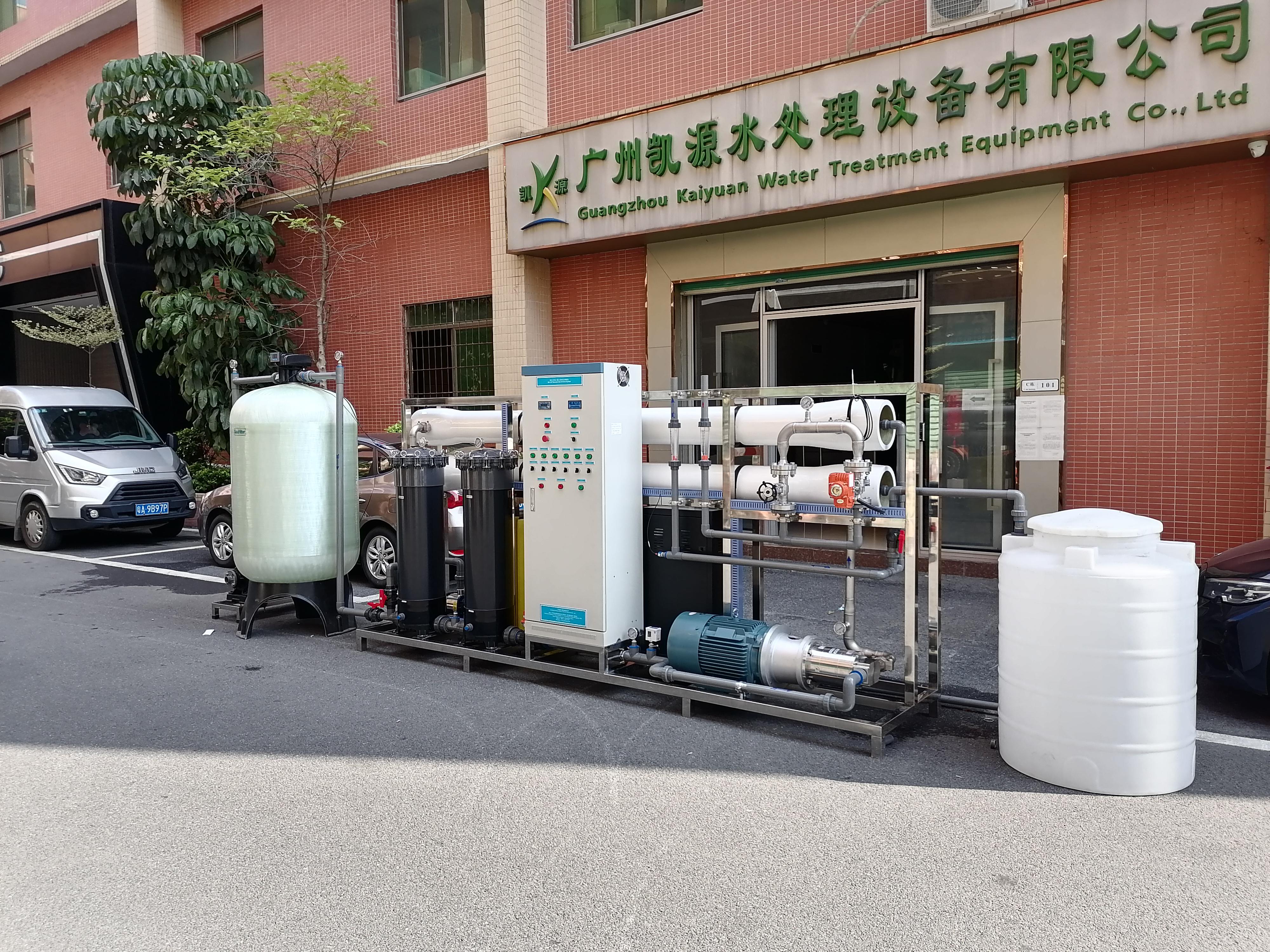
Procuring a large-scale water treatment facility requires rigorous technical evaluation. Buyers must look past the initial price tag. You need to assess long-term operational resilience. We evaluate vendors and EPC contractors using specific performance metrics.
Power consumption dominates a desalination plant's operating budget. You must evaluate how the system handles hydraulic energy. The reject brine stream leaves the RO membranes under immense pressure. It is incredibly wasteful to simply throttle this pressure away. Modern plants use advanced Energy Recovery Devices (ERDs). Isobaric pressure exchangers capture this hydraulic energy. They transfer it directly to the incoming raw seawater. This mechanical transfer reduces total power consumption drastically. A highly optimized plant should consume between 3.0 and 4.5 kWh/m³.
Membranes degrade over time. They suffer from chlorine exposure, biological fouling, and mineral scaling. You must understand the factors affecting your replacement cycles. Buyers should demand strict warranty terms from system integrators. A realistic lifespan for commercial RO membranes spans 5 to 7 years. However, this lifespan heavily relies on the quality of your pre-treatment system.
Municipal demand grows in unpredictable phases. Building a massive, custom civil infrastructure plant carries high financial risk. Assess the benefits of modular, containerized systems. These systems allow for phased capacity expansion.
Rapid Deployment: Containerized systems arrive pre-assembled and pre-tested from the factory.
Reduced Civil Works: You only need basic concrete pads and utility connections to start producing water.
Flexible Upgrades: You can add auxiliary treatment modules seamlessly as local regulations change.
Highly specialized operational staff are expensive and difficult to retain. Advanced control systems mitigate this labor risk. They automate complex procedures like membrane backwashing and chemical dosing adjustments. A well-designed control platform allows a small team to manage a massive facility safely.
Core Evaluation Benchmarks for Desalination Systems
Performance Metric | Optimal Industry Range | Operational Warning Sign |
|---|---|---|
Energy Consumption (w/ ERD) | 3.0 - 4.5 kWh/m³ | Consistently exceeding 5.0 kWh/m³ |
RO Membrane Lifespan | 5 - 7 Years | Replacement required under 3 years |
Pre-Treatment SDI (Silt Density Index) | < 3.0 | Frequent spikes above 5.0 |
Plant Recovery Rate (Seawater) | 40% - 50% | Dropping below 35% without temperature shifts |
Deploying a desalination plant is not just an engineering challenge. It is a major environmental intervention. Project developers must navigate strict ecological compliance frameworks. Transparent risk assessment builds credibility with local authorities.
Desalination produces high-salinity discharge. This brine is significantly denser than natural seawater. If you discharge it poorly, it sinks to the ocean floor. It suffocates benthic marine life and creates dead zones. Proper outfall design is mandatory. Engineers use complex hydrodynamic dispersion modeling. We install multi-port diffusers on the end of outfall pipes. These diffusers jet the brine upward into the water column. This promotes rapid, turbulent mixing with ambient seawater. It ensures salinity returns to normal background levels within a tiny mixing zone.
Never assume your local seawater is "standard." Coastal water chemistry fluctuates wildly. You face massive seasonal variations. Seasonal algae blooms choke physical filters. Red tides introduce devastating organic loads. Sudden temperature drops increase water viscosity. This forces your high-pressure pumps to work significantly harder. You must conduct comprehensive, longitudinal water studies before finalizing a plant design. A single grab sample is entirely insufficient.
Buyers often face intense pressure to reduce initial capital expenditure (CAPEX). This mindset is dangerous in desalination. Cheaper upfront materials invariably yield catastrophic operating expenses (OPEX). If you select lower-grade stainless steel to save money, it will corrode in a marine environment. You will face massive replacement costs. If you under-size the pre-treatment system, you save money initially. But your RO membranes will suffer severe chemical scaling. Your energy draw will skyrocket. You must analyze lifecycle costs realistically.
Moving from a conceptual idea to a signed procurement contract requires a disciplined methodology. You must validate your engineering assumptions using real-world data.
Theoretical modeling is not enough. You must conduct physical pilot testing. Operators rent small, containerized pilot units and deploy them at the actual intake site. You run this pilot for several months across changing seasons. This proves your pre-treatment sequence actually handles the local silt and algae. It guarantees your full-scale procurement is based on proven chemistry.
Stakeholders must align their fundamental project goals early. What defines success for your facility? Are you designing the plant strictly for the lowest possible cost per cubic meter? Or is this facility supplying a critical industrial hub or hospital network? If reliability is paramount, you must over-engineer the system. You will need extensive redundancy, standby pumps, and dual-train configurations.
Not all system integrators possess the same maritime experience. You must interrogate potential manufacturing partners aggressively. When vetting suppliers, demand answers to these specific questions:
Can you provide operational data from reference plants treating a similar feedwater profile?
Do you guarantee RO membrane lifespans under our specific, tested water conditions?
Do you offer localized service level agreements with nearby field technicians?
Are spare parts, particularly specialized high-pressure pump seals, stocked regionally?
Does your control system use open-source architecture, or are we locked into proprietary software?
Producing safe drinking water via desalination is a highly proven process. It operates under incredibly strict regulatory frameworks. Success depends entirely on matching the mechanical engineering to the specific local feed-water chemistry. Robust pre-treatment protects your membranes. Advanced energy recovery protects your budget. Precise remineralization protects public health.
Do not rely on guesswork when planning municipal water infrastructure. We strongly encourage project stakeholders to act systematically. Request a preliminary source water analysis today. Schedule a dedicated technical consultation with experienced integrators. They will help you properly scope the CAPEX and OPEX of a custom-fit desalination solution. Secure your region's water future with validated engineering.
A: Modern facilities are highly optimized. They typically consume between 3.0 and 4.5 kWh per cubic meter of produced water. This efficiency relies heavily on advanced Energy Recovery Devices (ERDs) capturing pressure from the brine stream.
A: Yes, it is completely safe. RO removes pathogens, heavy metals, and dissolved solids. The final stages precisely remineralize the water with calcium and magnesium. It undergoes strict UV sterilization and chlorination, making it identical or superior to standard municipal water.
A: The removed salt forms a dense brine. Facilities return this brine to the ocean using multi-port diffusers. These specialized pipes mix the brine rapidly with surrounding currents, preventing localized salinity spikes and protecting sensitive marine ecosystems.
A: A high-quality commercial membrane usually lasts 5 to 7 years. However, this lifespan depends entirely on the effectiveness of the pre-treatment system. Poor filtration of algae or silt will foul the membranes and drastically shorten their viable life.


