


Views: 0 Author: Site Editor Publish Time: 2026-07-31 Origin: Site


An electrodeionization system operates continuously without harsh chemicals, revolutionizing high-purity water generation. However, operators must remember a critical reality. "Low maintenance" does not equate to "zero maintenance" for these advanced units. Neglecting routine care inevitably leads to internal scaling and catastrophic module failure.
Unexpected downtime in high-purity applications carries severe business consequences. You might face halted pharmaceutical batches or massive yield drops in microelectronics. Power generation plants risk rapid boiler scaling if water quality drops. These disruptions threaten production schedules, compromise strict regulatory compliance, and damage expensive downstream infrastructure.
This guide provides a transparent, evidence-based framework for scheduling your system upkeep effectively. We will help you identify early failure warning signs long before they escalate into critical emergencies. Read on to evaluate professional service intervals, optimize daily logging routines, and guarantee the long-term operational reliability of your high-purity equipment.
Routine Monitoring is Daily: Operational data logging (voltage, flow, resistivity) is required daily to establish performance baselines.
Preventative Maintenance is Quarterly/Annually: Physical inspections and basic servicing should occur every 3 to 6 months; chemical cleanings (if required) are typically annual.
Pre-treatment is the Priority: 90% of EDI module degradation stems from upstream failures (e.g., RO membrane scaling, hard water bypass).
Data Drives the Schedule: Maintenance frequencies must adapt to raw water quality fluctuations and specific industry compliance standards (e.g., USP water requirements).
Facility managers need predictable maintenance schedules. This helps you budget for operational expenditures accurately. It also allows you to plan facility downtime effectively. Setting a baseline timeline eliminates guesswork from your daily operations. You protect your equipment from unexpected failure while maximizing capital investments.
Daily and weekly routines form your first defense line. Operators must log parameter trends consistently to establish baselines. You should track product water resistivity carefully during every shift. Feed water conductivity and concentrate flow rates require daily checks. You must monitor DC voltage and electrical current across the module. Sudden electrical shifts often indicate internal scaling. They can also signal rapid resin degradation occurring inside the stack.
Quarterly preventative inspections shift focus to hardware integrity. Technicians should check rectifier performance every three months. You must examine electrical connections to address potential thermal wear. Loose connections create serious safety hazards and drop operational efficiency. Facility staff must verify instrument calibration during this phase. Flow meters, conductivity probes, and pressure gauges require regular tuning. Accurate sensors guarantee safe operating conditions for the entire plant.
Annual deep system audits involve comprehensive overhauls. Your team will execute thorough system flushing protocols. They might perform clean-in-place (CIP) procedures if historical data indicates fouling. Maintenance staff should complete O-ring replacements during this shutdown period. You must perform torque checks on all module bolts to prevent leaks. Finally, conduct a complete pre-treatment integration audit. This ensures upstream filters still protect your downstream assets effectively.
The chart below outlines the standard frequency for core maintenance tasks:
Maintenance Task | Frequency | Primary Objective |
|---|---|---|
Parameter Logging (Voltage, Flow) | Daily | Establish performance baselines and spot immediate anomalies. |
Instrument Calibration | Quarterly | Ensure flow meters and probes provide accurate data. |
Electrical Connection Inspection | Quarterly | Identify thermal wear and prevent rectifier failure. |
Clean-in-Place (CIP) | Annually (or as needed) | Remove inorganic scale and organic fouling from resin. |
O-Ring Replacement & Torque Checks | Annually | Prevent physical leaks and maintain stack compression. |
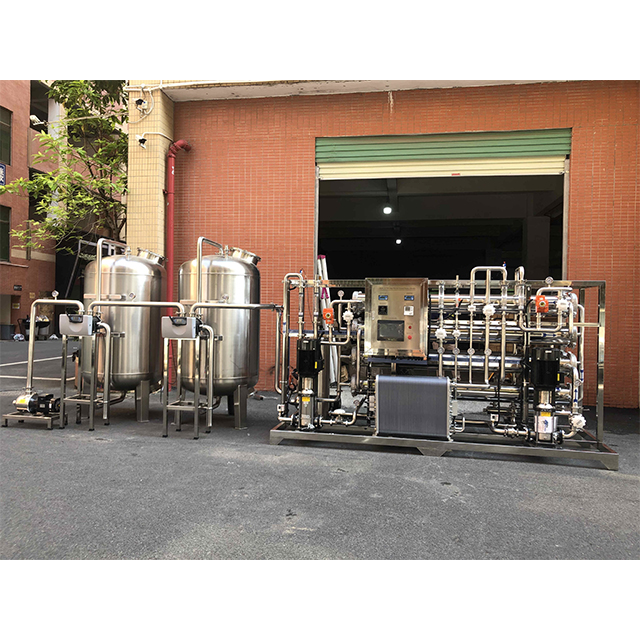
We must shift from time-based to condition-based maintenance strategies. You need to identify anomalies before catastrophic module failure occurs. Smart operators watch for specific failure triggers daily. They do not wait for the annual calendar reminder to take action.
Product water quality decline serves as a primary alert. You might notice a sudden drop in product water resistivity. A steady decline dropping below 16 MΩ·cm demands immediate attention. This indicates potential resin exhaustion within the stack. It could also point to a severe internal flow imbalance. Feed water chemical spikes often cause these rapid quality drops. You must test the raw water supply immediately when this happens.
Pressure drop (ΔP) increases require immediate troubleshooting. You might see increasing differential pressure across the module during routine checks. This points directly to physical fouling within the spacer channels. Organic scaling blocks the internal flow paths effectively. Severe pressure spikes might indicate resin bead fragmentation. Damaged beads restrict internal water movement entirely. You risk irreversible mechanical damage if you ignore pressure warnings.
Voltage and current anomalies offer clear electrical evidence of trouble. The system might require higher voltage to maintain the normal operating current. This serves as measurable evidence of internal scaling. Calcium and magnesium deposits increase electrical resistance significantly. The rectifier works much harder to push current through scaled resin. You must schedule diagnostic testing when these electrical shifts appear. Ignoring voltage spikes usually destroys the internal electrodes.
We must emphasize a harsh implementation reality. An Edi Water Treatment system is only as reliable as its feed water. The upstream reverse osmosis (RO) and softening systems dictate downstream success. You must prioritize upstream defense mechanisms to ensure longevity.
Upstream hardness and organics destroy modules incredibly fast. Trace hardness bypass occurs during missed softener salt refills. Sometimes, a compromised RO membrane lets dangerous contaminants slip through. These minerals rapidly damage sensitive internal components. Calcium forms hard scale on the concentration membranes. This scaling process chokes the electrical current and stops ion exchange.
Carbon dioxide and silica loading present complex operational challenges. Fluctuations in feed water chemistry overwhelm the ion exchange capacity. High CO2 levels consume valuable electrical current unnecessarily. Poor silica removal compromises critical boiler feed applications. You will face more frequent chemical cleaning requirements. Facility managers may need to upgrade membrane degassing equipment to fix this.
We strongly recommend taking proactive steps to defend your equipment. Following basic best practices prevents majority of upstream failures. Ensure you implement the following integration strategies:
Synchronize your preventative service schedules across all connected equipment.
Conduct RO clean-in-place procedures alongside quarterly stack inspections.
Verify water softener resin integrity and brine tank levels weekly.
Calibrate upstream ORP meters to prevent irreversible chlorine oxidation.
Install membrane contactors if raw water CO2 levels fluctuate seasonally.
Maintenance frequencies vary widely across different vertical markets. We must differentiate schedules based on specific risk tolerances. Regulatory lenses also shape your maintenance calendar heavily. What works for light manufacturing will fail in pharmaceutical production.
Pharmaceutical and biotech facilities face intense regulatory scrutiny. They require continuous water deionization reliability every single day. USP and Ph. Eur compliance dictates strict operational parameters. Microbial control dominates the maintenance strategy in this sector. You must execute rigorous hot water sanitization routines frequently. Scheduled heat cycles prevent biofilm formation effectively without harsh chemicals.
Power generation and boiler feed operations prioritize strict mineral control. They emphasize silica removal efficiency above all else. Silica scaling in high-pressure boilers causes catastrophic turbine damage. Plant managers schedule proactive stack cleanings to maintain single-digit ppb silica limits. The cost of turbine failure dwarfs the routine cleaning expenses. Therefore, power plants often adopt aggressive, preventative chemical cleaning schedules.
Microelectronics and semiconductor plants enforce absolute zero-tolerance policies. They focus intensely on ultra-pure water (UPW) stability. Trace boron removal remains a critical performance metric for chip yields. These facilities cannot tolerate any particulate shedding from degraded resin. Maintenance teams replace modules proactively to prevent wafer contamination. Production yields depend entirely on consistent, unbroken UPW quality.
Buyers must choose how to execute their overall maintenance strategy. This decision-stage framework guides you through the available execution options. You must weigh operational risk, internal technical capability, and budget constraints.
In-house feasibility requires significant internal resources. You need highly trained engineering personnel on staff. Your facility must own properly calibrated diagnostic tools. The strategy demands strict adherence to daily parameter logging. This approach carries high risk if staff turnover remains frequent. Losing an experienced operator often leads to missed warning signs. New staff might misinterpret a voltage spike, leading to permanent equipment damage.
Outsourced Service Level Agreements (SLAs) offer predictable reliability. You transfer the operational risk to specialized water treatment experts. When choosing a vendor, look for proprietary CIP capabilities. They should possess deep module regeneration expertise. Always demand guaranteed emergency response times in the service contract.
You must compare the service cost against the operational risk. Electrodeionization water treatment stacks represent a significant capital expense. A fully fouled module can cost over $10,000 per stack to replace. A quarterly service contract provides a predictable budget allocation. It prevents premature destruction of your expensive capital equipment.
Common Mistake: Relying solely on automated alarms. Alarms trigger after the failure occurs. Manual data trending predicts the failure before it happens.
Best Practice: Keep spare rectifier components on-site. Even if you use an SLA, having spare electrical parts eliminates shipping delays during an outage.
Electrodeionization technology significantly reduces hazardous chemical handling compared to traditional mixed-bed systems. However, rigorous monitoring and scheduled maintenance remain non-negotiable for system longevity. Daily data logging, quarterly inspections, and pristine pre-treatment management form the foundation of a successful operation. Neglecting these steps transforms a reliable asset into a costly liability.
We encourage decision-makers to audit their current pre-treatment setup immediately. Review your historical parameter logs to identify any creeping voltage or pressure anomalies. Catching these trends early saves thousands in replacement parts and lost production time.
Do not wait for a sudden drop in water quality to take action. Schedule a professional system performance evaluation today. Consult with an application engineer regarding a preventative maintenance contract to secure your facility's high-purity water supply for the future.
A: The industry standard lifespan for a module is 5 to 10 years. However, this assumes you maintain optimal feed water conditions and adhere to routine servicing. Exceptional pre-treatment and daily monitoring can occasionally extend this lifespan further.
A: Yes, mild scaling and organic fouling can be resolved through chemical Clean-in-Place (CIP) procedures. However, severe internal bridging, melted components, or physical resin fragmentation usually requires a complete module replacement. Routine data logging prevents fouling from reaching an irreversible state.
A: Current fluctuation is typically a symptom of variable feed water conductivity. It can also indicate failing rectifiers or internal gas accumulation. These fluctuations disrupt ion transport and require immediate diagnostic testing to prevent localized overheating within the stack.
A: No. Hot water sanitization (HWS) strictly targets microbial control, which is vital in pharmaceutical applications. Chemical cleaning specifically targets inorganic scaling and organic fouling. Depending on your feed water and industry, you may require both methods to maintain system health.


