


Views: 0 Author: Site Editor Publish Time: 2026-08-03 Origin: Site


The success of electrodeionization water treatment relies entirely on the quality of its feed water. You must treat the EDI module as a highly sensitive polishing step rather than a primary filtration mechanism. When fed improperly, the entire system can fail rapidly.
EDI modules represent a significant capital expenditure in any high-purity water facility. Sending poorly treated water into these units leads to irreversible resin degradation. It also causes severe scaling and highly expensive unplanned downtime. Protecting this investment requires strict adherence to precise feed parameters.
This article will provide the exact feed water parameters required to keep your system running smoothly. We will explain the engineering rationale behind these limits. You will also learn how to design and monitor your upstream pre-treatment architecture to protect your critical assets.
Electrodeionization water treatment requires highly purified feed water, typically RO permeate, to function continuously without scaling or fouling.
Strict limits on Total Exchangeable Anions (TEA), hardness, silica, and free chlorine are non-negotiable for system longevity.
Pre-treatment architecture (e.g., single-pass vs. double-pass RO, membrane degassing) must be designed directly around site-specific raw water metrics.
Continuous monitoring of feed conductivity and pressure drop is required to maintain compliance in critical industries like pharmaceutical and microelectronics.
Proper feed water compliance is a fundamental risk-management necessity. Plant managers often view water purification as a simple linear process. However, the final polishing stage is highly vulnerable. If you ignore strict feed water guidelines, the financial consequences are severe.
Ignoring feed parameters leads directly to catastrophic module failure. You will face sudden, unplanned production halts. These halts cost manufacturing facilities thousands of dollars per hour. Furthermore, you will have to replace ruined modules. This replacement process consumes massive portions of your maintenance budget.
To avoid these financial pitfalls, you must understand the primary threats entering your system. These threats attack the internal components of the module.
Scaling: Excessive hardness primarily causes this issue. Calcium and magnesium ions precipitate inside the concentrate chambers. This precipitation blinds the ion exchange membranes and physically blocks water flow.
Oxidation: Free chlorine or ozone causes permanent damage. These oxidizing agents destroy the cross-linking inside the ion exchange resin. The resin beads swell, fracture, and lose all structural integrity.
Fouling: Total Organic Carbon (TOC) acts as a coating agent. Organic molecules coat the surface of the resin beads. This coating drastically reduces the electrical efficiency and ion transfer rate of the unit.
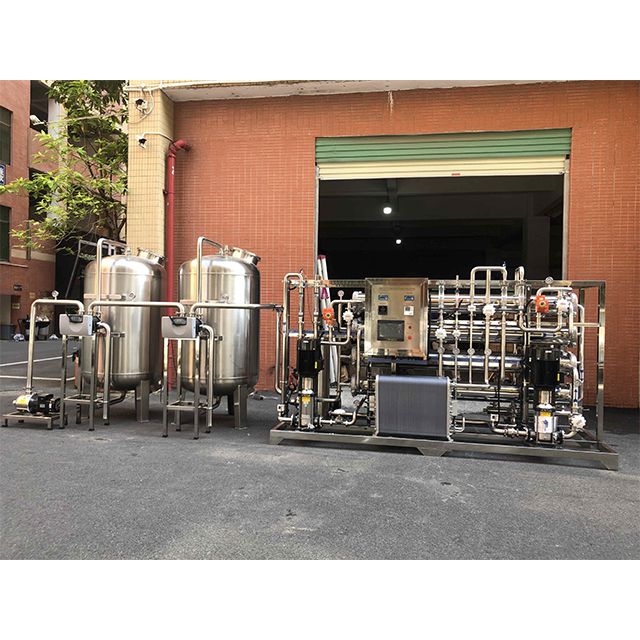
Major manufacturers like GE E-Cell and Ionpure mandate strict baseline specifications. You must evaluate your water against these universally accepted metrics. Failing to meet these baseline requirements will immediately void equipment warranties.
We have compiled a standard specification chart below. It outlines the absolute maximum limits for incoming water.
Parameter | Maximum Allowable Limit | Primary Risk if Exceeded |
|---|---|---|
Conductivity Equivalent (TEA) | < 25 ppm (as CaCO3) | Loss of electrical driving force, low resistivity |
Total Hardness (as CaCO3) | < 1.0 ppm | Severe localized scaling in concentrate chambers |
Silica (SiO2) | < 0.5 ppm | Irreversible silica polymerization on membranes |
Free Chlorine | < 0.02 ppm | Oxidative destruction of resin beads |
Dissolved CO2 | < 5.0 ppm | Excessive ionic load, reduced final water quality |
Total Organic Carbon (TOC) | < 0.5 ppm | Organic fouling and reduced electrical efficiency |
Here is the engineering rationale behind these specific parameters.
Conductivity and Total Exchangeable Anions (TEA): The system relies on an electrical current to drive ions through membranes. If the incoming ionic load is too high, it overwhelms this electrical driving force. You must maintain TEA below 25 ppm. This strict limit ensures the system can achieve target product resistivity.
Total Hardness (as CaCO3): Hardness limits are typically set below 1.0 ppm. Divalent ions like calcium and magnesium migrate toward the cathode. The environment near the cathode is highly alkaline. In this alkaline zone, these ions precipitate instantly. This creates hard scale inside the concentrate chambers. Scale blocks flow and causes internal overheating.
Silica (SiO2): Silica is a weak acid. It is notoriously difficult to remove from water. You must keep silica levels below 0.5 ppm. If concentrations rise, silica begins to polymerize. This polymerization forms a glass-like gel on the anion exchange membranes. This gel permanently ruins membrane permeability.
Free Chlorine: You must maintain a strict zero-tolerance policy for chlorine. The absolute maximum is a trace limit of 0.02 ppm. Any Edi Water Treatment setup will suffer permanent oxidative damage from chlorine exposure. The resin beads will physically disintegrate. Once oxidation occurs, you cannot reverse the damage.
Dissolved Gases (CO2): Carbon dioxide behaves uniquely in water systems. Un-ionized CO2 passes straight through reverse osmosis membranes. Once it enters the downstream polishing unit, it converts into bicarbonate ions. This conversion consumes valuable ion exchange capacity. High CO2 levels will drastically lower your final product water resistivity.
Achieving the strict specifications listed above requires robust upstream technology. Raw municipal or well water is completely unsuitable for direct polishing. You must design a comprehensive pre-treatment architecture. This architecture serves as a protective barrier.
Reverse osmosis is the mandatory baseline precursor. RO membranes remove over 98% of all dissolved solids. Without RO, the downstream polishing unit would choke on the ionic load within minutes.
You must carefully evaluate your raw water Total Dissolved Solids (TDS). This evaluation determines whether you need a Single-Pass or Double-Pass RO system. If raw water TDS is below 300 ppm, a Single-Pass RO is usually sufficient. However, if raw water TDS exceeds 300 ppm, you will likely require a Double-Pass RO setup. Double-Pass systems ensure the permeate meets the strict TEA limits required downstream.
Managing high CO2 loads is a critical engineering challenge. If your RO permeate contains high CO2, you must integrate a degassing step.
Membrane contactors are the most efficient degassing method. They use a vacuum and sweep gas to pull CO2 out of the water physically. Alternatively, you can use chemical dosing. Injecting sodium hydroxide before the RO raises the water pH. This converts free CO2 into alkalinity, which the RO membrane then rejects. However, chemical dosing increases the overall ionic load. Membrane contactors generally offer better protection for Electrodeionization water treatment efficiency.
You must deploy front-end safeguards before the water even reaches the RO phase. Industrial water softeners remove bulk calcium and magnesium. This cation exchange process prevents hardness from scaling both the RO and the final polishing modules.
Activated carbon filtration is equally essential. Carbon beds strip free chlorine and organics from the raw water. You must monitor these carbon beds constantly. If a carbon bed exhausts its capacity, chlorine will break through. This breakthrough will destroy your RO membranes and your final polishing resin simultaneously.
Theoretical designs often clash with implementation realities. Raw water sources shift continuously. Seasonal rains increase organic loading in municipal supplies. Winter temperatures change water viscosity. You must focus on dynamic plant operation to survive these fluctuations.
Continuous monitoring is your only defense against sudden water changes. You cannot rely on weekly manual grab samples. You must install advanced instrumentation directly at the inlet of the polishing module. Essential instruments include inline conductivity sensors, precise pH meters, and Oxidation-Reduction Potential (ORP) meters. ORP meters act as an early warning system for trace chlorine breakthrough.
In critical sectors, this monitoring is legally required. Pharmaceutical facilities producing USP Purified Water face strict auditing. These industries must formally validate their feed water monitoring systems. Regulators will inspect your data logs to ensure the feed water never deviated from safe parameters.
Operators must learn to troubleshoot early warning signs. A sudden drop in product water resistivity is a major red flag. It usually indicates a spike in incoming CO2 or a failure in the RO unit. An unexplained increase in operational voltage is another critical symptom. When voltage spikes, the system is struggling against increased electrical resistance. This resistance almost always points to early-stage fouling or scaling caused by feed water degradation.
Procuring the right equipment requires a logical evaluation framework. You must evaluate different modules based entirely on your specific site water profile. Do not purchase a system based on price alone.
You must acknowledge differing module tolerances. The baseline specifications we discussed earlier represent safe industry averages. However, certain commercial modules feature unique internal engineering. Some manufacturers design specific modules with wider concentrate chambers. These specific models can tolerate slightly higher hardness (up to 2.0 ppm) or elevated silica levels. If your upstream RO struggles to maintain 1.0 ppm hardness, you must actively seek out these high-tolerance modules.
The first action step in procurement is gathering data. You must conduct a comprehensive raw water analysis across multiple seasons. Once you have this data, engage a qualified system integrator. They will run projection software. This software simulates how the specific module will react to your exact water profile. Never finalize a purchase without running these digital pilot tests first.
The final polishing process is highly efficient and sustainable, but its reliability depends entirely on stringent feed water control.
Failing to meet strict parameters for hardness, chlorine, and CO2 will cause permanent resin damage and rapid scaling.
Skimping on pre-treatment capital equates to inflated operational costs, frequent maintenance, and premature module failure.
Robust monitoring, including inline ORP and conductivity sensors, is mandatory to catch upstream RO failures before they destroy downstream equipment.
Next Step: Schedule a comprehensive water quality assessment today. Consult an engineering team to review your existing RO permeate data before upgrading your polishing system.
A: Yes. Reverse Osmosis (RO) is the industry standard precursor. RO removes over 98% of bulk dissolved solids. Without pre-RO filtration, the raw water ionic load would immediately overwhelm the electrical driving force of the downstream module. RO ensures the water meets the strict Total Exchangeable Anions (TEA) limits required for continuous operation.
A: Chlorine causes irreversible oxidative damage. It attacks the structural cross-linking inside the ion exchange resin beads. The beads swell, fracture, and lose their ability to transfer ions. This permanently destroys the system's efficiency, immediately voids manufacturer warranties, and forces a complete, expensive module replacement.
A: Feed water temperature directly impacts water viscosity and electrical resistance. Lower temperatures make the water more viscous, which increases electrical resistance across the module. To compensate for cold water, operators often need to apply higher operational voltage or reduce the total feed flow rate to maintain target water quality.


