


Views: 0 Author: Site Editor Publish Time: 2026-09-27 Origin: Site


Running a commercial or industrial desalination operation requires balancing high-pressure mechanical processes alongside aggressive, corrosive fluid dynamics. You must tame extreme marine conditions to produce clean water efficiently. Inadequate monitoring quickly leads to premature Reverse Osmosis (RO) membrane fouling. It also causes catastrophic high-pressure pump failures and strict non-compliance with municipal or maritime water standards. Without precise real-time data, you operate blindly in a highly unforgiving environment.
Moving from theoretical plant design to actual operational reality requires a strict, well-planned instrumentation matrix. This comprehensive guide breaks down the critical monitoring parameters, essential material evaluation criteria, and vital system integration requirements. You will learn exactly how to outfit a resilient Seawater Desalination Plant to maximize equipment lifespan and guarantee consistent water output.
Membrane Protection is Priority One: Differential pressure and precise flow monitoring are non-negotiable for preventing irreversible RO membrane scaling and biofouling.
Water Quality Dictates Compliance: A Seawater Desalination System for Drinking Water requires continuous, multi-stage tracking of conductivity, pH, and ORP to meet health regulations.
Material Selection Outweighs Initial Cost: Wetted parts must utilize marine-grade materials (e.g., Titanium, Hastelloy, Super Duplex) to survive high-salinity and high-pressure environments.
Remote Integration is the Modern Standard: Viable monitoring systems must feed directly into SCADA or cloud-based remote monitoring frameworks, especially for offshore or isolated facilities.
Instrumentation serves as your primary risk mitigation tool. It goes far beyond simple data collection. We measure operational success through extended membrane lifespan and optimized energy consumption per cubic meter. You must also maintain zero compliance breaches. Effective monitoring systems prevent minor anomalies from becoming major mechanical disasters.
Undetected issues create a rapid cascade effect of failures across your facility. An unnoticed pressure drop or conductivity spike introduces immediate mechanical stress. It accelerates biological fouling inside the RO elements. This forces unplanned downtime and halts your production schedule. For example, a sudden drop in feed pressure can cause RO pump cavitation within minutes. This ruins expensive impellers and stops all water production.
Safety and compliance remain paramount for any drinking water output. You face a strict regulatory environment governed by local and international health authorities. A reliable monitoring framework proves continuous compliance automatically. It eliminates dangerous manual guesswork entirely. Automated logging ensures you always have defensible data ready for municipal audits or maritime inspections.
Pressure dictates the mechanical heartbeat of your desalination facility. You must track it across multiple distinct stages to ensure system stability.
Feed Water & Pre-treatment: You must monitor for filter blockages continuously. We use differential pressure transmitters across multimedia and cartridge filters. A rising differential pressure indicates accumulating particulate matter. This triggers necessary backwashing cycles before flow becomes restricted.
High-Pressure RO Pumps: You must track absolute pressure religiously. This prevents destructive cavitation. Accurate sensors ensure high-pressure pumps operate strictly within their optimal efficiency curve. Operating outside this curve wastes massive amounts of electricity.
Brine Reject Lines: You need to monitor back-pressure closely. This maintains delicate system balance. Proper brine pressure control prevents sudden pressure shocks from damaging the RO membrane elements during startup or shutdown sequences.
Flow meters provide the fundamental data required for calculating plant efficiency. You cannot optimize what you do not measure accurately.
Feed Flow vs. Permeate Flow: Comparing these two metrics calculates your recovery rate in real-time. If permeate flow drops while feed flow remains constant, you have a fouling problem. This data drives your maintenance scheduling.
Dosing Systems: Micro-flow monitoring is critical for antiscalant and chemical dosing. Precision prevents dangerous under-treatment or wasteful over-treatment. Delivering the exact chemical volume protects membranes without inflating your daily consumable expenses.
Chemical and analytical tracking guarantees the final product meets stringent safety requirements. These sensors act as the final defense line.
Salinity and conductivity serve as the primary metrics for evaluating success. They measure membrane rejection rates directly. High conductivity in the permeate line indicates a compromised RO membrane element. You must address this immediately to protect downstream holding tanks.
You must monitor pH continuously during both pre-treatment and post-treatment. Pre-treatment pH control optimizes chemical coagulation. Post-treatment pH monitoring is critical for re-mineralization. Pure permeate water is highly aggressive and acidic. You must balance the pH before distributing it into municipal piping networks.
Oxidation-Reduction Potential (ORP) tracking prevents catastrophic membrane damage. You must ensure the complete removal of residual chlorine before water reaches the RO unit. Polyamide RO membranes possess zero tolerance for free chlorine. An ORP sensor acts as an absolute fail-safe. It triggers a shutdown if de-chlorination chemicals fail to neutralize the feed water.
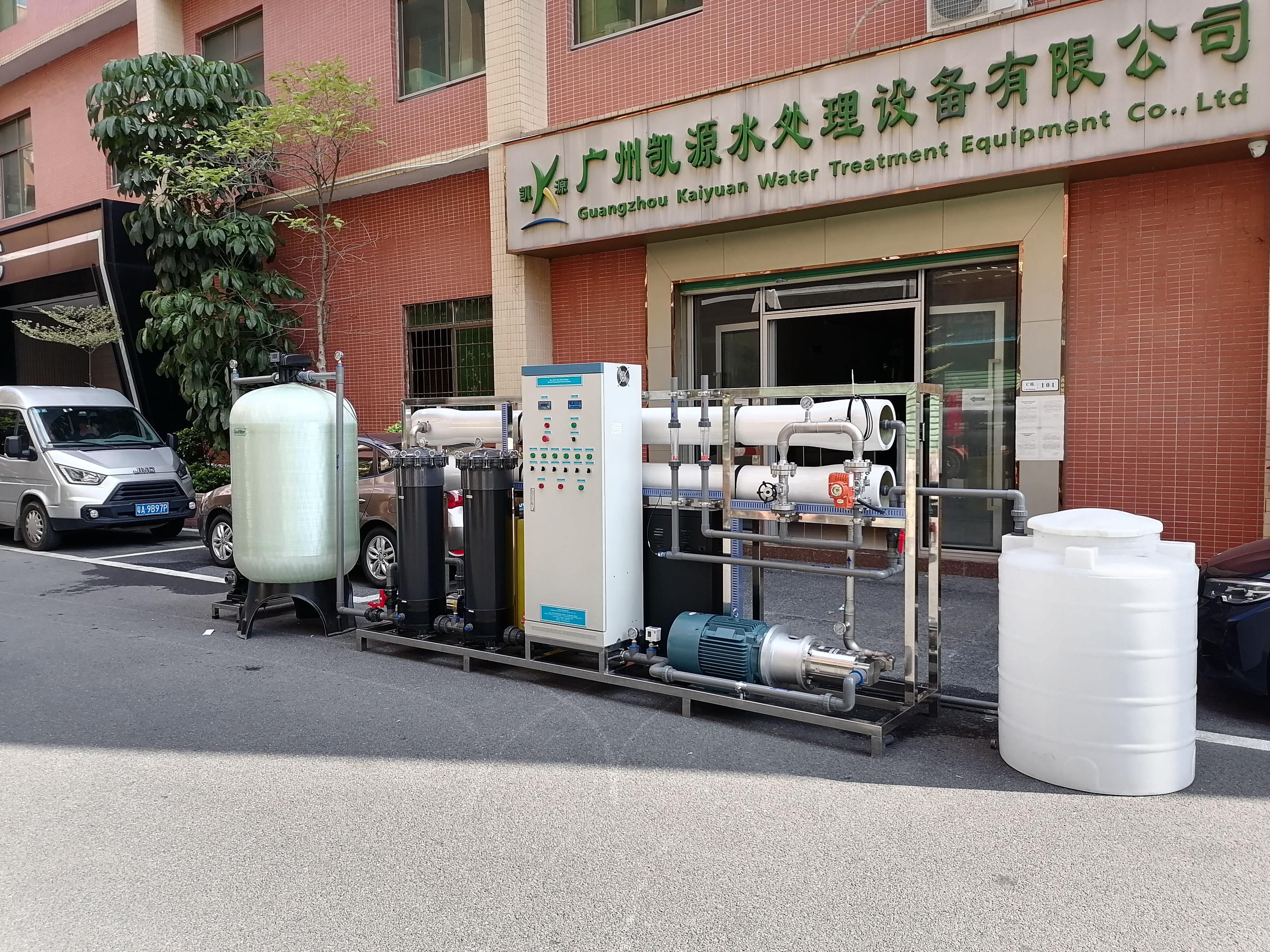
Marine environments aggressively destroy standard metals. Seawater acts as a highly corrosive electrolyte. Standard 304 stainless steel fails quickly. Even basic 316L stainless steel pits under continuous chloride exposure. You must specify superior alloys to ensure sensor survival.
Wetted parts demand strict material shortlisting. You should specify Titanium or Hastelloy C-276 for any sensor in direct fluid contact. Specialized engineering plastics like PTFE or PVDF work exceptionally well for chemical dosing sensors. These materials remain completely inert to high-salinity brine and aggressive dosing chemicals.
Non-wetted housings require equal attention. You must demand IP67 or IP68 ingress protection. This is especially true for offshore platforms, cruise ships, or coastal splash zones. Salt fog penetrates cheap enclosures rapidly. It corrodes internal circuit boards and destroys signal transmission.
Pressure ratings present another extreme challenge. Seawater Reverse Osmosis (SWRO) routinely exceeds 800 to 1000 psi (55 to 70 bar). You must evaluate sensors strictly on their over-pressure capabilities. A minor pressure surge should not rupture your instrument's primary sensing diaphragm.
Material Specification | Primary Application Area | Chloride Resistance Level |
|---|---|---|
Titanium | Sensor Wetted Parts & Diaphragms | Excellent (Immune to pitting) |
Hastelloy C-276 | High-Pressure Transmitters | Very High |
Super Duplex SS | High-Pressure Piping Connections | High |
316L Stainless Steel | Non-Wetted External Housing Only | Low (Prone to pitting) |
PTFE / PVDF | Chemical Dosing Flow Meters | Excellent (Chemically inert) |
Modern facilities require centralized data aggregation. You must move far beyond isolated dial gauges. Local mechanical gauges provide zero historical data. They cannot trigger automated emergency shutdowns. A centralized system provides complete visibility across the entire desalination process.
You must evaluate instrument communication protocols carefully. Assess sensors for standard industrial outputs like 4-20mA or HART. For digital networking, look for Modbus RTU or Profibus compatibility. These standardized protocols ensure seamless integration with your plant's Programmable Logic Controllers (PLCs). Smooth integration prevents frustrating data bottlenecks.
Cloud connectivity delivers a massive remote monitoring advantage. Remote telemetry benefits offshore facilities and decentralized municipal plants immensely. It enables predictive maintenance routines. Off-site experts can troubleshoot anomalies without traveling to isolated locations. You can monitor recovery rates and membrane health from a smartphone anywhere in the world.
Sensor accuracy drifts over time in harsh marine conditions. You must establish transparent calibration frequencies based on the specific parameter. In a standard setup, pH and ORP sensors drift much faster than pressure transmitters. Analytical sensors require frequent manual verification. High-grade pressure and flow transmitters maintain their baseline much longer.
We evaluate instrumentation strongly on its ease of maintenance. Modularity saves countless hours of labor. You should ask if a sensor tip can be replaced easily. Hot-tap retractable assemblies allow technicians to pull a pH probe without taking the entire pipe offline. This prevents costly process interruptions.
You must move procurement logic away from the lowest initial purchase price. Focus instead on evaluating the operational burden over time. Analyze the required labor for calibration. Look at the expected lifespan of replacement parts in harsh conditions. A cheap sensor that fails every six months drains your maintenance budget rapidly through constant labor demands.
Below is a typical upkeep schedule for a standard operating environment:
Instrument Category | Recommended Verification Interval | Typical Replacement Cycle |
|---|---|---|
ORP & pH Sensors | Bi-weekly to Monthly | 12 to 18 Months |
Conductivity Transmitters | Quarterly | 3 to 5 Years |
Differential Pressure Sensors | Bi-annually | 5 to 7 Years |
Magnetic Flow Meters | Annually | 7+ Years |
Reliable desalination instrumentation requires balancing extreme material durability with high-precision analytical capabilities. You cannot compromise on either front. Using standard industrial sensors in a marine environment guarantees premature failure. Conversely, durable sensors lacking precise digital integration leave you blind to subtle system inefficiencies.
Your next step involves auditing your current monitoring gaps. Establish baseline material requirements immediately. Insist on Titanium or Super Duplex for critical wetted parts. Prioritize instruments that offer native SCADA integration to unlock predictive maintenance capabilities.
We highly encourage consulting directly with marine instrumentation specialists. They can help map a custom sensor matrix tailored to your specific plant capacity. This ensures your facility effortlessly meets local water quality regulations while maximizing continuous uptime.
A: Free chlorine damages RO membranes irreversibly. Unmonitored ORP increases the risk of chlorine pass-through. This leads to immediate and catastrophic membrane failure. Without ORP monitoring, you have no automated way to verify that your de-chlorination dosing system is working correctly.
A: It depends heavily on the measured parameter. Analytical sensors like pH and ORP may need monthly or bi-weekly calibration checks due to chemical drift. Conversely, high-grade pressure and flow transmitters may only require annual verification to maintain process accuracy.
A: Titanium stands as the gold standard for wetted parts. Hastelloy and Super Duplex stainless steel follow closely behind. These premium materials provide superior resistance to chloride-induced pitting and severe stress corrosion cracking.
A: Drinking water systems require significantly stricter post-treatment monitoring. This includes precise re-mineralization pH tracking, stringent final conductivity limits, and continuous automated reporting. These extra layers prove compliance with WHO or local municipal health guidelines.


