


Views: 0 Author: Site Editor Publish Time: 2026-09-30 Origin: Site


Procuring commercial or industrial-scale desalination infrastructure involves massive financial investment and long-term operational commitments. This high-stakes decision requires meticulous planning and rigorous technical evaluation. Off-the-shelf solutions rarely align perfectly with specific coastal water profiles. They also frequently fail to meet localized compliance requirements. This mismatch often leads to premature membrane failure or unexpected budget overruns.
Buyers need a reliable way to navigate these complex procurement cycles. This article provides a rigorous, engineering-focused evaluation framework. We will help you validate technical parameters and vet manufacturers thoroughly. You will learn exactly what to look for before signing any purchase order to ensure your facility operates reliably for decades.
Precise feed water analysis (TDS, temperature, biological load) is the non-negotiable baseline for system design.
A viable Seawater Desalination Plant must integrate Energy Recovery Devices (ERDs) and robust pre-treatment to keep operational expenditures (OpEx) manageable.
Designing a Seawater Desalination System for Drinking Water requires strict adherence to WHO guidelines and local environmental regulations regarding brine discharge.
Vendor vetting must go beyond initial quotes to include Factory Acceptance Testing (FAT), warranty transparency, and post-installation support.
You cannot purchase marine water treatment equipment based solely on a desired flow rate. A comprehensive water analysis forms the absolute foundation of your project. Manufacturers need precise data to engineer a reliable solution.
You must conduct a comprehensive water analysis before requesting a formal quote. Total Dissolved Solids (TDS) dictate the required pump pressure. Different water bodies vary drastically in salinity. The Mediterranean Sea has higher salinity than the Pacific Ocean. You must also account for seasonal temperature variations. Cold water increases viscosity. This physical change requires higher feed pressure to push water through the membranes. Furthermore, you need to measure turbidity and organic fouling potential. High biological loads will quickly overwhelm standard filters. We recommend running a continuous 24-hour water sampling test during both high and low tides to capture accurate baseline data.
Calculating your required daily output requires more than estimating average consumption. You must determine your target Gallons Per Day (GPD) or Liters Per Day (LPD) carefully. Always factor in peak demand buffers. Industrial facilities often experience sudden usage spikes. Furthermore, you must account for maintenance downtime. Reverse osmosis membranes require regular chemical cleaning. This process takes the system offline. We advise sizing the equipment to meet your daily demand within a 20-hour operational window. This leaves a four-hour buffer for routine maintenance without disrupting your water supply.
General industrial process water requires different treatment than water meant for human consumption. If your goal is public supply, configuring a safe Seawater Desalination System for Drinking Water demands specific post-treatment steps. Pure reverse osmosis water is highly acidic and corrosive. It lacks essential minerals. You must integrate remineralization filters to add calcium and magnesium back into the product water. Strict adherence to World Health Organization (WHO) guidelines also requires robust disinfection. You will need ultraviolet (UV) sterilizers or automated chlorine dosing systems to prevent bacterial growth in your storage tanks.
The internal components of your equipment determine its lifespan. A visually impressive skid means nothing if the underlying architecture uses inferior materials or outdated technology.
Inadequate pre-treatment guarantees early membrane failure. The vendor must recommend either Ultrafiltration (UF) or Multimedia Filtration based on your feed water's Silt Density Index (SDI). If your water source exhibits an SDI above 3, standard multimedia filters will struggle. UF modules offer a physical barrier against suspended solids and bacteria. They protect the expensive reverse osmosis membranes downstream. Always ask the vendor to justify their pre-treatment selection using your raw water data.
Comparison of Pre-Treatment Architectures
Feature | Multimedia Filtration | Ultrafiltration (UF) |
|---|---|---|
Target SDI Limit | Effective for SDI < 3 | Effective for SDI up to 6+ |
Filtration Mechanism | Depth filtration (sand, gravel, anthracite) | Absolute membrane barrier (0.01 to 0.1 microns) |
Footprint | Large, requires massive vessels | Compact, modular skid design |
Maintenance Needs | Periodic backwashing | Automated chemical cleaning and backwashing |
Extracting fresh water from the ocean requires immense pressure. This makes energy consumption a critical factor. Any modern Seawater Desalination Plant must include robust energy recovery technology. Verify the inclusion of pressure exchangers or recovery turbines. These devices capture the high pressure from the reject stream (brine). They transfer this kinetic energy directly back to the incoming feed water. Quality ERDs can recover up to 60% of the wasted energy. Never accept a commercial proposal that omits this technology.
The marine environment aggressively attacks standard metals. Traditional 316L stainless steel will suffer from pitting corrosion rapidly when exposed to high-pressure saltwater. You must verify the material grades used throughout the system. Check for high-grade alloys in all high-pressure piping and pump housings. Demand Duplex stainless steel (alloy 2205) or Super Duplex stainless steel (alloy 2507). These materials offer superior resistance to chloride-induced stress corrosion cracking. Proper material selection prevents catastrophic leaks and ensures decades of safe operation.
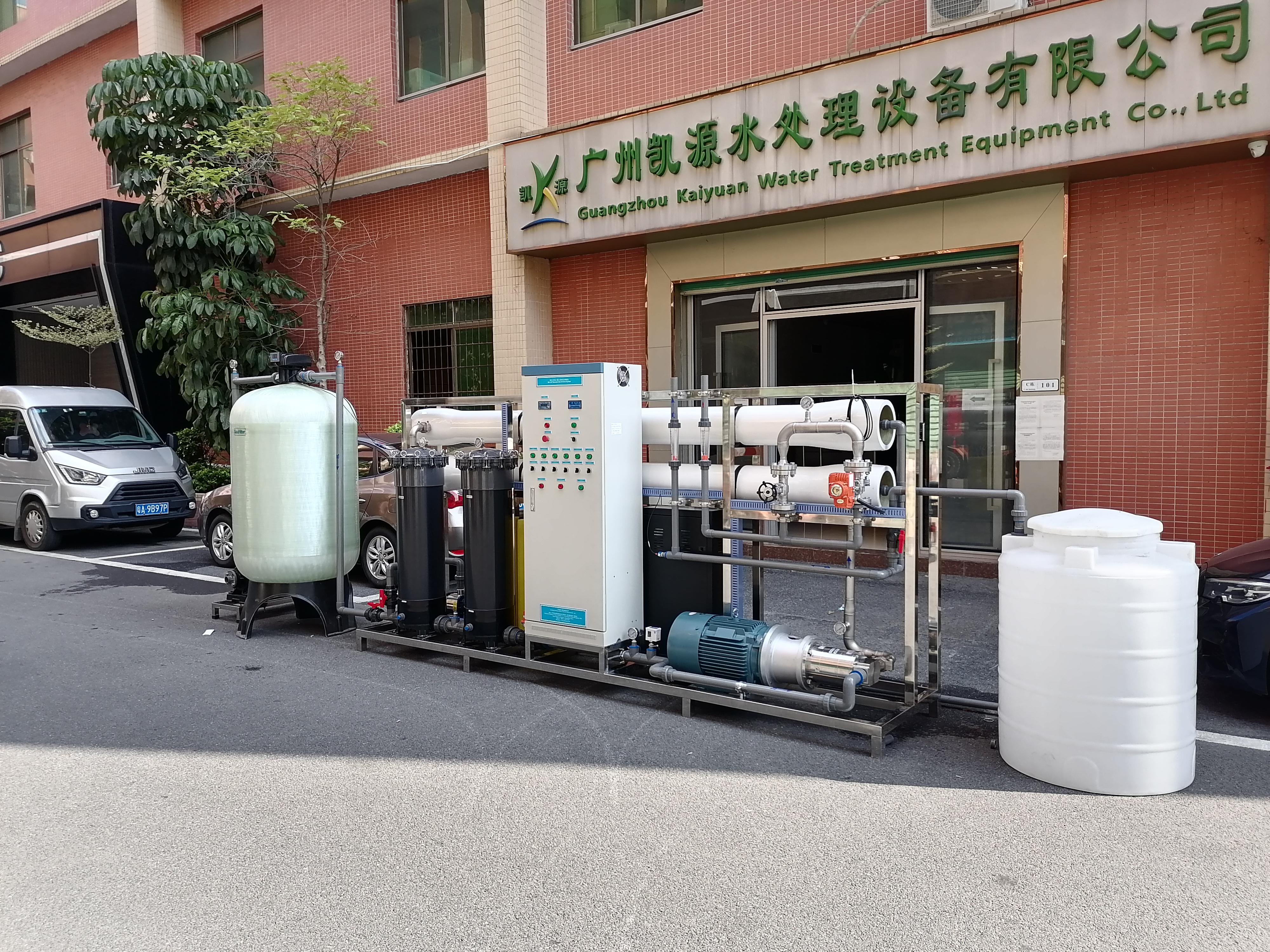
Equipment design is only half the battle. How you bring water into the facility and how you discharge the waste will determine your project's viability and legal compliance.
Evaluate the feasibility of open-ocean intakes versus subsurface wells carefully. Subsurface intakes, like beach wells or infiltration galleries, use the ocean floor as a natural pre-filter. They deliver cleaner water with lower biological loads. However, coastal geology does not always permit drilling. If you must use an open-ocean intake, you must implement wedge wire screens. You should also design the system for ultra-low intake velocities. This minimizes marine impingement and entrainment, protecting local aquatic life from being sucked into your pumps.
You must address the environmental reality of highly concentrated reject water. Reverse osmosis produces a brine stream twice as salty as the ocean. Because it is heavy, brine sinks to the seafloor and can damage marine ecosystems. Ensure your overall plant design includes proper outfall strategies. You will likely need specialized diffusers. These devices spray the brine across a wide area to promote rapid dilution. You must verify that your discharge strategy complies strictly with local environmental protection regulations.
Clearly delineate the responsibilities between the equipment vendor and your local contractors. Clarify exactly what the skid includes versus what requires local civil engineering. Vendors typically provide the processing equipment mounted on steel frames. You must prepare the site. This involves pouring heavy-duty concrete pads to support the weight of the skids and storage tanks. You must also build climate-controlled housing to protect sensitive electronics from salt spray. Additionally, you need to construct raw water intake reservoirs and final product storage tanks.
Comparing commercial proposals requires looking past the bottom-line number. A poorly detailed quote often hides inferior components and rigid designs that limit your future growth.
Identify red flags in vendor proposals immediately. A trustworthy quote explicitly details all major components. Ensure the document lists the exact brands of the reverse osmosis membranes. Industry leaders like DuPont, Hydranautics, or Toray should be standard. Check the specified high-pressure pump manufacturers. Furthermore, examine the automated control systems. Does the quote specify an open-source Programmable Logic Controller (PLC) from a reputable brand like Siemens or Allen-Bradley? Avoid vendors who use proprietary, locked control boards. Finally, clarify what standard inclusions are versus optional add-ons. You do not want to discover that remote monitoring or chemical dosing stations cost extra after you sign the contract.
Assess the system’s modularity before making a decision. Municipal populations grow, and industrial production demands often increase over time. Determine how difficult it would be to add future capacity. Ask the manufacturer if the high-pressure headers and feed pumps are slightly oversized to accommodate additional membrane housings later. A well-designed skid leaves physical space for expansion. Choosing a scalable architecture prevents you from having to purchase an entirely new, separate unit when your water demand inevitably rises.
A glossy brochure does not guarantee engineering competence. You must systematically vet potential manufacturing partners to mitigate operational risks.
Never accept delivery of complex machinery without proof of functionality. Demand documented protocols for Factory Acceptance Testing (FAT). The vendor must assemble the entire skid and perform wet testing before it leaves their facility. This process verifies pump alignments, identifies piping leaks, and ensures all sensors communicate correctly with the main control panel. Request video documentation of the FAT or arrange to send an independent inspector to the factory. Catching a faulty valve during a FAT is a minor delay; catching it during site commissioning is an expensive disaster.
Essential Vendor Vetting Checklist:
Verify open-source software programming on all control panels.
Request detailed Piping and Instrumentation Diagrams (P&ID) with the proposal.
Review the specific terms of the product water quality guarantees.
Ensure the vendor provides comprehensive operation and maintenance manuals in your local language.
Validate the manufacturer's institutional credibility. Verify their ISO 9001 certifications to ensure they follow strict quality management protocols. Ask for case studies of similar installations. If you are building a facility in a hot, high-salinity environment like the Middle East, a vendor whose only experience is in cold, low-salinity regions may struggle. Speak directly with their past clients to confirm equipment uptime and general satisfaction.
Evaluate the availability of localized technical support. A breakdown stops your operations completely. Ensure the vendor maintains a robust spare parts inventory. Ask about lead times for critical components like Variable Frequency Drives (VFDs) or specialty high-pressure valves. Furthermore, clarify the terms of the performance warranties. The warranty must clearly define acceptable degradation rates for water quality and energy consumption over the first few years of operation.
Successful procurement relies on balancing technical rigor, environmental realities, and strategic planning. Sizing a system correctly demands a deep understanding of your specific feed water chemistry and peak production needs. You must scrutinize material selections, pre-treatment architectures, and scalability options to ensure a durable installation. Protecting the marine environment through smart intake and discharge designs is equally critical for long-term compliance.
Your immediate next step is to finalize your raw seawater analysis report. Commission a certified laboratory to test your coastal water across different tidal and seasonal conditions. Once you have this verified data, you can confidently engage engineering firms for custom system sizing and demand highly detailed, transparent commercial quotations.
A: Timelines typically range from 3 to 9 months based on the scale and complexity of the project. Smaller modular skids take about 12 weeks to build. Industrial-scale facilities require longer engineering phases, specialized component procurement, and extensive on-site civil works. Commissioning and final testing usually add an additional two to four weeks.
A: The physical plant, including the stainless steel frames, high-pressure piping, and main pumps, generally lasts 15 to 20 years with proper maintenance. However, the reverse osmosis membranes are consumables. They operate on a much shorter cycle and typically require replacement every 3 to 5 years, depending on water quality and cleaning frequency.
A: Yes. The adoption of solar-PV integrated desalination is rising rapidly. However, it requires extensive site preparation for solar arrays. Because desalination plants run best continuously, a solar-powered system demands substantial battery storage or a hybrid grid connection to maintain stable operations overnight and during cloudy conditions.
A: Routine maintenance involves replacing pre-filter cartridges periodically and monitoring differential pressure. Operators must perform automated chemical cleaning of the membranes (CIP) to remove scaling and organic fouling. Additionally, technicians must regularly calibrate water quality sensors, inspect high-pressure pump seals, and lubricate mechanical components to prevent unexpected failures.


