


Views: 0 Author: Site Editor Publish Time: 2026-08-15 Origin: Site


Transitioning from traditional mixed-bed ion exchange to an industrial EDI system eliminates hazardous chemical handling. It demands rigorous upfront system sizing and feedwater validation to ensure success. Modern facilities rely on this shift to streamline operations and enhance workplace safety.
Procurement and engineering teams often face a severe disconnect between catalog specifications and actual on-site feedwater conditions. This mismatch frequently leads to premature module scaling or an outright failure to hit Megohm-cm purity targets. Ignoring these nuanced variables can quickly turn a highly efficient setup into an operational bottleneck.
A structured pre-purchase evaluation matrix prevents costly integration delays. It ensures strict regulatory compliance across global standards like USP and ASTM. It accurately forecasts long-term operating expenses while setting clear performance expectations. Using this framework empowers buyers to make highly informed, risk-averse purchasing decisions.
Pretreatment is Non-Negotiable: EDI modules will fail rapidly if RO (Reverse Osmosis) permeate does not meet strict limits for hardness, silica, and CO2.
Look Beyond CAPEX: Evaluate the total cost of ownership by comparing electrical consumption and module replacement costs against the eliminated costs of acid/caustic regeneration.
Verify Industry Compliance: Ensure the system guarantees the specific resistivity and TOC (Total Organic Carbon) limits required for your application (power generation, semiconductor, or pharmaceutical).
Scrutinize Vendor Support: Prioritize manufacturers who offer comprehensive feedwater audits, pilot testing, and transparent warranty conditions regarding module scaling.
Implementing an industrial Edi Water Treatment setup requires an honest assessment of current infrastructure. These units are highly sensitive polishing systems. They do not act as primary filters. Feeding them inadequately treated water guarantees rapid failure.
You must meticulously analyze the water entering the EDI array. It requires reverse osmosis permeate of exceptional quality. Even minor deviations cause irreversible damage to the internal ion exchange resins. You should closely monitor these critical parameters:
Hardness: Verify your existing or planned RO system reliably produces water measuring less than 1 ppm (as CaCO3). High hardness causes severe internal scaling.
Scaling Agents: Check for strict control of silica, iron, and manganese. These elements quickly foul membranes and block flow paths.
Free Chlorine: Ensure absolute zero free chlorine. Oxidation permanently degrades the ion exchange resin matrix.
Dissolved CO2: Assess CO2 levels constantly. Excessive dissolved CO2 heavily burdens the electrical load. It ultimately decreases overall resistivity and drives up operating costs.
If your feedwater falls short, you must upgrade your pretreatment. Determine if a membrane contactor acts as a necessary degassing valve. These units strip excess carbon dioxide before it reaches the EDI array. Alternatively, consider installing a 2-pass RO system. A double-pass setup dramatically reduces dissolved solids. This protects the sensitive downstream equipment and extends module longevity. Many facilities underestimate the return on investment from robust pretreatment.
Common Mistake: Relying on a single outdated water analysis report. Water chemistry fluctuates seasonally. Always base your pretreatment design on worst-case historical data.
Proper capacity planning determines long-term success. Under-sizing causes immediate operational bottlenecks. It forces production lines to halt while waiting for purified water. Conversely, over-sizing results in poor flow distribution. It unnecessarily increases your initial capital expenditure.
You must review the minimum and maximum flow rate specifications carefully. Every module operates within a strict hydraulic window. Operating below the minimum flow triggers internal overheating. The direct current applied to the stack generates heat. Insufficient water flow fails to carry this heat away. The resin beds can melt or warp as a result. Pushing flow above the maximum rating increases pressure drop. High pressure damages the internal spacers and leads to mechanical failure.
Future-proofing your investment saves significant capital later. Check if the manufacturer designed the system skid with blank slots. Look for capped manifold connections intended for future modules. This modular approach allows you to add capacity seamlessly. You can increase production without requiring a complete system redesign. It prevents redundant spending when your facility inevitably expands operations.
Best Practice: Size your initial equipment to run at 75% of its maximum flow capacity. This provides a safe buffer for sudden production spikes while keeping velocities optimal.
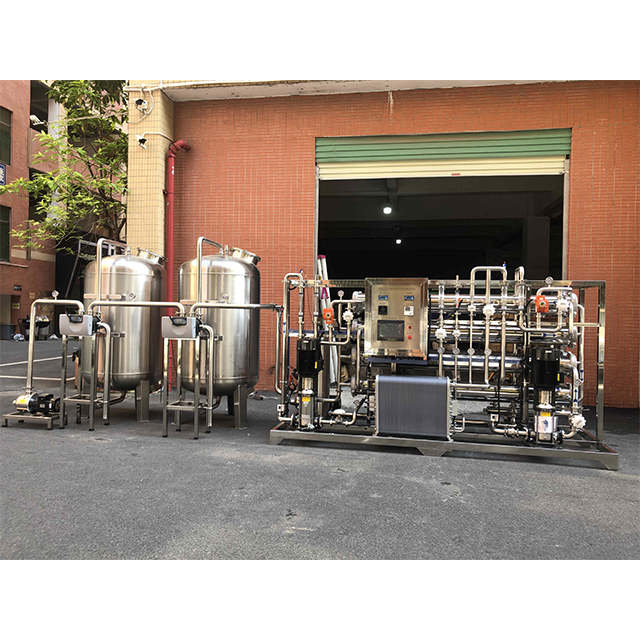
The term "ultrapure" remains highly relative across different sectors. Your chosen system must meet verifiable, documented standards. You should base your final selection entirely on your specific end-use application.
Different industries enforce completely different regulatory frameworks. A pharmaceutical setup looks very different from a power plant installation. You must match the technology to the governing standard.
Microelectronics/Semiconductor: Chip manufacturing demands the absolute highest purity. Verify the capability to maintain 18.2 MΩ.cm continuously. You must ensure minimal silica and boron leakage. Even trace amounts cause catastrophic defects on silicon wafers.
Pharmaceuticals: Drug manufacturing prioritizes biological safety alongside chemical purity. Ensure strict compliance with USP (United States Pharmacopeia) or Ph. Eur. standards. Scrutinize the sanitary design features. The system must support routine hot-water sanitization cycles. It must also guarantee strict TOC (Total Organic Carbon) limits to prevent bacterial growth.
Power Generation: Boiler feed systems require robust durability. Focus primarily on consistent silica removal. Silica vaporizes and deposits on high-pressure boiler turbines. This scaling destroys turbine balance and causes massive mechanical failures.
Industry Purity Standards and Critical Metrics | |||
Industry Sector | Target Resistivity | Primary Compliance Focus | Key Contaminant to Avoid |
|---|---|---|---|
Microelectronics | 18.2 MΩ.cm | ASTM D5127 Type E-1 | Boron and Trace Metals |
Pharmaceuticals | > 1.0 MΩ.cm (USP) | USP Purified Water / WFI | TOC and Microorganisms |
Power Generation | 10 - 16 MΩ.cm | EPRI Guidelines | Dissolved Silica |
You must adopt a skeptical approach during procurement. Ignore superficial "low maintenance" marketing claims. Ask vendors for hard data regarding power consumption. Demand realistic projections for consumable lifespans. Evaluating standard operating expenses ensures long-term financial viability.
Quantify the continuous DC power consumption of the equipment. While it uses electricity instead of chemicals, power rates vary geographically. You must accurately map these utility costs.
Follow these defined steps to calculate your true return on investment:
Audit your current annual spend on bulk hydrochloric acid and caustic soda.
Calculate the yearly hazardous waste disposal fees associated with chemical regeneration.
Estimate the labor hours spent handling chemicals and maintaining safety compliance.
Request the exact kilowatt-hour (kWh) consumption rating from the manufacturer.
Subtract the projected electrical costs from your legacy chemical and disposal expenses.
This direct comparison usually reveals significant operational savings. It completely removes the risk of chemical spills from your facility.
Model the cost of replacing internal modules over a 5-to-10-year lifecycle. Resins and membranes do degrade eventually. Good pretreatment stretches this lifespan considerably. Ask suppliers for the current replacement cost per stack. Factor one complete replacement into your decade-long financial model. This prevents surprise budget shortfalls when maintenance becomes necessary.
The inherent complexity of this technology requires robust post-installation support. A strong relationship with your manufacturer mitigates sudden downtime. Do not treat this purchase as a simple transactional exchange.
Require a site-specific projection before signing any contracts. Reliable vendors utilize proprietary sizing software. They input your specific historical water analysis data. This software models exactly how their Electrodeionization water treatment system will perform on your floor. It predicts effluent quality and power draw accurately. Reject any supplier quoting a generic catalog system without running these specific calculations.
You must check the fine print of your contract. Most warranties are voided immediately if feedwater parameters drift out of specification. Ask exactly what evidence they require for warranty claims.
Request integrated remote monitoring features. A good SCADA integration tracks voltage, current, and resistivity trends continuously. This logged data proves your warranty compliance. It shows you maintained proper feed conditions. Furthermore, monitoring electrical trends helps predict maintenance. An unexplained rise in voltage usually indicates early resin scaling. Catching this early allows for preventative cleaning rather than total replacement.
Ordering this infrastructure is an investment hinging entirely on proper pretreatment integration.
Accurate capacity modeling prevents immediate operational bottlenecks and excessive capital spend.
Eliminate any vendors who quote generic systems without demanding a comprehensive water analysis first.
Focus heavily on remote monitoring tools to ensure long-term warranty compliance and predictive maintenance.
Gather your current RO permeate water chemistry data immediately to request a detailed projection report.
A: High hardness, the presence of free chlorine, or high dissolved organics immediately disqualify a site. You cannot use this technology without adequate upstream RO and degassing pretreatment. Chlorine destroys the internal membranes permanently. High hardness causes irreversible internal scaling within days, halting purified water production completely.
A: It shifts costs entirely away from chemical procurement and hazardous waste disposal. Instead, it relies on predictable electrical consumption. This transition generally results in a significantly lower and far more stable operating expense over a 3 to 5-year period.
A: Yes, you can retrofit an existing skid. However, the RO output must match the strict input specifications perfectly. You must also add the necessary electrical infrastructure, such as dedicated DC power supplies, to support the new array.
A: You can typically expect 5 to 7 years of optimal performance under strict feedwater conditions. However, poor pretreatment and frequent parameter fluctuations can cause irreversible scaling and mechanical failure within just a few months.


