


Views: 0 Author: Site Editor Publish Time: 2026-08-09 Origin: Site


High-pressure boilers demand ultrapure water. This critical resource prevents catastrophic scaling, severe corrosion, and costly unplanned downtime. Traditional chemical-based demineralization methods are rapidly fading from use. Plant managers now favor continuous, chemical-free purification processes. Relying on hazardous bulk chemicals poses too many safety and environmental risks.
Today, Edi Water Treatment serves as the industry standard for polishing boiler feed water. This advanced technology integrates seamlessly into existing plant workflows. It effectively replaces outdated mixed-bed ion exchange units. By making this shift, facilities drastically reduce operational expenditure (OpEx) while mitigating strict compliance risks.
In this article, you will learn exactly how these systems function. We will explore the vital integration process alongside reverse osmosis. Finally, we will provide an actionable framework to help you evaluate upgrades for your own facility.
Electrodeionization water treatment eliminates the need for hazardous acid and caustic handling in boiler feed applications.
EDI operates continuously, removing the downtime associated with regenerating traditional mixed-bed ion exchange systems.
Successful implementation requires strict adherence to feed water parameters, necessitating integration with Reverse Osmosis (RO) pretreatment.
The primary ROI driver for EDI is the drastic reduction in operational costs (chemicals, labor, and maintenance) over the system's lifecycle.
Industrial facility managers face immense pressure to keep boiler systems running efficiently. You must define clear success criteria for treating boiler feed water. The ultimate goals include minimizing boiler blowdown frequency, maximizing heat transfer efficiency, and extending the turbine lifecycle. Achieving these targets requires water purity levels reaching up to 18.2 megohm-cm.
Poor water quality introduces massive operational risks. High-pressure steam environments are unforgiving. Even trace amounts of impurities cause severe mechanical failures. Consider the following specific risks:
Silica Carryover: Silica vaporizes at high pressures. It travels through steam lines and deposits onto delicate turbine blades. This disrupts aerodynamics and significantly lowers power generation efficiency.
Scale Formation: Calcium and magnesium form hard scale deposits on boiler tubes. Scale acts as an insulator. It forces the boiler to consume more fuel to achieve the same steam output. Eventually, tubes overheat and rupture.
Galvanic Corrosion: Dissolved salts increase water conductivity. This promotes galvanic corrosion across dissimilar metals. Corrosion eats away at expensive boiler components, causing dangerous leaks.
You need a robust risk-mitigation and cost-control strategy. Shifting toward membrane and electrical-based purification provides this solution. Facilities following strict ASME boiler water guidelines increasingly rely on advanced electrical polishing. This modern approach protects multimillion-dollar assets from premature failure.
Understanding the core mechanism requires looking inside the purification module. The process combines three distinct elements: ion-exchange resins, ion-selective membranes, and direct electrical current. Together, they remove residual dissolved salts from the water.
Water enters the module and passes through compartments filled with resin beads. These resins capture dissolved ions. A direct electrical current then pulls these trapped ions through the selectively permeable membranes. Cations move toward the cathode, while anions move toward the anode. The ions concentrate in a separate reject stream. The purified product water exits the module ready for the boiler.
Here is a breakdown of the continuous process:
Ion Capture: Mixed-bed resins grab trace salts from the feed water.
Ion Migration: Direct electrical current pulls the ions out of the resin bed.
Continuous Regeneration: The electrical current splits water molecules into hydrogen and hydroxyl ions. These automatically regenerate the resin bed.
This self-regenerating capability defines the structural advantage of Electrodeionization water treatment. Traditional systems rely on batch-cycle regeneration. They require facilities to take equipment offline, pump hazardous acids through the beds, and flush massive amounts of water. Continuous electrical regeneration completely eliminates these batch-cycle vulnerabilities.
Furthermore, this technology excels at removing weakly ionized species. High-pressure boilers demand strict silica and boron compliance. These specific contaminants often slip through standard filtration. The specialized electrical field effectively targets and removes these difficult ions, ensuring safe steam generation.
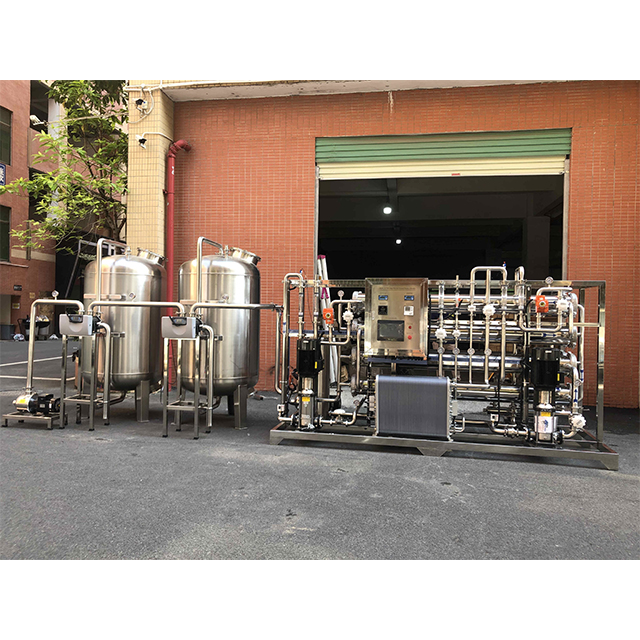
Many aging power plants and industrial facilities still operate traditional mixed-bed ion exchange systems. Comparing these legacy setups against modern electrical polishing reveals stark operational differences.
First, evaluate the physical footprint and safety realities. Conventional mixed beds require massive chemical storage tanks. You must maintain bulk supplies of hydrochloric acid and sodium hydroxide. This forces facilities to install safety showers, eyewash stations, and complex hazardous waste neutralization pits. Electrical polishing modules drastically shrink this footprint. They completely eliminate bulk chemical storage, creating a vastly safer working environment for plant personnel.
Cost predictability is another major deciding factor. Decision-makers often weigh Capital Expenditure (CapEx) against Operational Expenditure (OpEx). Traditional systems look appealing initially due to lower CapEx. However, they carry highly volatile OpEx. Chemical prices fluctuate wildly. Hazardous disposal fees continue rising. Manual labor costs for handling chemical regeneration cycles remain consistently high.
Conversely, modern electrical modules require a higher initial investment. Yet, they deliver predictable, consistently low OpEx. The only ongoing cost is a small amount of electricity.
Water quality consistency also differs significantly. Traditional resins degrade as they near the end of their batch cycle. This creates a "sawtooth" effect in water quality. Purity drops right before a chemical regeneration. Electrical continuous regeneration maintains a flat, unwavering ultrapure output. Your boilers receive the exact same water quality 24 hours a day.
Evaluation Metric | Traditional Mixed Bed (MB) | Electrical Polishing (EDI) |
|---|---|---|
Chemical Usage | High (Acid and Caustic required) | None (Chemical-free process) |
Regeneration Method | Batch cycle (Requires downtime) | Continuous (Electrical) |
Safety Risk | High (Hazardous handling/storage) | Low (Standard electrical safety) |
Water Quality Output | Inconsistent (Sawtooth degradation) | Consistently Flat (Ultrapure) |
Operational Expenditure | Volatile (Chemicals, labor, waste) | Predictable (Electricity only) |
We must establish a transparent assumption regarding this technology. It functions strictly as a polishing step. It is never a primary filtration method. You cannot pump raw city water or untreated well water directly into these modules. Doing so will destroy the equipment within hours.
Protecting the module requires mandatory upstream Reverse Osmosis (RO) pretreatment. The RO system performs the heavy lifting. It removes up to 99% of total dissolved solids, large organics, and suspended particles. The downstream polishing unit then handles the remaining 1% of trace ions.
Feedwater specifications dictate strict tolerance limits. Plant engineers must monitor these limits constantly to prevent catastrophic module failure. Exceeding these parameters leads to irreversible internal damage.
Parameter | Maximum Allowable Limit | Consequence of Exceedance |
|---|---|---|
Total Hardness (Ca + Mg) | < 1.0 ppm (as CaCO3) | Severe internal scaling and flow blockage. |
Total Chlorine | < 0.05 ppm | Oxidative destruction of resins and membranes. |
Total Organic Carbon (TOC) | < 0.5 ppm | Fouling of resin surfaces, reducing ion transfer. |
Carbon Dioxide (CO2) | < 5.0 ppm | Overloads the module, degrading final resistivity. |
Implementation risks run high if facilities neglect RO maintenance. Poorly maintained RO membranes let hardness slip through. When calcium enters the polishing stack, it reacts inside the alkaline concentration chambers. This forms solid calcium carbonate scale. Once a stack scales internally, it loses electrical efficiency and water flow. You must implement a comprehensive, holistic system design. Upstream RO reliability directly determines downstream polishing success.
Common mistakes include ignoring dissolved carbon dioxide levels. CO2 acts as a weakly ionized gas. It passes right through RO membranes. When it hits the polishing unit, it converts into bicarbonate and consumes valuable electrical capacity. Many successful boiler feed designs include a membrane contactor (degasser) between the RO and the polishing unit to strip away excess CO2.
Facility decision-makers need a clear framework to calculate Return on Investment (ROI) for equipment upgrades. Replacing legacy mixed beds yields substantial savings, but you must measure the right operational metrics. Do not simply look at the sticker price of the equipment.
Start by auditing your current chemical spending. Calculate the annual cost of purchasing bulk acid and caustic soda. Next, add the labor costs associated with managing regeneration cycles. Include the specialized hazmat training required for your staff. Finally, factor in the environmental disposal fees for neutralizing hazardous wastewater. Compare this large cumulative sum against the projected electrical consumption of the modern polishing module.
The resulting OpEx analysis usually reveals a payback period of 18 to 36 months. Beyond the direct financial returns, facilities gain significant operational advantages. Scalability and modularity offer unmatched flexibility. As your plant expands and boiler steam demands grow, you can simply add more modules in parallel. You do not need to construct entirely new treatment trains.
When selecting a water treatment partner, apply strict shortlisting logic. Demand specific deliverables before signing any contracts. Consider the following actionable steps:
Demand a Comprehensive Feed Water Analysis: A reputable partner will test your raw water across all seasons. They must understand seasonal temperature and chemistry fluctuations.
Require RO Permeate Verification: The partner must prove your existing RO system meets the strict <1 ppm hardness requirement before recommending a polishing unit.
Request Pilot Testing: Ask for a small-scale pilot skid. Run it on-site for 30 days to verify silica removal rates under real-world conditions.
Establish Guaranteed Performance Metrics: Ensure the contract includes hard guarantees on product water resistivity (e.g., 16+ Megohm) and maximum power consumption limits.
Upgrading your boiler feed water system represents a strategic move toward safer, more efficient plant operations. Traditional chemical-intensive demineralization simply cannot compete with modern electrical purification. By eliminating hazardous chemicals, facilities dramatically reduce safety liabilities and streamline daily maintenance.
While this technology serves as the most reliable, long-term solution for high-pressure boilers, it demands careful respect for pretreatment rules. Upstream reverse osmosis remains absolutely non-negotiable. You must protect the module from hardness, organics, and chlorine to ensure a long operational lifespan.
Now is the time to evaluate your current setup. We highly encourage facilities to schedule a comprehensive feed water analysis. Audit your existing RO systems to determine their current health. Engage a trusted water treatment expert to map out a clear, cost-effective integration strategy for your plant.
A: The system requires strict feed water hardness of less than 1.0 ppm (as CaCO3). Exceeding this limit causes rapid internal scaling inside the concentration chambers. This is why upstream Reverse Osmosis (RO) is a mandatory pretreatment requirement. RO removes the bulk hardness, protecting the downstream polishing module from permanent physical damage.
A: It removes carbon dioxide by converting it into bicarbonate ions under electrical current. However, high CO2 loads will overwhelm the module and reduce water quality. We recommend using a membrane degasser upstream for optimal efficiency. The process does not remove dissolved oxygen; you must use separate deaeration equipment for oxygen scavenging.
A: When operated correctly, standard industry lifespans range from 5 to 10 years. This longevity is entirely contingent on strict adherence to pretreatment guidelines. Maintaining healthy RO membranes upstream prevents scaling and fouling. Routine monitoring of chlorine and hardness ensures the module reaches its maximum operational lifespan.
A: Yes, retrofitting is highly feasible and common in industrial facility upgrades. However, you must thoroughly verify your existing RO permeate quality first. The current RO output must strictly meet the polishing module's feedwater specifications. If the existing RO system underperforms, you must replace the membranes or upgrade the RO unit before proceeding.


