


Views: 0 Author: Site Editor Publish Time: 2026-08-06 Origin: Site


Pharmaceutical manufacturing demands absolute water purity. A single microbial spike can ruin entire production batches. Facilities must meet stringent global pharmacopeial standards consistently to ensure patient safety. Water quality directly dictates product viability and facility compliance.
Traditional mixed-bed deionization relies heavily on chemical regeneration. This archaic process introduces severe safety hazards. It also causes frequent facility downtime and frustrating batch-to-batch variance. Plant managers urgently need a modern, reliable alternative. Chemical handling simply carries too much risk in a sterile environment.
We evaluate if Electrodeionization water treatment solves these critical compliance challenges. You will learn how it produces pharmaceutical-grade Purified Water (PW) and Water for Injection (WFI). We also outline a rigorous framework for assessing its implementation in a regulated facility. You can then make an informed, confident upgrade decision.
Regulatory Compliance: When properly integrated post-Reverse Osmosis (RO), EDI water treatment consistently meets and exceeds USP, EP, and JP standards for Purified Water.
Operational Consistency: EDI offers continuous, chemical-free regeneration, eliminating the quality spikes associated with exhausted mixed-bed resins.
Pretreatment Dependency: EDI is not a standalone solution; its reliability is entirely dependent on strict feed water parameters (hardness, silica, and CO2 limits) managed by upstream RO.
Meeting pharmacopeial standards is non-negotiable in the life sciences sector. Facilities must prove their water systems operate within strict limits. They must also validate these systems routinely.
Reverse Osmosis combined with EDI reliably satisfies USP <1231> (Water for Pharmaceutical Purposes). It also meets European Pharmacopoeia (Ph. Eur.) and Japanese Pharmacopoeia (JP) monographs. Regulators focus heavily on two target parameters. First, conductivity must remain below 1.3 µS/cm at 25°C. Second, Total Organic Carbon (TOC) must stay below 500 ppb. Properly designed EDI systems achieve these metrics effortlessly. They often deliver conductivity as low as 0.05 to 0.1 µS/cm. This provides a massive buffer against regulatory action limits.
Common mistake: Facilities sometimes rely on grab samples for compliance testing. You should utilize continuous online instrumentation. Regulators prefer real-time data for conductivity and TOC monitoring.
Historically, EDI served as the standard application for bulk Purified Water generation. It excels at producing high-volume PW for non-parenteral drugs and cleaning processes. However, regulatory landscapes have evolved significantly.
Recent Ph. Eur. revisions now allow ambient WFI generation without distillation. You can achieve this by combining RO, EDI, and terminal ultrafiltration (UF). This combination provides adequate microbial and endotoxin reduction. It represents a massive shift. Facilities can now produce WFI without the extreme energy demands of multi-effect distillation.
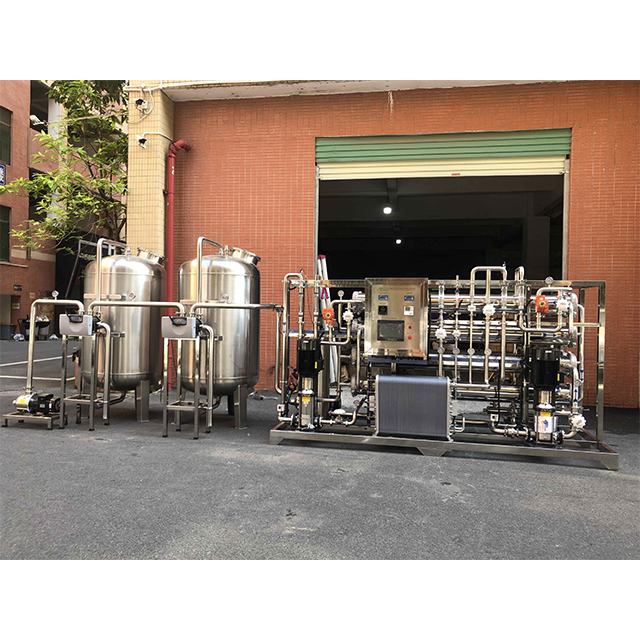
Transitioning from legacy systems requires careful technical evaluation. You must weigh operational consistency against capital requirements.
Mixed Bed DI operates as a batch process. Water quality degrades steadily as the ion exchange resin nears exhaustion. Once exhausted, the system requires hazardous acid and caustic chemicals for regeneration. This causes sudden conductivity spikes and forces production holds.
Conversely, Edi Water Treatment is a continuous process. It utilizes electrical current to regenerate the resin continuously while water flows through the module. This eliminates exhaustion cycles. It delivers a flat-line, consistent water quality profile day after day.
CAPEX heavily favors traditional mixed beds. EDI requires a higher upfront capital investment. You must purchase specialized membrane modules, rectifiers, and sophisticated power supplies.
However, OPEX tells a different story. EDI eliminates chemical purchasing entirely. You no longer need bulk storage tanks for corrosive acids. You also eliminate waste neutralization systems and the environmental compliance reporting associated with chemical handling. Operational budgets shrink dramatically over time.
Space is a premium commodity in cleanroom environments. EDI modules are highly compact. Vendors mount them on tight, integrated skids. They require a fraction of the floor space compared to bulky resin vessels.
Furthermore, EHS (Environment, Health, and Safety) metrics improve instantly. EDI removes operator exposure to corrosive regeneration chemicals. You eliminate acid spill risks, chemical burn hazards, and toxic fume ventilation requirements.
The following chart illustrates the primary technical differences between the two technologies:
Feature | Mixed Bed Deionization | Electrodeionization (EDI) |
|---|---|---|
Process Type | Batch (cyclic exhaustion) | Continuous (steady-state) |
Regeneration Method | Chemical (Acid & Caustic) | Electrical Current |
Water Quality Profile | Fluctuating (degrades over time) | Highly Consistent (flat-line) |
Operator Safety Risk | High (chemical handling) | Low (chemical-free) |
Footprint | Large (vessels + chemical storage) | Compact (skid-mounted modules) |
Not all EDI modules suit pharmaceutical applications. You must evaluate internal architectures and sanitization capabilities before procurement.
Industrial EDI modules rely on chemical sanitization. Pharmaceutical buyers should mandate Hot Water Sanitizable (HWS) modules instead. HWS modules withstand temperatures exceeding 80°C. Hot water reliably penetrates biofilms and destroys vegetative bacteria without leaving toxic chemical residuals behind. Chemical sanitants require exhaustive rinse-down periods and complicate validation.
Modern pharmaceutical EDI designs also emphasize continuous flow dynamics. They eliminate internal dead legs. Stagnant water promotes biofilm proliferation. Clean-in-place (CIP) efficiency depends entirely on maintaining turbulent velocity through every internal channel.
Engineers primarily choose between two physical module designs:
Plate-and-Frame: These modules stack flat membranes and resin spacers. They offer excellent flow distribution and rugged leak prevention. Maintenance teams generally prefer them for high-pressure pharmaceutical loops.
Spiral Wound: These wrap membranes around a central collection tube. They are highly compact and cost-effective but can be more susceptible to internal channeling if feed pressures fluctuate.
Both architectures provide remarkable TOC reduction capabilities. The direct current electrical field inside the module splits water into hydrogen and hydroxyl ions. This localized extreme pH environment helps ionize weakly ionized organic acids. It forces them through the anion exchange membrane, reducing total organic carbon effectively.
EDI rarely fails due to internal defects. It fails when operators ignore upstream pretreatment requirements. You must protect the module aggressively.
EDI is incredibly sensitive to feed water quality. Upstream RO is mandatory. Facilities typically deploy double-pass RO to guarantee feed water parameters.
Hardness and scaling present the greatest risks. Calcium and magnesium ions will precipitate on the EDI membranes. This localized scaling increases electrical resistance, burns out modules, and destroys performance permanently. You must keep feed hardness near zero.
Dissolved carbon dioxide (CO2) creates another significant integration risk. CO2 passes easily through RO membranes as a gas. Inside the EDI module, it converts into bicarbonate ions. These ions compete fiercely with silica and boron for ion exchange sites. Heavy CO2 loads will suppress EDI resistivity outputs. Plant engineers must install membrane degassing contactors prior to the EDI unit to strip CO2 from the feed stream.
Reliable pharmaceutical water generation requires sophisticated automation. You cannot operate these systems manually.
Process control integration is vital. You must connect the EDI power supply data directly to the plant SCADA system. Operators need real-time visibility into applied voltage, amperage draw, and output resistivity. Tracking these trends helps predict membrane fouling before a critical failure occurs.
Facilities should implement the following alarms and interlocks:
Low Feed Flow Interlock: Instantly cuts rectifier power if water flow drops, preventing catastrophic module meltdown.
High Conductivity Alarm: Triggers immediate divert valves to send off-spec water to the drain instead of the storage tank.
Voltage/Current Deviation Alarm: Alerts maintenance staff to scaling development or internal rectifier issues.
Pre-RO Pressure Drop Warning: Indicates upstream filter fouling, which could soon impact EDI feed quality.
Selecting the right vendor determines your project's long-term success. Procurement teams must look beyond initial equipment pricing.
Validation support ranks as the most critical vendor capability. Life science facilities require comprehensive documentation packages. Ensure your vendor provides rigorous Installation Qualification (IQ), Operational Qualification (OQ), and Performance Qualification (PQ) protocols. Their software and control systems must comply with ISPE GAMP 5 guidelines. They must also support FDA 21 CFR Part 11 requirements for electronic records and signatures.
Vendor experience matters immensely. Differentiate between general industrial water treatment providers and those intimately familiar with GMP requirements. A pharmaceutical vendor understands sanitary design. They use 316L stainless steel piping with internal surface roughness strictly controlled. They utilize sanitary tri-clamp fittings and FDA-compliant elastomers. Industrial vendors often utilize threaded PVC, which is strictly prohibited in pharmaceutical loops due to microbial harboring risks.
Finally, evaluate scalability and redundancy. Size the system for your projected peak load rather than just the current average load. Evaluate the necessity of N+1 module configurations. Adding a redundant module prevents a single point of failure from halting entire production lines. Redundancy allows maintenance staff to isolate and sanitize one module while the others continue supplying the facility.
Electrodeionization has decisively proven its capability to produce pharmaceutical-grade water. It has become the definitive industry standard for new installations. Plant managers prioritize it for its exceptional reliability, consistent water quality, and chemical-free operation. Shifting away from mixed-bed resins eliminates hazardous chemical handling and stabilizes daily production routines.
Facilities still relying on legacy chemical deionization should initiate a comprehensive feed water audit immediately. Assess your existing RO infrastructure to ensure it can support an EDI integration. By comparing your current chemical consumption, labor hours, and maintenance downtime against the electrical load of an upgraded skid, you can justify the modernization. The operational improvements and risk reductions make the upgrade an essential step for forward-looking pharmaceutical manufacturers.
A: No. EDI requires high-quality feed water, typically maintaining conductivity below 40 µS/cm. Feeding raw or poorly treated water into the unit will immediately cause severe scaling. This precipitates minerals onto the internal membranes and permanently destroys the EDI module.
A: Module lifespan depends entirely on feed water quality. With strict feed water control, robust RO pretreatment, and proper routine hot water sanitization, pharmaceutical EDI modules typically last 5 to 7 years. Many well-maintained systems operate reliably even longer.
A: Yes. Modern USP and European Pharmacopoeia guidelines approve it for ambient WFI generation. However, it must function as part of an integrated system. This usually involves RO followed by EDI and terminal ultrafiltration. The entire sequence must be fully validated.
A: The internal electrical field creates an inhospitable, extreme pH environment for bacteria. However, EDI is not designed as a primary microbial or endotoxin filter. You must install downstream ultrafiltration (UF) or point-of-use sterile filtration to ensure complete endotoxin removal.


